In the era of rapid digitization shaping workplaces, businesses rely on technology to manage employee data, emphasizing the critical role of safeguarding confidential information in HR functions. The statistics reveal a concerning reality where 1 in 10 employees (13%) have been affected by an employer’s data breach, leak, or hack.
HR professionals must stay updated on data protection regulations to safeguard information about employees. They need to ensure confidentiality and security, especially with the rise of AI in HR tasks like chatbots, to protect against evolving cybersecurity challenges.
What is Employee Privacy Rights and Data Protection?
Employee privacy rights and data protection involve conscientious measures to secure personal information, ensuring access or disclosure only with explicit employee consent. Sensitive data, including contact details, social security numbers, birth dates, financial information, family details, and medical history, must not be released without individual permission. Organizations must uphold these privacy standards to prevent unauthorized use, prioritizing employee well-being and confidentiality.
Types of Employee Data Requiring Protection
From personal details such as names and addresses to financial information like salaries and bank accounts, the spectrum of employee data requiring protection is extensive. This encompasses sensitive information like medical history and disability status, employment data such as performance reviews and job history, and even communication records like emails and chats. Every piece of identifiable information related to an individual employee deserves protection to prevent privacy violations, financial harm, or reputational damage. By safeguarding this diverse range of data, companies not only build trust with their employees but also ensure compliance with data privacy regulations, fostering a secure and ethical work environment.
Aftermath of Data Breaches: Impact on Individuals and Organizations
The aftermath of an employee data breach can have wide-ranging and significant effects on both individuals and organizations. Some common after-effects include:
Breaches can lead to identity theft and financial losses for employees as cybercriminals exploit compromised data.
Individuals may face financial implications, including costs for credit monitoring, legal assistance, and identity theft recovery services.
Employees may lose trust in their employer’s ability to protect sensitive information about employees, impacting morale and the workplace environment.
Organizations suffer reputational harm as news of the breach spreads, affecting brand and market standing.
Breaches trigger legal obligations, leading to penalties for non-compliance with data protection laws, necessitating the rebuilding of compliance measures.
Breaches can result in customers and employees severing ties due to data security concerns, making trust recovery challenging.
Managing breaches leads to operational disruptions as organizations contain, investigate, and implement remediation strategies, impacting day-to-day activities.
Organizations face legal repercussions, including lawsuits and financial costs, from affected individuals, regulatory bodies, or stakeholders.
Misconceptions about Employee Data Protection
Notification Misconception
Misbelief: Employers think they don’t need to notify employees before processing data.
Reality: Most global privacy laws mandate notification for every instance of data collection and processing.
Monitoring Misconception
Misbelief: Employers believe they have an unrestricted right to monitor employees for security and productivity.
Reality: Global privacy laws permit monitoring under specific conditions, ensuring it is not unreasonably intrusive to employees.
International Law Misconception
Misbelief: Employers in the US think laws from other countries don’t apply to them.
Reality: Laws like GDPR may apply in the US, especially when processing data of EU residents; global privacy laws often have extraterritorial applications.
Data Breach and Fines Misconception
Misbelief: Employers assume a data breach will always result in fines.
Reality: Fines depend on the severity and impact of the breach; employers may also need to provide mitigation services and upgrade security frameworks.
HR Data Protection Lifecycle: Safeguarding Employee Privacy
HR departments play a crucial role in data protection throughout the employee lifecycle. In recruitment, transparency in collecting employee data is vital. Background checks demand applicant consent, and thoughtful consideration and future consent are required for retaining unsuccessful candidates’ data. Employers must inform and protect employees during monitoring, conduct risk assessments for high-risk data processing, and promptly address Data Subject Rights. Robust security measures, third-party privacy assessments, and regular HR record updates are imperative. At employment termination, a clear data retention policy is essential, necessitating consent for future data use and respecting former employees’ rights to access and accuracy.
7 Comprehensive Steps to Safeguarding Employee Data
Securing employee data is a multifaceted task, and by diligently following the steps outlined below, you can fortify the protection of sensitive information of employees within your organization.
1. Navigating Legal Compliance
A profound understanding of your data handling responsibilities is pivotal in crafting an effective protection plan. Operating in various states and countries introduces an additional layer of complexity, emphasizing the need to meticulously monitor and comply with regulations at the federal, state, and local levels. Stay vigilant and well-informed to navigate the intricate landscape of data protection laws.
2. Data Privacy Policies and Security Measures
Establish comprehensive data privacy policies that meticulously outline your data protection strategy. Implement specific security measures, including:
Adhering to the “principle of least privilege” by limiting employee access to necessary information.
Strengthening physical device security with robust passwords, biometric access, and remote device erasure capabilities.
Employing data encryption for both stored and transferred data.
Transparency with employees about data security builds trust, emphasizing the importance of communication
3. Limited Access to Confidential Data
Implement strict access controls, allowing only essential personnel, such as HR employees to access confidential data. Utilize protocols like multi-factor authentication and regularly review and update security procedures.
4. Screening and Agreements
Screen employees before granting access to sensitive company data. Make them sign agreements outlining responsibilities and penalties for mishandling data. Regularly review access permissions and promptly revoke credentials for those who no longer require them or have left the company.
5. Employee Training Programs
Conduct comprehensive training programs for all employees, not just those directly handling sensitive data. Stay ahead of evolving cyber threats by educating staff on phishing attempts, social engineering, and other security risks. Regular training reinforces a culture of security awareness.
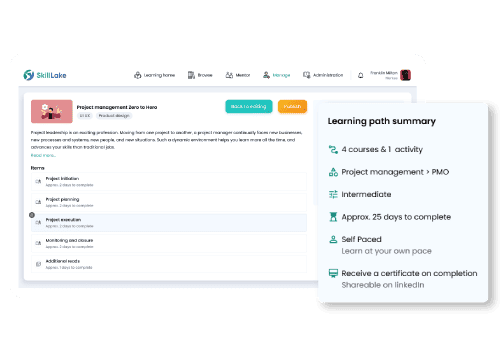
Courses on Skill Lake Library
6. Incident Response Plan
Acknowledge the inevitability of potential security breaches and have a well-defined incident response plan in place. Regularly revise and update the plan to align with evolving threats. Share the plan with relevant stakeholders across the organization for a coordinated response.
7. Strategic Software Selection
Choose software solutions tailored to your organization’s needs. Opt for tools that manage access, prevent security breaches, and ensure compliance with applicable regulations. The right software is pivotal in ensuring the overall security posture of your organization.
Conclusion
HR plays a vital role in safeguarding employee data and ensuring compliance through transparent recruitment, informed consent for background checks, and meticulous data management. Implementing robust security measures, third-party privacy assessments, and training programs demonstrates a proactive stance in securing defenses against potential breaches. This dedication positions HR as a strategic partner in navigating cybersecurity challenges, fostering a secure environment, and instilling confidence in employees and stakeholders.
Ashmitha is a learning and development enthusiast who shares her insights on e-learning. She loves to create engaging and informative content and is dedicated to helping people learn and grow through her deep expertise in the field.
Diversity, equity, and inclusion (DEI) initiatives have recently come under fire and are at the center of fierce political debates in many countries. Attracting a diverse workforce has never been more important for companies, especially for those who want to hire and retain the best and brightest candidates.
According to McKinsey, companies with the most ethnically diverse executive teams are 33% more likely to experience industry-leading profitability by outperforming their peers.
In a recent Monster survey, 83% of Gen Z candidates said that a company’s commitment to DEI is important when choosing an employer. Diverse and inclusive workplaces earn more trust and commitment from their employees.
What can your organization do to promote diversity, equity, and inclusion in the workplace? And how can skills-based talent management support and accelerate your DEI initiatives? Start by understanding what DEI means for your workforce.
What is Diversity, Equity, and Inclusion?
Diversity, equity, and inclusion (DEI) is an organizational framework that seeks to promote the fair treatment and full participation of all people, particularly groups that have historically been underrepresented or subject to discrimination on the basis of identity or disability.
As a discipline, DEI refers to the policies, programs, and practices designed to make people of diverse backgrounds feel welcome and ensure they have support to perform to the fullest of their abilities in the workplace.
The three interconnected concepts – diversity, equity, and inclusion – work together to create an environment of respect and fairness.
Diversity: Diversity refers to the differences represented within a given setting. In the workplace, diversity can mean differences in age, gender, race, ethnicity and cultural backgrounds, identity, sexual orientation, socio-economic class, physical ability, neuro-diversity, and so on.
Equity: Equity refers to fair treatment for all people so that the workplace norms, practices, and policies provide impartial, fair, and equal possible outcomes for every individual.
Inclusion: Inclusion refers to how employees feel a sense of belonging in the workplace and the extent to which organizations embrace all employees and help them make meaningful contributions.
To bring DEI values to life, companies must implement programs and initiatives that actively make their workplaces more diverse, equitable, and inclusive.
Importance of Diversity, Equity, and Inclusion in The Workplace
DEI promotes healthy communities and places of work that are free of stereotyping and mistreatment. Equitable employers who respect the unique needs, perspectives, and potential of their diverse workforce are in a better position to outpace their competitors.
There are several reasons DEI is important:
Diverse talent pool: Hiring candidates from diverse backgrounds allows employers to access a wider and under-tapped talent pool.
Greater innovation and creativity: DEI can provide you with a broader perspective for problem-solving and help build creative and innovative solutions for a competitive advantage and greater success.
Higher employee engagement: DEI plays a significant role in ensuring employee satisfaction, positive workplace morale, motivation, and productivity, leading to better business outcomes.
Stronger company culture: Engaging with people from diverse backgrounds and experiences will make your employees feel positive about the workplace. It also helps in creating a sense of greater belonging.
Better customer alignment: When employees know their diversity is being represented and understood, they are more likely to understand target customers. Marketing efforts that reflect diverse workforce backgrounds will help you build deeper connections with customers and better understand their needs.
Improved employee retention: An inclusive work environment helps reduce employee turnover. When your employees understand they are valued and their voice is heard, they will stay with your company longer. Diversity, equity, and inclusion empower your employees to take pride in their work and the company.
Five Ways Skills-Based Talent Management Can Support DEI Initiatives
1. Reduce bias in hiring process
DEI-based hiring policies and practices can reduce bias as much as possible in the candidate selection process and create a more diverse talent pool with the skills required to drive business success. An inclusive and equitable hiring process will create more opportunities for a diverse pool of job candidates.
Companies should ensure that all members of their hiring staff receive anti-bias training that will help reduce the effects of unconscious bias in hiring. Employers should ensure that their hiring staff follow all defined hiring protocols and comply with the required regulatory standards in the candidate assessment and selection process.
Skills-based talent management boosts employee engagement, productivity, inclusivity, and equity. When employees feel valued at their workplace, they are less likely to leave the company.
Corporate learning and development programs that provide skills-based career paths and resources for reskilling and upskilling will give employees opportunities for career advancement within the company.
Skills-based workforce training programs demonstrate how the organization nurtures a workplace culture that values its people and is willing to invest in them.
3. Provide career advancement opportunities
Through well-defined roles and career paths and skills-based training programs, you can help your existing workforce make internal career advancements. When employees have clear paths to move from less important to more important skills and roles, you can retain a diverse workforce, include your existing employees in new opportunities, and ensure equity in career advancement opportunities.
Skills-based talent management will make it easy for your workforce to understand the skills they need for new and existing roles, so they can apply for open positions with confidence.
4. Seek out talent from traditionally underrepresented groups
To create a more equitable candidate pool comprising diverse talent, organizations should remove barriers to entry for traditionally underrepresented groups. Having a diverse panel of interviewers will allow you to identify the distinctive strengths that would make a candidate a strong employee.
Ensure your recruiting materials highlight how your company is embracing diversity by including employee video testimonials, a diversity statement, awards and public recognition, and information about employee source groups.
Creating equity for traditionally marginalized groups will help boost your engagement and brand awareness and make your workplace culture more inclusive.
5. DEI Training: Teach employees how to support DEI values
Diversity, equity, and inclusion (DEI) training is a type of workplace training program that teaches all staff how to interact and communicate with colleagues of diverse backgrounds more effectively.
Rather than focusing solely on awareness training, DEI training should teach employees how to recognize and respond to workplace injustices through scenario-based learning modules. This kind of training can be conducted in person or virtually through e-learning programs delivered via corporate LMS platforms.
Diversity training programs help organizations create a safe and healthy working environment that aligns well with emerging workforce values. Some of the common DEI training topics can be around cultural awareness and belonging, workplace scenarios, anti-harassment, unconscious biases and stereotypes, inclusive leadership, etc.
SOP & Books Feature on Skill Lake
Implementing Diversity, Equity, and Inclusion in Your Workplace
Integrating DEI principles into learning and development initiatives is a powerful way to foster an inclusive culture, boost employee engagement, and drive overall business success. Follow these steps to effectively integrate DEI principles into your corporate training:
1. Evaluate Your Current State
Conduct a comprehensive assessment of your organization’s DEI efforts. Identify gaps and areas for improvement.
2. Set Your Goals with Clarity
Establish your goals clearly. Define specific, relevant, measurable, realistic, and time-bound goals for DEI initiatives in training.
3. Hire a DEI Expert
DEI consultants can help design content on topics such as social justice, inclusive workplaces and leadership, multiculturalism, racism, ethnic literature, etc.
4. Develop Inclusive Training Content
Ensure your employee training materials and courses are designed to embrace diversity, promote inclusivity, and avoid stereotypes.
5. Consider Different Delivery Formats
Design your DEI training content in multiple formats, such as videos, images, motion graphics, GIFs, and more. Use more diverse online training options, such as virtual instructor-led training (VILT), self-paced e-learning courses, scenario-based learning, quizzes, and mock tests, to maximize DEI awareness and training outcomes.
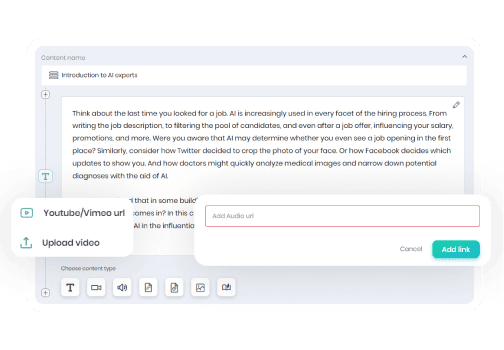
Skill Lake’s Inbuilt Authoring Tool
6. Create a Bunch of Diverse Training Groups
Make your training batches more diverse by including demographics such as differently abled employees, LGBTQIA, working parents, and so on.
7. Train Employees to Recognize Unconscious Bias
Enable employees to recognize and address unconscious biases that they could possibly make. Help them understand how such biases can impact decision-making and interactions.
8. Boost Employee Morale by Encouraging Open Dialogue
Foster an inclusive workplace environment where employees feel more comfortable discussing DEI topics and sharing their experiences. Offering unconscious bias training can help your teams eliminate subconscious barriers when interacting with new employees.
9. Seek and Implement Employee Feedback
Employee feedback is a critical element that bridges the DEI gap in your organization. It enables employees to voice their perspective on various aspects, including recruiting, pay and promotions, fair treatment, leadership approach, and more. Use feedback to identify challenges and areas that require improvement. Act on the feedback at all levels within your organization.
10. Measure Progress and Share Achievements
Assess the impact of DEI initiatives regularly and share the results with your teams. Demonstrate how their feedback has led to positive changes and highlight success stories within the organization. Celebrate achievements and milestones won to boost employee morale and encourage continued participation in DEI efforts. Also, recognize areas where more work needs to be done.
Parting Thoughts
DEI is an ethos that recognizes and respects diverse voices and emphasizes inclusivity and employee well-being as the central facets of success. Companies that are diverse, equitable, and inclusive will be better able to respond to challenges, hire and retain top talent, and meet the needs of different customer bases.
Shifting to skills-based talent practices is an imperative for companies to remain competitive and relevant. Widespread adoption of skills-based hiring approaches by employers will help people facing systemic barriers to make greater career advancements.
Aarathy is an e-learning professional and enthusiast with a keen understanding of learning and development concepts. She writes insightful content, unraveling the possibilities that e-learning holds, and strives to make education open for all.
Employee engagement is essential for all types of businesses. It will reduce employee turnover and promote a more favorable workplace culture. Additionally, increased employee learning and engagement results in higher production rates, improved relationships among coworkers, and stronger relationships with customers. These advantages work together to have a direct, beneficial effect on business profits.
Compared to the older generation, maintaining the engagement of the younger workforce presents distinct challenges. The younger generation of employees is typically more focused and actively looks for better personal and professional development opportunities.
The human resources (HR) team needs to understand the young workforce’s preferences, aspirations, and motivations to attract, engage, and retain them effectively. Studies substantiate that young professionals consider learning and skill development opportunities pivotal and significantly contribute to job satisfaction. They look for projects aligning with their passions, skills and upskilling opportunities. This reality emphasizes the importance of today’s workforce learning.
From this blog, you will:
Understand the Young Workforce
The Strategic Role of HR L&D
How can HR Keep the Young Workforce Engaged through Learning?
Role of Skill Lake in promoting a learning culture
Understanding the Young Workforce
In pursuing a future-ready workforce, leaders must unravel the shifting priorities that define the aspirations of emerging generations. Understanding the evolving desires of young talent is key to crafting workplaces that resonate with their values.
According to studies, over 80% of HR managers believe training helps them to attract (83%) and keep (86%) talent and aids overall success. Many employees (48%) say available training influenced their company choice. Moreover, continuous training boosts loyalty. 76% of employees prefer companies offering regular training, showing its retention power.
The study underscores young talents’ hunger for training and development and emphasizes organizations’ need for a learning culture. HR teams attuned to the needs and expectations of the young workforce can tailor their strategies to create a supportive and engaging work environment. Organizations can effectively attract, engage, and retain young professionals by offering growth opportunities, aligning with values, promoting work-life balance, and fostering a culture of inclusion and innovation.
Young, enthusiastic workers determined to learn more, improve their careers, and significantly benefit their organizations are becoming increasingly popular in the workplace today. Businesses must consciously increase employee engagement, and HR departments should be at the forefront.
The HR department has a crucial role in releasing the unrealized potential of these young people and inspiring them to improve the company’s performance as a whole. The active involvement of employees in Learning and Development (L&D) activities is a crucial catalyst in this process. Through these initiatives, organizations can not only keep up with business competition but also sustain the zeal and commitment of their employees.
How can HR Keep the Young Workforce Engaged through Learning?
The necessity for a broad set of abilities is an ever-changing component of today’s corporate scene. HR can use a carefully crafted learning and development strategy as a compass to direct employees toward developing relevant and crucial skills. These abilities range from developing managerial capability and essential soft skills to developing specialized competencies for specific tasks.
Top 5 Employee Learning and Engagement Strategies
1. Identify the Essential Skills
The HR team should map the available competencies and abilities before creating an upskilling module. Then, decide which particular abilities each individual requires. It will provide a clear picture of the training needs and skill gap. Companies might also ask employees to rank their skill levels to determine the type of L&D required to close the gap. Evaluating the upskilling plan with at least five years in mind is important.
2. Create a Creative L&D Plan
The upskilling program’s engaging modules are the most effective strategy to raise employee engagement. Creating an upskilling program cannot be done in a cookie-cutter fashion. Developing a program and grouping employees according to their desired talents is a significant step in the right direction. Employee learning and development strategies should be specific, time-bound, challenging, and enjoyable.
3. Encourage Staff to Engage in Upskilling
Organizations should persuade employees to enroll in training programs to improve their skills. Employees are frequently preoccupied with projects, so finding time for L&D may take time.To encourage employees to enroll in training, organizations should explain the advantages of L & D and offer them the necessary tools and assistance. The HR team can boost employee participation with rewards, bonuses, completion certificates, and time off.
4. Provide the best platform for Upskilling
Employing the finest training platform is a need for organizations looking to boost employee engagement. A modern, AI-enabled LMS platform will have hiring, onboarding, background checks, payroll administration, and skill upgrading capabilities. Businesses can use platforms with interactive sessions, tests, live classes, feedback posting, group learning, gamification, and other elements to make L&D engaging. Before making the training program available to all employees, run it on the LMS.
5. Collect Feedback And Monitor Progress
Continuous learning and growth encourage employee engagement. Organizations should also monitor staff performance after training. This will help to understand training effectiveness. An in-depth- understanding of the training program and its effectiveness will help the HR department to tailor-make learning modules in the best way. Providing learning opportunities based on individual preferences is also important.
Competency Mapping on Skill Lake
Skill Lake: A Modern LMS in Promoting A Learning Culture
Skill Lake is a dynamic platform that empowers human resource professionals to plan and lead learning and development projects with extraordinary efficiency. Utilizing Skill Lake’s innovative features, HR departments can gain access to a wide range of tools to improve the learning and development of the workforce proactively.
Through interactive learning pathways and tailored content, individuals can engage in focused development that will enhance their effectiveness. The transformative design ensures that learning is not confined to theoretical knowledge. It facilitates learning conversion into actionable outcomes that tangibly impact job performance. Skill Lake nurtures a perpetual improvement culture by promoting real-time feedback and guidance.
Ashmitha is a learning and development enthusiast who shares her insights on e-learning. She loves to create engaging and informative content and is dedicated to helping people learn and grow through her deep expertise in the field.
An increasing number of CEOs, around 66%, recognize the potential advantages of integrating AI into their HR departments. Similarly, 52% of HR leaders actively seek ways to improve the employee experience through AI-driven solutions. This acknowledgment arises from the understanding that AI can significantly enhance various aspects of HR management.
HR leaders strategically utilize AI in employee engagement to achieve specific objectives. About 37% of HR leaders use AI to drive cost reduction initiatives, while 28% focus on leveraging AI’s capabilities to strengthen learning and development initiatives within their organizations. These statistics highlight the multifaceted role of AI in organizations, from optimizing cost-efficiency to enhancing employee growth and development.
AI continues to reshape the workplace, with HR and leadership playing a crucial role in guiding employees through this transformation. To successfully integrate AI into the workplace, HR and leadership must foster a culture of continuous learning within the organization. This involves promoting a mindset of adaptability and openness to change among employees and implementing AI in learning and development. It’s essential to convey that AI is not a threat to job security but rather a tool that can enhance their capabilities and streamline their tasks.
AI: A Paradigm Shift and the Future of Lasting Innovation
The significance of AI in today’s technology landscape cannot be overstated, and statistics underline its enduring presence and transformative potential.
AI Adoption: A substantial 40% of organizations have embraced AI to varying degrees, integrating it into their operations.
Future Investments:72% of organizations plan to invest in AI within the next three years. This strong commitment reflects the recognition of AI’s long-term significance.
Job Creation: AI is set to make a remarkable impact on the job front, with projections indicating the creation of 9 million new jobs in the United States alone by 2025. This figure underscores AI’s substantial and lasting influence on the workforce.
Statistics not only reaffirm the significance of AI but also emphasize its enduring presence in the technology landscape. AI’s dynamic evolution and inherent unpredictability position it as a powerful force for transformation in the future workforce. This necessitates organizations to prioritize cultivating adaptability and strategic readiness within their workforce, paving the way for thriving in an AI-driven future workforce.
Continuous Evolution
AI constantly evolves, with each interaction providing an opportunity for growth. Unlike static technologies, advanced AI tools are designed to learn and improve over time. This dynamic nature requires a workplace culture that prioritizes ongoing learning and adaptability. As a recent Harvard Business Review article highlights, employees must learn to use AI initially and continuously adapt to its evolving capabilities. AI skill development empowers employees by enhancing their skills, career prospects, job satisfaction, and productivity. It also contributes to the organization’s success and resilience in the face of technological changes, creating a win-win scenario for employees and the company.
Unpredictable Changes
AI’s potential applications are vast and, at times, unpredictable. Foreseeing the full spectrum of how AI will be utilized in the future is challenging. This inherent unpredictability makes working with AI exciting and challenging, as it constantly presents new opportunities for growth and transformation. Organizations can proactively prepare for unforeseen shifts in the future of AI-driven work. This involves several key initiatives:
Fostering a corporate culture that values adaptability is essential. Encouraging employees to be open to new technologies and ideas, with visible support and leadership from management.
Diversifying AI skill sets across the organization is advisable. Cross-training employees to develop a broader understanding of AI technologies and their applications is crucial.
Offering continuous learning opportunities to employees, including support for certifications and skill acquisition, helps them remain up-to-date with AI advancements.
Collaboration with AI experts, research institutions, and industry peers is pivotal. Such partnerships provide insights into emerging AI technologies and access to cutting-edge solutions.
How Can HR and Leaders Facilitate A Smooth Transition To AI Adoption Within Our Organization?
As AI revolutionizes industries and reshapes the workplace, organizations must proactively embrace this transformative technology to stay ahead of the curve. However, integrating AI into existing workflows and empowering employees to adopt these new tools can be daunting. Organizations should implement actionable strategies to address employee concerns, foster a learning culture, and provide the necessary support to ensure a smooth and successful AI transition.
Establishing a Clear AI Framework
Developing a strategic approach to AI is as vital for a company as having marketing or growth strategies. Establishing a clear internal and external AI strategy is crucial for reassuring employees about AI’s role in company operations and demonstrating your distinctiveness to stakeholders and investors. Regarding internal AI utilization, defining areas where AI will not be involved and where human intervention will always be necessary is essential. The level of AI integration and trust within your company’s operations also depends on the specific AI services you employ.
On the external front, assess how your competitors leverage AI and explore innovative approaches to differentiate yourself. Also, be clear on how your company applies AI on its website to educate potential customers and clients. While appointing a Chief AI Officer might seem ambitious, it’s crucial to recognize that the growth in AI adoption is exponential.
Empowering Employees through Flexibility and Support
With the growing influence of AI, employees may understandably have apprehensions regarding its effects on their roles and skill sets. Organizations should prioritize providing flexibility and support to ensure a harmonious transition and empower employees to excel in this evolving landscape.
1. Training
One crucial aspect is the provision of comprehensive training opportunities. Equipping employees with the knowledge and skills required to engage with AI effectively is essential. By investing in training programs tailored to their needs, organizations can instill confidence and competence, mitigating concerns about job security.
Courses on Skill Lake
2. Learning Platforms
Offering access to dedicated learning platforms can be instrumental. These platforms facilitate continuous learning and skill development, allowing employees to adapt to AI-driven changes at their own pace. By making such resources readily available, organizations demonstrate their commitment to employee growth and adaptation.
Employees should feel empowered to explore AI solutions within their roles. This experimentation enhances their familiarity with AI and promotes innovative thinking, potentially uncovering novel ways to leverage AI for business benefit.
Harnessing the STEP Framework for Effective AI Adoption
The STEP framework is a strategic approach organizations use to integrate and leverage technologies in the workplace effectively. The framework comprises four interconnected activities, which encompass:-
The process of categorizing tasks for either AI automation or AI augmentation based on their suitability and complexity.
Facilitating the seamless transfer of tasks across different work roles, ensuring a cohesive integration of AI into the workflow.
Providing comprehensive education and training empowers workers to harness AI’s evolving capabilities in their roles.
Implementing a robust performance evaluation system that reflects employees’ learning progress and their contributions to assisting others.
By adopting the STEP framework, organizations can optimize their AI utilization, enhance workforce skills, and promote a culture of continuous learning and collaboration, ultimately driving improved performance and competitiveness.
Key Insights for Leaders and HR Professionals
Leaders and HR professionals must proactively educate employees about this transformative technology’s intricacies and untapped potential. By fostering a culture of innovation and experimentation, where employees are empowered to explore generative AI tools and envision novel applications, organizations can harness the collective creativity of their workforce to drive business growth.
Moreover, the adoption of generative AI should not be viewed as a mere replacement for human labor; rather, it should be seen as an opportunity to augment human capabilities and unleash a new era of productivity. By embracing the transformative potential of generative AI, organizations can position themselves for success in an ever-evolving landscape of boundless possibilities.
Conclusion
As AI continues transforming the workplace, proactive leadership and strategic HR management are crucial for successful adoption. AI is not a passing trend but a lasting innovation with numerous benefits for organizations. By embracing the transformative potential of generative AI, organizations can position themselves for success in an ever-evolving landscape of boundless possibilities. AI’s dynamic evolution and lasting significance underscore the need for organizations to prioritize adaptability and strategic readiness. This approach will empower employees and ensure that organizations thrive in an AI-driven future workforce, where the fusion of human and AI capabilities unlocks unprecedented potential.
Aarathy is an e-learning professional and enthusiast with a keen understanding of learning and development concepts. She writes insightful content, unraveling the possibilities that e-learning holds, and strives to make education open for all.
Statistics revealed that 98% of organizations believed performance management was necessary for success. Furthermore, 80% of employees preferred immediate feedback rather than waiting for annual performance management reviews. These statistics highlight the importance of performance management and the changing preferences of employees, who now prefer real-time feedback. Organizations understood that performance management was vital in ensuring employees’ work aligned with corporate goals.
In this blog, we will discuss:
What is performance management in HR?
Why is performance management critical?
The performance management process
How do we manage poor performance in the workplace?
How do we measure performance management?
How to implement performance management software?
What is Performance Management in HR?
Performance management in HR is the strategy that monitors and manages employees, creating an environment where people can perform at their best. It helps HR professionals or managers understand where employees stand regarding goals and capabilities.
Why Is Performance Management Important?
Performance management has a significant role in the success of an organization. It helps to identify employee issues, strengths, and weaknesses and take proactive steps for growth.
In 2023, 79% of HR managers in the retail sector and 83% in the financial industry believed moving forward required a focus on performance management and continuous employee feedback exchanges.
Performance management in HR brings in numerous benefits like:
Continuous performance monitoring allows the HR department to identify potential issues before they escalate.
Identifying performance issues enables the HR team to create targeted training programs to improve skills and processes.
Performance management clarifies employee roles, expectations, and reporting structures, boosting productivity and confidence.
Effective performance management provides a platform for employees to share concerns and ideas, promoting communication and making employees feel valued.
Engaged employees are more productive and committed to their work. Performance management can enhance engagement by fostering a sense of investment in the company.
The implementation of meaningful recognition and reward systems increases employee motivation and satisfaction. According to a survey by American Express, a third of top businesses believe that recognition and reward lead to higher staff retention.
Performance management aligns employees with organizational goals, enhancing their understanding of how their contributions affect the company’s success.
Let us look into the statistics discussing the impact of continuous feedback:
Companies adopting continuous performance feedback significantly outperformed competition at a 24% higher rate. (Betterworks, 2020)
Organizations with continuous performance processes are 39% better at attracting top talent, and 44% better at retaining talent. (Betterworks, 2020)
In organizations with a continuous performance process, HR teams enjoy a 50% increase in their ratings by managers as “excellent”. (Betterworks, 2020)
Some areas where companies with continuous performance management outperform traditional ones have increased productivity (66%), motivating the entire workforce (65%), and achieving the top goals of the organization (64%). (Betterworks, 2020)
72% of respondents thought their performance would improve if their managers provided corrective feedback. (Hbr.org, 2014)
According to 86% of employees and executives, poor collaboration and inefficient communication are the main reasons for workplace failures. (Clearcompany, 2017)
Companies and organizations with greater-than-average levels of employee engagement reported 27% higher earnings and 38% higher productivity. (Hiredna, 2020)
The Process of Performance Management
Performance management is a continuous process that involves setting objectives, establishing evaluation criteria, and managing outcomes.
1. The planning phase
The performance review process typically begins with the planning phase. Ensuring that the performance appraisal or review is conducted effectively and aligns with the organization’s goals and objectives is crucial. The planning phase sets the stage for a successful performance review process by establishing clear expectations, guidelines, and goals, ensuring that the process is fair, objective, and focused on improving employee performance and contributing to organizational success.
2. Reviewing phase
The reviewing phase is an opportunity to assess the employee’s performance during the review period. Self-assessment is a common component of this process, allowing employees to evaluate their performance against the provided guidelines. Managers should also assess work accomplishments in alignment with goals, document any challenges faced, and discuss unforeseen barriers that may have arisen.
3. Coaching phase
The coaching phase is designed to help employees contribute positively to the organization. During this phase, the employee and manager should meet regularly to review progress toward performance goals and determine if additional support or resources are needed to help the employee achieve these objectives.
How Do You Manage Poor Performance In The Workplace?
Here is a checklist to assist the HR team in effectively tackling poor performance issues.
Developing criteria to assess employees’ performance, including their strengths and weaknesses.
Address poor performance promptly by initiating one-on-one discussions.
Maintain records of all performance-related conversations and subsequent actions for continual improvement.
Engage in a two-way dialogue by asking employees about their challenges and perspectives.
Acknowledging employees’ strengths and offering positive feedback to foster trust.
Develop a performance improvement plan outlining clear goals and expectations.
How Do We Measure Performance Management?
The HR team can employ specific Key Performance Indicators (KPIs) and a systematic measurement process to assess performance management precisely. Below are five crucial KPIs accompanied by their respective measurement processes:
KPI
Definition
Measurement Process
Employee Engagement Score
Measures employee engagement with work, colleagues, and the organization.
1. Administer regular employee engagement surveys (e.g., quarterly or annually).
2. Calculate the average engagement score based on survey responses.
3. Analyze trends over time.
Goal Achievement Rate(GAR)
Indicates the percentage of employees meeting or exceeding performance goals.
1. Review individual and team performance against set goals.
2. Calculate the percentage of employees achieving their goals.
3. Compare GAR over different performance periods.
Feedback Effectiveness
Assesses how well feedback is delivered and received within the organization.
1. Conduct feedback effectiveness surveys or interviews.
2. Analyze feedback processes, including timeliness, specificity, and receptivity.
3. Calculate an FE score based on results.
Employee Turnover Rate
Measures the percentage of employees leaving the organization within a specified period.
1. Gather data on employee departures during a given time frame.
2. Calculate ETR by dividing departures by the average number of employees.
3. Analyze turnover trends.
Managerial Adherence Score(MAS)
Evaluates how consistently managers follow performance management processes.
1. Conduct manager assessments or audits based on established criteria.
2. Evaluate adherence to processes like goal setting, feedback, and appraisals.
3. Calculate a MAS.
How to Implement Performance Management Software?
Performance management software is an exemplary tool that simplifies the process and elevates workforce management effectiveness. For companies aiming to actively engage their employees and foster an environment of growth, online learning platforms like Skill Lake offer a revolutionary approach. These platforms, which can operate on private servers or cloud-based systems enhance performance management by achieving unprecedented efficiency and integration.
Investigate and choose a performance management software provider that meets your organization’s requirements and budgetary constraints.
Ascertain the necessary funds for the software acquisition, implementation, and maintenance. Remember to allocate resources for comprehensive training and support.
Collaborate with your chosen vendor to tailor the software, ensuring it complements your organization’s established performance management procedures and workflows.
Plan meticulously for data transfer, especially if you’re shifting from manual methods or outdated systems, guaranteeing historical performance records are precisely migrated.
Ensure the new software aligns with other pertinent HR and organizational systems, such as your HRIS or payroll applications, for streamlined operations.
Organize detailed training programs for HR staff, managers, and other employees to maximize the software’s utility.
Initiate the software implementation on a smaller scale or among a particular user group to evaluate its functionality and gather feedback.
Regularly oversee the software and assess its influence on performance management procedures, adjusting as necessary.
Exploit the software’s analytics and reporting capabilities to derive valuable insights into employee performance, facilitating informed decision-making.
Enact robust security protocols to safeguard confidential employee information.
Maintain a support system for users, resolving any emerging questions or issues without delay.
What Makes Skill Lake An Apt Performance Management Software
Learning management systems (LMS) are pivotal in facilitating online training in today’s rapidly changing digital landscape. A top-notch corporate LMS enables the workforce to stay aligned with the ever-evolving business world demands. It empowers organizations to assess employees’ competencies, identify skill gaps, and tailor corporate training programs to enhance their skills. Skill Lake emerges as a versatile and adaptable solution for organizations looking to foster a culture of continuous learning and skill enhancement. With its AI-driven personalized learning, competency management, accountability features, SCORM compliance, and robust user management capabilities, Skill Lake is well-equipped to support the workforce’s growth and development, ultimately driving success in a dynamic digital world.
Sachin is a passionate advocate of e-learning with a profound knowledge of the field. He regularly writes compelling content that captivates readers and works to spread awareness of learning solutions.
Organizations are now experiencing a massive change in workforce dynamics due to rapid technology and market shifts. In fact, approximately 85 million job positions are projected to remain vacant owing to a need for more qualified candidates possessing the requisite skills. Nearly 40% of the U.S. workforce departs from companies, primarily due to perceived limitations in career advancement prospects. To tackle this challenge, many organizations are now transitioning into skills-based, underscoring the importance of fostering employee capabilities.
Research conducted by Deloitte reveals that an overwhelming 98% of business executives have expressed their intent to integrate skills-based approaches into their operational frameworks. In this transformative process, the development of career paths and training plays a crucial role, profoundly impacting both personal advancement and the organization’s future. Pioneering organizations leading this paradigm shift have reported marked enhancements in performance, heightened talent retention, and increased levels of employee engagement.
In this blog, we will delve into the significance of career paths and training in the transition to a skills-based organization.
What is a Skills-Based Organization?
A skills-based organization (SBO) is the one that primarily focuses on its workforce and their skill sets within its talent management strategies. Instead of adhering to conventional job structures, an SBO deconstructs roles into projects, gigs, and tasks based on the specific skills and capabilities necessary for their successful execution.
What is the Significance of a Skills-Based Approach?
A skill-based organizational approach strongly emphasizes the assessment of employees based on their specific skill sets, contributions to the organization, and potential for long-term growth and development. A noteworthy shift in perspective has recently come to light where hiring managers prioritize identifying talent whose existing skills closely align with the precise requirements of the roles they aim to fill.
By making skills the primary criterion for talent acquisition and development, organizations position themselves favorably to adapt to the ever-evolving demands of the job market. They become adept at pinpointing the right talent for the right roles, thereby driving sustained success. Wholeheartedly embracing a skill-centric mindset is a proactive strategic realignment that empowers organizations to thrive during evolving business challenges, enabling their human resources teams to unlock the full potential of their workforce.
Benefits and Challenges of Building a Skills-based Approach
What are the Benefits of a Skills-Based Organization?
Employee Retention
In 2021, the U.S. Bureau of Labor Statistics recorded a significant phenomenon known as the “Great Resignation,” where over 47 million Americans voluntarily left their jobs. This mass exodus was primarily driven by factors such as inadequate compensation, limited prospects for career growth, and a pervasive sense of disrespect and undervaluation in the workplace.
According to insights from McKinsey’s research, a noteworthy 80% of workers who decided to change their roles chose to switch employers altogether. This pattern suggests that these employees possess the skills required for advancement but often lack viable internal opportunities to do so within their current organizations.
Skills-based organizations (SBOs) provide a distinctive solution to this challenge. Their flat, team-oriented structures empower employees to take on various tasks, creating an environment that supports career growth and fosters a satisfied and loyal workforce.
Maximizing Talent
Prioritizing skills over qualifications proves to be a pivotal strategy for achieving optimal business outcomes. It helps unveil hidden talents within the workforce and motivates employees to realize their full potential, irrespective of their existing job titles or prior experiences.
Furthermore, Skills-Based Organizations (SBOs) actively work to break down organizational silos by promoting cross-functional communication and collaboration. This deliberate approach ensures that specialized skills and knowledge are not siloed within specific teams, nurturing a more interconnected and knowledge-sharing environment.
Promoting Inclusivity
Skills-Based Organizations (SBOs) play a pivotal role in cultivating diversity and inclusion through various strategic approaches.
One notable way is by revolutionizing the recruitment process, providing hiring managers with access to a wider and more diverse talent pool. This is particularly crucial in a landscape where many organizations grapple with the challenge of finding suitable candidates for their open positions. It’s worth noting that skill-based recruitment has proven to be five times more predictive of job performance than traditional qualifications-based hiring and more than twice as predictive as experience-based recruitment.
Furthermore, SBOs often design comprehensive learning and development initiatives focused on long-term professional growth. This commitment ensures that employees across all levels of the organization have increased opportunities to advance their careers, contributing to a more inclusive and equitable work environment.
Elevating Employee Well-Being and Productivity
When employees have the opportunity to engage in meaningful and diverse work assignments, continuously enhance their skill sets, and progress in their careers, their overall job satisfaction surges.
This surge in contentment yields a ripple effect on various key metrics, including heightened productivity, increased motivation, enhanced attendance, and a boost in innovation.
What are the Challenges of Building a Skill-Based Approach in Organizations?
Overcoming Resistance to Change
In the ever-evolving business environment, transitioning from a job-centric focus to a skills-oriented framework presents significant challenges. This transformation often involves the introduction of new work methodologies such as project-based structures, agile workforce principles, and other innovative approaches. Employees accustomed to established routines may feel uneasy when confronted with change. This resistance to change is a common phenomenon in organizational transitions, and effectively addressing resistance to change becomes a crucial challenge.
Inadequate Skill Visibility Across the Organization
The success of skills-based talent strategies depends on the organization’s capacity to thoroughly identify, assess, and communicate a wide range of skills, proficiency levels, and areas of skill gaps within the company.
In cases where transparency and centralization need improvement, employees and their managers may find it challenging to adapt to or fully understand the expectations associated with this new approach. Also, the absence of specialized tools to monitor evolving skill requirements can hinder an organization’s adaptability and overall success.
These tools provide valuable foresight and data-driven insights for ensuring the workforce possesses the necessary skills to meet future demands, ultimately fostering sustained growth and success.
Managing the Complexity of Skill Data Collection
Skill data collection complexity grows with company size. Coordinating across teams and departments becomes resource-intensive. To simplify, firms can use skill assessment platforms and HR systems for centralized data collection, automated assessments, and real-time insights. Technology makes this task manageable, helping organizations unlock their workforce’s potential and adapt to business changes.
Identifying and Mapping Essential Skills for Roles
Companies often hesitate to initiate the transition toward skills-based practices, even when recognizing their significance. The reason is clear—it’s not always evident where or how to commence this transformation. It demands a well-thought-out plan and dedicated effort. Amid the persistent pressure to meet immediate results and rigid Key Performance Indicators (KPIs), this crucial shift can sometimes be relegated to the realm of ‘nice-to-have’ ideas rather than a strategic priority.
Lack of Collaborative Support
While talent strategies are typically HR’s responsibility, the challenge lies in securing a commitment from various stakeholders, such as department heads, managers, team leads, and, most critically, unwavering support from the C-suite or business leadership. Gaining their full endorsement for this transformative shift is imperative for progress.
How To Adopt A Skills-Based Approach?
Adopting a skills-based approach in your organization requires a thoughtful and strategic process.
Career Path Development
Career path development involves identifying and planning potential career paths within an organization for employees. This includes understanding the various job roles, what skills and experiences are necessary, and how an employee can move from one position to another over time. It aids in employee motivation, helps retain talent, and ensures the organization has a steady pipeline of skilled employees ready to fill critical roles. To develop a career path, you can follow the steps detailed below:
Create Skills Inventory
Start by creating a comprehensive inventory of skills essential for various roles within your organization. This should include both technical and soft skills.
Conduct Skills Mapping
Map these skills to specific career paths. Clearly define which skills are necessary at different stages of an employee’s career development.
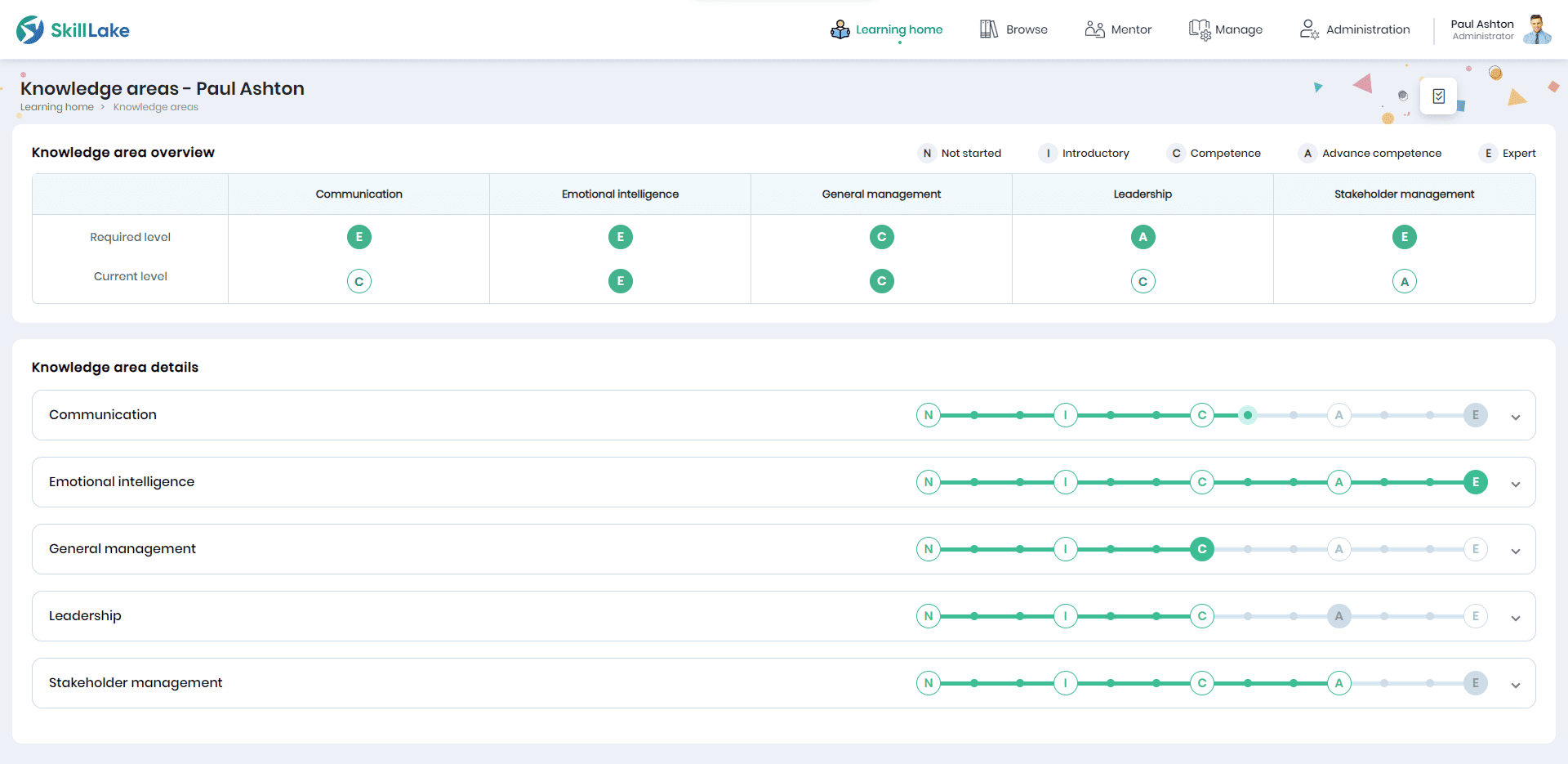
Knowledge Areas on Skill Lake
Customize Career Paths
Develop flexible career pathways that focus on skills rather than job titles. This allows employees to move laterally across the organization, exploring different roles that match their skill set.
Ensure Transparent Communication
Ensure that information about skill requirements for each career path is transparent and accessible to all employees. This encourages them to take charge of their career development.
Training
Training is a key factor in the success of skill-based organizations. It enhances individual performance, aligns employee skills with organizational goals, fosters a culture of continuous improvement, and ensures the organization’s adaptability and competitiveness in the market. Steps to facilitate the process:
Conduct Skill Gap Analysis
Regularly assess the skill gaps in your workforce. This involves comparing employees’ skill levels with those required for current or future roles.
Create Tailored Training Programs
Create training programs focused on bridging these skill gaps. These programs should be tailored to individual learning styles and career aspirations.
Learning Path on Skill Lake
Leverage Technology
Using technology, offer flexible and diverse learning opportunities, such as e-learning modules, virtual workshops, and webinars.
Foster a Continuous Learning Culture
Foster a culture of continuous learning and development. Encourage employees to regularly update their skills and provide incentives for doing so.
Performance Management
Performance management ensures employees’ skills align with organizational goals, identifies training needs, fosters employee growth, and enhances productivity. Ensure the effectiveness of performance management by following these steps:
Skills-based Assessment
Shift the focus of performance evaluations from job duties to skill proficiency. Assess how effectively employees are developing and applying their skills.
Provide Regular Feedback
Provide regular, constructive feedback on skill development. This should be an ongoing process rather than an annual event.
Create Performance Goals Aligned with Skills
Set performance goals that are directly linked to skill development. This ensures that employees know what skills they need to work on.
Recognition and Reward
Implement a system of recognition and rewards that acknowledges skill acquisition and application. This can be an effective motivator for continuous learning and development.
Summary
It is crucial to prioritize careers and talent strategies centered around skills. A strategic emphasis on skills development, inclusivity, and robust workforce planning is the foundation for lasting success. Even though there may be challenges, such as resistance to change and the intricacies of skill management, a combination of meticulous strategic planning, specialized tools, and unwavering leadership support can effectively overcome these obstacles. This transformative journey not only unleashes the full potential of your workforce but also results in enhanced performance, better employee retention, and a distinct competitive advantage in your industry.
Aarathy is an e-learning professional and enthusiast with a keen understanding of learning and development concepts. She writes insightful content, unraveling the possibilities that e-learning holds, and strives to make education open for all.
Artificial intelligence, rapid digital transformation, and evolving workforce expectations are reshaping the way organizations approach learning and development. Today, employee training is no longer limited to onboarding or annual compliance programs. Businesses are investing in continuous, skills-focused learning experiences that help employees adapt to changing job roles, embrace new technologies, and stay productive in an increasingly competitive environment.
As organizations prepare for the future of work, Learning and Development (L&D) has become a strategic business function rather than just an HR initiative. Modern L&D focuses on building future-ready workforces through personalized learning, AI-powered technologies, data-driven decision-making, and continuous upskilling. Companies that invest in learning today are better equipped to innovate, retain talent, and respond to changing market demands.
The future of work is undeniably centered around skills, a reality made even more evident by the global pandemic. While the importance of digital skills has been underscored, there’s also a growing recognition of the value of adaptable and learning-agile individuals in the workforce.
In addition to these evolving skill requirements, the rapid advancement of AI and technology, coupled with a competitive labor market, has made it abundantly clear that companies must prioritize investing in the development and training of their employees.
As we delve into Learning and Development trends for 2026, it becomes evident that to remain competitive, businesses must gain a profound understanding of the current state of L&D. Understanding corporate learning and development strategy helps businesses to plan effective training programs that align with the evolving needs of the workforce and the demands of the modern workplace.
In this blog, we will discuss learning and development strategy and trends for 2026 in detail.
The Crucial Role of Learning and Development
Organizations should align their rate of adaptation with the rapidly changing external landscape to engage Gen Z talent effectively. This necessitates the creation of comprehensive training and leadership initiatives that genuinely prioritize diversity and inclusion.
According to LinkedIn Workplace Learning Report 2019, Companies are not the only ones who value training. 94% of employees say that they would stay at a company longer if there is investment in their learning and development.
Learning and Development has also become a key driver of business resilience. Organizations with strong learning cultures can respond faster to technological changes, industry disruptions, and evolving customer expectations. Instead of reacting to change, these organizations proactively equip employees with the skills they need to succeed in future roles.
Employees today expect learning opportunities that are flexible, engaging, and relevant to their day-to-day responsibilities. Whether they are developing leadership capabilities, learning AI tools, or improving technical skills, continuous learning has become an essential part of career growth. Organizations that create meaningful learning experiences not only improve employee engagement but also strengthen retention and overall business performance.
Key Learning and Development Trends for 2026.
When implementing Learning and Development (L&D) initiatives, organizations must determine the training domain and the frequency of training delivery. Another crucial factor for organizations to consider is employees’ preferred learning methods. As remote and virtual learning options continue to expand, employees now have a multitude of learning avenues available. The most favored among employees are online/self-paced courses.
Now, let us get into the key learning and development trends in detail:
Continuous Learning for Organizational Agility
The focus on organizational agility has intensified, driven by the need to adapt to market disruptions swiftly. Recent insights from a Deloitte survey revealed that 85% of business executives actively seek more agile approaches.
The key to enhancing organizational agility is fostering a continuous learning culture. Learning and development strategy examples include training, employee engagement activities, and more. Training empowers employees to swiftly grasp new situations and respond effectively to the changing dynamics of the business world.
Learning and Development (L&D) teams play a pivotal role in this transformation by providing fresh learning opportunities and ensuring that training materials remain current, aligning with immediate organizational needs and broader market conditions.
The embrace of organizational agility yields significant advantages to companies and their workforce. Companies gain the competencies needed to thrive in challenging market scenarios, while employees access valuable training opportunities and acquire new skills that enhance their future career prospects.
Today’s organizations are moving beyond one-time training events and building a culture of continuous learning. Employees are encouraged to learn regularly through bite-sized courses, collaborative learning experiences, on-the-job practice, and personalized development plans. This approach helps businesses remain agile while enabling employees to continuously improve their skills as technology and business needs evolve.
Continuous learning also encourages innovation. When employees have access to relevant learning opportunities throughout their careers, they become more confident in experimenting with new ideas, adopting emerging technologies, and contributing to business growth.
Upskilling and Reskilling
In response to the ever-evolving demands of the modern workforce, organizations of all types and sizes continue to prioritize upskilling and reskilling efforts.
According to LinkedIn, a survey of L&D professionals reveals that 89% believe cultivating employee skills is instrumental in helping organizations navigate the uncertain future of work. This endeavor is particularly critical as specific skills have become important, including management, communication, customer service, and leadership.
A noteworthy trend emerging in the business world is the growing adoption of skill-based approaches to talent management. This strategic shift strongly emphasizes skills rather than specific job roles, ensuring that employees possess the cutting-edge competencies necessary for success.
Furthermore, organizations are increasingly embracing best practices from product development and applying them more broadly. This involves forming project teams focusing on task execution moving away from traditional business unit and department structures.
A significant majority of employees share the enthusiasm for continuous learning and acquiring new skills. A report by PwC titled “Workforce of the Future” revealed that 74% of workers desire to develop their skills to remain employable.
To further bolster their skill-building endeavors, organizations can implement recognition or incentive programs that reward employees for their active participation in developing their skill sets.
Beyond traditional upskilling, organizations are now focusing on preparing employees for AI-enabled workplaces. AI literacy, data literacy, cybersecurity awareness, and digital collaboration have become essential skills across industries. As automation continues to transform job roles, reskilling initiatives help employees transition into new responsibilities while ensuring organizations remain competitive in a rapidly changing business environment.
Successful organizations also create personalized development plans based on employees’ current competencies, career aspirations, and business objectives. This makes learning more relevant and increases employee participation in training programs.
Employee-centric Learning Experiences
The success of an organization’s Learning and Development (L&D) initiatives fundamentally relies on the collective achievement of individual employee learning journeys. By placing employees at the core and optimizing each learning experience, businesses can significantly enhance the effectiveness of their training programs, bringing them closer to their overarching goals.
This principle forms the bedrock of an employee-centric learning culture, focusing on nurturing individual growth to propel the organization forward. Organizations are encouraged to meticulously scrutinize the entire learning journey of each employee, spanning from their initial onboarding to their eventual exit, all to maximize their learning experience.
To successfully deliver employee-centric learning experiences, businesses must invest time and effort in understanding each employee persona comprehensively. This entails delving into their distinct learning preferences, career aspirations, and the potential contributions they can make to the organization.
Today’s employees expect learning experiences that are as personalized as the digital platforms they use every day. Rather than assigning the same courses to everyone, organizations are increasingly creating learning journeys tailored to employees’ roles, career goals, existing skills, and interests. Personalized learning not only improves engagement but also helps learners acquire skills that are directly relevant to their day-to-day responsibilities.
Modern learning platforms also support learning in the flow of work by enabling employees to access training whenever they need it. Whether it’s a short video, a quick knowledge article, or a practice activity, employees can learn without interrupting their workflow, making learning more practical and effective.
Organizations are also embracing mobile learning and microlearning to make training more accessible. Short, focused learning modules allow employees to develop new skills at their own pace, regardless of where they are working.
Wellbeing Programs and Mental Health Support
The challenges of maintaining a healthy work-life balance have left many employees grappling with fatigue and burnout, ultimately leading to diminished performance, increased absenteeism, and even resignations. In response, forward-thinking businesses are proactively addressing these issues by implementing wellbeing programs and specialized training initiatives designed to empower employees in navigating the demands of the modern workplace.
Recognizing the need to support their workforce’s mental health and overall wellbeing, organizations are extending their development opportunities beyond traditional complex or technical skills. These programs now encompass essential skills such as stress management, cultivating a positive mindset, practicing mindfulness, and refining time management abilities. Equipping employees with these crucial skills enables them to function effectively despite workplace pressures, reducing the risk of feeling overwhelmed.
Furthermore, some organizations are taking an extra step by investing in dedicated wellbeing spaces within the workplace, offering employees a sanctuary to decompress, recharge, or engage in mindfulness exercises. Although these investments may appear challenging for some, the positive outcomes of successful wellbeing programs are undeniable. They encompass improved motivation and productivity, reduced absenteeism, heightened job satisfaction, an enhanced company reputation that aids in the hiring process, and increased staff retention, ultimately contributing to a healthier and more resilient workforce.
Employee wellbeing is no longer viewed as a separate initiative from Learning and Development. Organizations are integrating wellbeing, resilience, emotional intelligence, and leadership development into their learning strategies to help employees thrive in high-performing work environments. Supporting both professional growth and personal wellbeing creates a healthier workplace culture and contributes to long-term organizational success.
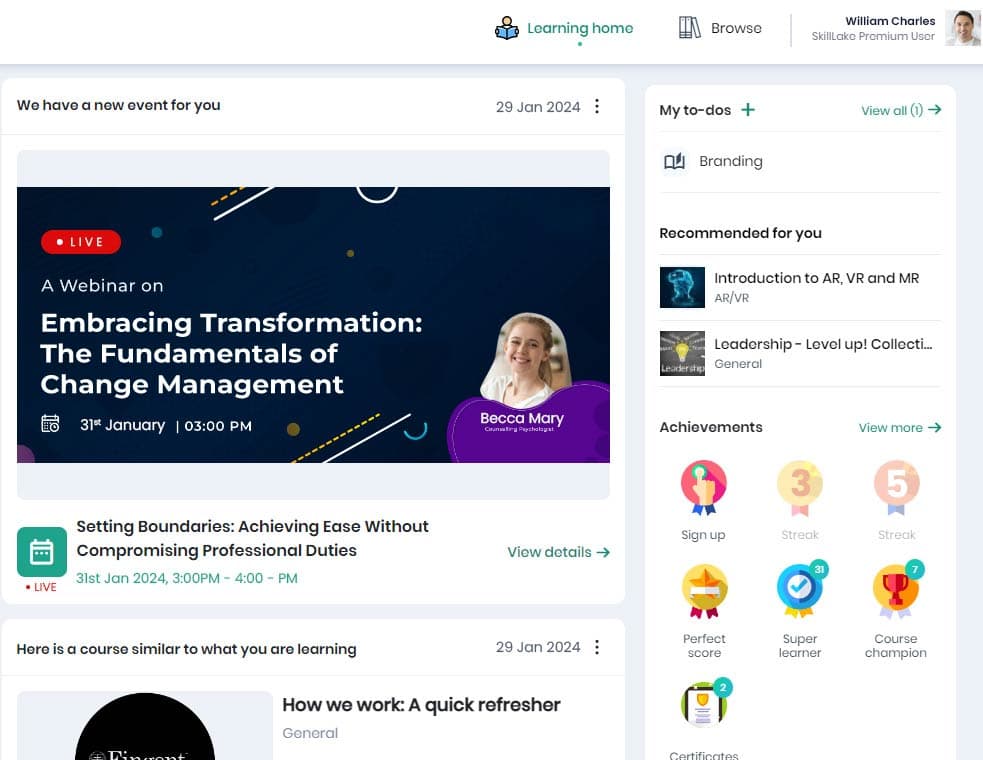
Skill Lake’s Event Registration
AI-Powered Learning Experiences
Artificial Intelligence has become one of the most influential forces shaping the future of Learning and Development. Organizations are using AI to simplify course creation, personalize learning experiences, automate administrative tasks, and provide learners with faster access to relevant knowledge.
AI-powered learning platforms can analyze employee skills, learning behavior, and performance data to recommend personalized learning paths that align with individual career goals and organizational objectives. This helps learners focus on the most relevant content instead of navigating through lengthy course catalogs.
AI is also transforming how learning content is created. Instead of spending weeks developing courses and assessments manually, organizations can leverage AI to generate training content, quizzes, learning summaries, and course recommendations in significantly less time while maintaining consistency and quality.
As AI continues to evolve, Learning and Development teams will increasingly focus on designing engaging learning experiences while AI handles repetitive tasks such as content generation, knowledge updates, and learner recommendations.
Skills-Based Learning and Internal Mobility
Organizations are shifting from traditional role-based workforce planning to skills-based talent development. Rather than focusing solely on job titles, businesses are identifying the specific skills employees possess and the skills they need to develop for future roles.
Skills-based learning enables organizations to identify workforce capabilities, close skill gaps, and create targeted learning programs that prepare employees for changing business requirements. This approach also supports internal mobility by helping employees explore new career opportunities within the organization based on their skills and learning progress.
By investing in skills development, organizations create a more agile workforce that can quickly adapt to new technologies, business priorities, and market changes. Employees also benefit from clearer career progression, increased learning opportunities, and greater confidence in navigating their professional growth.
Learning Analytics and Data-Driven Decision Making
Modern Learning and Development strategies rely heavily on data to measure effectiveness and continuously improve training outcomes. Learning analytics provide organizations with valuable insights into learner engagement, course completion rates, assessment performance, and overall skill development.
These insights help L&D teams understand which learning programs deliver the greatest impact and identify areas where employees may require additional support. Instead of relying on assumptions, organizations can make informed decisions based on measurable learning data.
Learning analytics also enable organizations to demonstrate the business value of employee training by connecting learning outcomes with productivity, employee performance, retention, and organizational goals. As businesses continue investing in workforce development, data-driven decision-making will play an increasingly important role in maximizing the return on learning investments.
Utilizing a Learning Management System
In the realm of Learning and Development (L&D) trends, Learning Management Systems (LMS) play a pivotal role by offering a host of valuable features and benefits. A contemporary LMS is a centralized hub for storing and organizing learning materials, ensuring accessibility, and accommodating diverse content types, from videos to interactive elements. Furthermore, it empowers organizations to customize and adapt learning experiences, tailoring them to individual learners’ specific needs and goals while fostering engagement and collaboration through gamification and social features. Notably, a robust LMS provides measurable insights, tracking learner performance and behaviors aiding in program evaluation. Its cost-effective scalability eliminates physical constraints, while its capacity to integrate innovative technologies and methodologies future-proofs learning initiatives enabling organizations to stay at the forefront of evolving learning trends. Ultimately, LMS serves as a cornerstone in crafting agile, efficient, and effective learning experiences in the ever-evolving landscape of Learning and Development.
Skill Lake: A Modern LMS
Why is Skill Lake an Ideal LMS for learning and development?
Skill Lake’s AI-enabled Learning Management System (LMS) is ideal for modern organizations seeking an advanced online employee training platform. It offers personalized, accountable, and comprehensive learning experiences beyond traditional LMS systems. With Skill Lake, organizations can create a continuous learning and growth culture, fostering accountability, cooperation, and personalization. It empowers learners to develop skills and competencies directly impacting their job performance, effectively converting learning into actionable results. The platform encourages social and collaborative learning, inspires personalized learning paths, and provides various learning delivery options. Skill Lake’s commitment to learning accountability, microlearning, flexibility, and hands-on training sets it apart. It is a compelling choice for organizations aiming to transform their workforce into future-ready, knowledgeable, and adaptable employees. Skill Lake’s AI LMS offers a holistic and innovative approach to learning and development, addressing the evolving needs of organizations in today’s fast-paced business landscape.
Modern organizations need more than a platform that simply delivers courses. They need an intelligent learning ecosystem that accelerates content creation, personalizes learning experiences, measures workforce skills, and supports continuous employee development. Skill Lake is designed to meet these evolving needs by combining AI-powered automation with learner-centric experiences.
With Skill Lake, Learning and Development teams can create engaging training programs faster using AI-powered course creation, generate assessments automatically, transform existing documents into structured learning content, and deliver personalized learning paths that align with employee roles and career aspirations. This significantly reduces manual effort while improving learning quality and consistency.
Skill Lake also empowers organizations to deliver immersive, hands-on learning through AI Role Play Simulations. Employees can practice real-world workplace scenarios, such as customer interactions, sales conversations, leadership discussions, and compliance situations, in a safe and interactive environment. Instant AI-powered feedback helps learners refine their communication, decision-making, and problem-solving skills, enabling them to build confidence and apply their knowledge effectively in real workplace situations.
Skill Lake also enables organizations to monitor learner progress, identify skill gaps, track competency development, and measure training effectiveness through powerful analytics and reporting dashboards. These insights help HR and L&D leaders make informed decisions about workforce development and continuously improve learning outcomes.
By supporting continuous learning, skills development, collaborative learning, mobile accessibility, AI Role Play Simulations, and AI-powered automation, Skill Lake helps organizations build a future-ready workforce capable of adapting to rapidly changing business environments.
Best Practices for Building an Effective Learning and Development Strategy
While understanding the latest Learning and Development trends is important, organizations must also focus on implementing strategies that create meaningful learning outcomes. A well-planned L&D strategy ensures that learning initiatives support both employee growth and overall business objectives.
Some best practices include:
Identify current and future workforce skill gaps before designing training programs.
Align learning initiatives with business goals and organizational priorities.
Provide personalized learning experiences based on employee roles, career aspirations, and skill levels.
Encourage continuous learning instead of relying on one-time training sessions.
Leverage AI-powered learning platforms to automate course creation, assessments, and content recommendations.
Measure learning effectiveness using analytics, learner feedback, and performance data.
Regularly update learning content to reflect changing technologies, regulations, and industry trends.
Promote collaborative learning through peer discussions, knowledge sharing, and mentoring programs.
Organizations that follow these practices create learning cultures where employees continuously develop new skills while contributing to long-term business success.
Conclusion
The rapid pace of technological advancement and the fiercely competitive job market compel organizations to invest substantially in employee development and training. This imperative arises from several key factors. Technological innovations constantly reshape industries, necessitating organizations to effectively equip their employees with the skills to harness these advancements. Failure to do so can render businesses obsolete in a swiftly evolving business landscape. Furthermore, attracting and retaining skilled professionals is a significant challenge in today’s highly competitive job market. Companies that invest in employee growth and development not only draw top talent but also retain it, while those neglecting such investments risk losing their most valuable assets. Adapting Learning and Development (L&D) strategies to align with evolving workforce needs and workplace demands has become essential for organizational survival in the dynamic modern business world.
As organizations prepare for the future of work, Learning and Development will remain one of the most important investments they can make. By embracing AI-powered learning, continuous upskilling, personalized learning experiences, and data-driven decision-making, businesses can create resilient, adaptable, and future-ready workforces capable of thriving in an ever-changing business landscape.
Organizations that invest in modern Learning and Development strategies today will be better equipped to drive innovation, improve employee engagement, strengthen retention, and build a culture of continuous learning. With an AI-powered Learning Management System Software like Skill Lake, businesses can streamline learning operations, accelerate workforce development, and empower employees with the knowledge and skills needed for long-term success.
Frequently Asked Questions
Q: What are the top Learning and Development trends in 2026?
A: The top trends include AI-powered learning, continuous upskilling and reskilling, personalized learning experiences, skills-based workforce development, learning analytics, employee wellbeing, and modern AI-powered Learning Management Systems.
Q: Why is AI important in Learning and Development?
A: AI helps organizations automate course creation, generate assessments, personalize learning paths, recommend relevant content, and provide actionable learning insights, making training more efficient and engaging.
Q: Why is continuous learning important for organizations?
A: Continuous learning enables employees to keep pace with evolving technologies, improve performance, develop future-ready skills, and adapt to changing business requirements.
Q: How does an LMS support Learning and Development?
A: A modern LMS centralizes learning content, delivers personalized learning experiences, tracks learner progress, measures training effectiveness, and simplifies learning administration.
Q: How can organizations measure the success of Learning and Development programs?
A: Organizations can evaluate L&D success using metrics such as learner engagement, course completion rates, assessment scores, skill development, employee performance improvements, and business outcomes.
Q: How does Skill Lake support modern Learning and Development?
A: Skill Lake combines AI-powered course creation, document-to-course conversion, automated assessments, AI Role Play Simulations, personalized learning paths, social learning, skills tracking, and learning analytics to help organizations build a future-ready workforce
Ashmitha is a learning and development enthusiast who shares her insights on e-learning. She loves to create engaging and informative content and is dedicated to helping people learn and grow through her deep expertise in the field.
According to NerdWallet’s research, 78% of business leaders reported feeling imposter syndrome at work at some point in their careers. Despite the prevalence of this phenomenon among leaders, there is still a significant stigma associated with it. Only 21% of leaders have openly discussed these feelings with their peers or other business leaders, while a mere four percent choose to keep these emotions private.
Another survey conducted by the business communication provider Moneypenny among 2,000 U.S. workers found that 32 percent of respondents had experienced imposter syndrome in the workplace. According to the data, Imposter Syndrome is most commonly observed among individuals who are just starting their careers and those who are approaching retirement. The data highlights that starting a new role triggers Imposter Syndrome in most people (57%).
Furthermore, the research indicates that Imposter employees tend to contemplate leaving their jobs, with 59% of business leaders admitting to seriously considering such a move due to self-doubt. Additionally, this issue has a detrimental impact on professional relationships (64%), physical health (53%), financial well-being (51%), and personal relationships (46%).
Notably, imposter syndrome was highest among younger workers:
46 percent of workers aged 18 to 24
40 percent of those aged 25 to 34
31 percent of those aged 35 to 44
18 percent of those aged 45 to 54
19 percent of those aged 55 to 64
8 percent of those aged 65 and older
The Imposter Syndrome Institute underscored on its website that societal stereotypes linked to competence, which are based on factors such as gender, race, age, language, socioeconomic class, and disability, can significantly contribute to making certain groups more vulnerable to experiencing imposter syndrome.
Proactive HR intervention is indeed crucial for addressing imposter syndrome within an organization. Cultivating an open and supportive workplace culture is a crucial strategy to help employees overcome imposter syndrome, and encouraging honest conversations can play a significant role in this effort. By fostering an environment where individuals can openly share their struggles and receive constructive guidance, HR contributes to the overall well-being and success of employees and the organization.
What Is Imposter Syndrome At Work?
Imposter syndrome, initially identified and coined by clinical psychologists Pauline Rose Clance and Suzanne Imes in 1978, is characterized by individuals experiencing persistent feelings of anxiety and a lack of internal acknowledgment of their success despite demonstrable high levels of achievement in external, objective measures. This psychological phenomenon frequently leads individuals to perceive themselves as “frauds” or “phonies” and to doubt their competencies and capabilities.
Causes and Types of Imposter Syndrome
Imposter syndrome, a phenomenon more commonly experienced when individuals venture into new territories and face the pressure to achieve, was first explored by Clance and Imes. They posited that this mentality stemmed from a complex interplay of factors, including gender stereotypes, early family dynamics, cultural influences, and attribution style.
Key Factors Influencing Imposter Syndrome
Family Dynamics
Childhood experiences of family expectations, the emphasis on success and perfection can persist throughout an individual’s life.
Cultural Expectation
Diverse cultures place varying values on education, career, and success, shaping individuals’ perceptions of themselves.
Personality Traits
Perfectionism, a personality trait, is often the driving force behind imposter syndrome. Individuals relentlessly seek flawless achievements leading to anxiety and worry.
Comparison
The tendency to compare oneself with others, particularly in achievement, can lead to feelings of inadequacy.
Types of Imposter Syndrome
Dr. Valerie Young has categorized imposter syndrome into five distinct types:
The Perfectionist
This type is preoccupied with the “how” of doing things and tends to perceive even the smallest mistake as a failure.
The Expert
Individuals of this type constantly worry about what they know or can do, often feeling like failures if they have a minor knowledge gap.
The Soloist
This category places great importance on the “who” and believes that success should be achieved independently without seeking help from others.
The Natural Genius
Those falling into this category measure their self-worth based on how effortlessly and swiftly they accomplish tasks. They may feel ashamed if they require extra time or have to redo something.
The Superwoman/Superman/Super Student
These individuals evaluate their achievements by how many different roles they can juggle and excel in simultaneously.
How to Deal With Imposter Syndrome at Work?
Set Up Performance Goals and Regular Follow-Ups
Establishing clear performance goals and conducting periodic follow-ups are essential components of effective corporate imposter syndrome management. Implement SMART ( (Specific, Measurable, Achievable, Relevant, Timely) goals in collaboration with each team member. Incorporating SMART goals and a robust follow-up strategy into performance management can create a more supportive and nurturing environment that helps individuals build confidence and reduce imposter syndrome.
Develop a Feedback Culture
Fostering a feedback-centric culture is a powerful strategy for addressing imposter syndrome. Developing a deep understanding of your employees allows agile identification of their needs and challenges.Collecting feedback from the team helps HR and management identify employees who may be experiencing imposter syndrome. Constructive feedback is instrumental in overcoming imposter syndrome as it fosters a culture of continuous improvement.
Skill Lake’s Feedback System
Design an Employee Recognition Plan
An effective employee recognition plan is crucial for overcoming imposter syndrome. A structured framework for expressing appreciation and nurturing a positive workplace culture elevates employee morale. This plan helps employees feel valued and motivated, reducing feelings of inadequacy associated with imposter syndrome. It also fosters a sense of belonging and inclusivity, contributing to a more positive and productive work environment ultimately helping individuals overcome imposter syndrome and build confidence in their abilities.
Provide Mental Health Support
Prioritizing mental health is crucial in addressing imposter syndrome, as it equips individuals to manage emotions, boost self-confidence, and develop adaptive coping strategies. Organizations can contribute significantly by implementing Employee Assistance Programs (EAPs) and conducting Mental Health Awareness Training. EAPs offer confidential counseling and resources, creating a supportive workplace environment. Mental Health Awareness Training helps reduce the stigma around mental health and enhances employee understanding on mental health issues. Cultivating such an environment prioritizes the workforce’s well-being, fostering resilience and productivity.
Psychological safety is essential for tackling imposter syndrome in the workplace. It fosters open communication, enabling employees to express their imposter syndrome concerns without fear. A supportive environment helps individuals gain insights into their thoughts and makes them more confident in their skills and abilities. In psychologically safe workplaces, employees realize they’re not alone in dealing with issues like self-doubt, negative self-perceptions, anxiety, and more.
Focus on Diversity, Equity, and Inclusion (DEI)
Promoting Diversity, Equity, and Inclusion (DEI) within an organization is crucial for creating a safe workplace. These strategies also help individuals combat imposter syndrome. Inclusive hiring practices and diverse interview panels reduce imposter syndrome during recruitment. DEI training addresses unconscious biases contributing to imposter syndrome and equips individuals to manage these feelings. Mentorship and sponsorship programs, particularly for underrepresented groups, boost confidence and counteract imposter syndrome by providing guidance and advocacy. Employee Resource Groups (ERGs) reduce isolation associated with imposter syndrome by creating a sense of community where experiences can be shared and support sought.
Conclusion
Imposter syndrome represents a pervasive challenge in professional settings, affecting individuals across various demographics. Organizations cannot underestimate its detrimental effects on individuals. However, by implementing effective strategies, they can mitigate its impact and foster a more positive and productive workplace environment.
Establishing clear performance objectives, promoting a feedback culture, and designing a comprehensive employee recognition plan are key steps in addressing imposter syndrome. These initiatives not only enhance employee motivation and confidence but also contribute to a more inclusive and supportive workplace culture.
It is essential to understand that imposter syndrome affects individuals differently, and a tailored approach is necessary to address its varied manifestations. By proactively addressing imposter syndrome, organizations can unlock the full potential of their employees, leading to increased productivity, satisfaction, and overall success in the professional sphere.
Aarathy is an e-learning professional and enthusiast with a keen understanding of learning and development concepts. She writes insightful content, unraveling the possibilities that e-learning holds, and strives to make education open for all.
In a world reshaped by the pandemic, businesses face new challenges in keeping their operations smooth, especially regarding their employees. The crisis has dramatically changed the work environment, pushing companies towards remote and virtual workspaces quicker than expected. As 2024 approaches, HR teams are dealing with the effects of these changes, like keeping remote employees engaged, ensuring they are productive, and encouraging ongoing learning and development. This new work environment requires more than just flexible locations; it demands a new approach to how companies understand, communicate, and support their employees. At the heart of this shift, HR needs to lead the way with clear vision, understanding, and creative solutions.
What’s next for HR trends in 2024?
What new trends will define the workplace?
How can HR get through these changes and use them to create a happier, more efficient, and dedicated workforce? This blog will address these critical questions, looking at the key trends that will transform HR management in 2024 and beyond.
The HR trends of 2024 in brief:
Work From Anywhere (WFX)
Recruitment to Retirement Skilling
Skilling
Digital Transformation of HR
Organization Culture
Employee Experience
1. Work from Anywhere- A Tug of War
As we transitioned back to traditional office settings, there was a profound shift in how we viewed work. In 2023, the hybrid work model, which blended office, remote, and home-based positions, continued to dominate. Research and discussions with CHROs in India’s tech sector revealed a distribution of about 70% working from home and 30% in the office. Some companies mandated 2-3 days in the office, while a few opted for 100% return. Flexibility was given to teams and managers to tailor return plans.
Key HR Best Practices Are Mentioned Below:
Transparent communication at all levels, regardless of the return policy.
Organize diverse events like relationship-building gatherings, innovation sprints, hackathons, and CSR initiatives to make the office enticing.
Expanding to Tier II and III locations by establishing satellite offices and co-working spaces.
Personalized onboarding to help new hires connect with the culture and integrate into the team.
2. Talent Acquisition Trends
Amid an unprecedented surge in hiring, CHROs are recalibrating their strategies. This involves implementing a hiring freeze, increasing the recruitment of fresh talent, focusing on precise hiring, and promoting internal job rotations. The prolonged COVID-19 lockdowns and voluntary isolation disrupted in-person social interactions and blurred work and personal life boundaries. This amplified concerns regarding employee mental well-being.
Key HR Best Practices Are Mentioned Below:
Prioritizing mental well-being through programs focused on work-life balance, wellness apps, counseling, and support groups.
Exploring diverse perspectives on moonlighting and experimenting with internal gig platforms and talent marketplaces. Some are open to external gig projects with proper approvals.
Companies are investing in platforms to promote open positions as part of their internal hiring practices.
3. Skilling
BEST PRACTICES – Managers
BEST PRACTICES – Employees
Establish streamlined processes and a supportive culture to reduce attrition and boost workforce engagement.
Organize tech fairs, gig projects, monthly learning days, and interactive online training programs.
Develop guidelines, frameworks, and documentation to manage hybrid teams effectively.
Conduct regular assessments to identify future skills requirements and proactively design upskilling/reskilling programs.
Train managers on employing empathy, personalized connections, and behavioral techniques to connect with team members.
Implement in-person training sessions to enhance employee engagement.
Mandate certifications to enhance managers’ team management capabilities.
CHROs are focusing on Gen AI, augmenting employees’ data-driven analysis abilities, and providing training on AI usage.
4. Digital Transformation of HR
Hybrid work has broadened organizational horizons, with technology as a vital tool for sustaining employee engagement, collaboration, communication, project management, career growth, and learning and development. HR teams are emphasizing upskilling programs and implementing AI-driven career pathways to facilitate employees in acquiring pertinent skills and competencies. This signifies a pivotal shift towards a tech-enhanced workplace.
Utilizing AI/ML-powered apps to empower managers to understand their team’s preferences and needs better.
Implementing practical applications of Gen AI and the metaverse to integrate into your organization’s systems, optimizing employee-based programs.
Leveraging platforms like Yammer, similar tools, and chatbots designed to facilitate independent learning.
Utilizing tools that facilitate tracking employee skill requirements and enable assigning job roles based on these skills.
Harnessing sentiment analysis tools for monitoring real-time employee sentiments and engagement.
Employing tools dedicated to project management, time management, productivity enhancement, and more. These productivity hacks are instrumental in streamlining workflows and optimizing output.
5. Organization Culture
CHROs stress the importance of preserving organizational culture in the hybrid work model. A related concern is instilling this culture in the newer workforce, especially recent graduates and pandemic-era hires. HR and CXOs are concerned about the dilution of culture and values.
To address this, companies are banking on a return to the office as a potential solution. They are actively working to make the return to the office an attractive proposition rather than a mandatory one.
Effective HR Practices Are Mentioned Below:
Actively review their current policies and HR processes to ensure suitability, efficiency, and effectiveness in the present environment.
Senior leadership is actively engaging with employees through travel and face-to-face meetings. This includes interactions with women leaders in specific regions, new hires, first-time managers, and more, aiming to instill the organization’s core values.
Leveraging alumni networks to facilitate continuous engagement between current and former employees, fostering a sense of community and shared values.
6. Employee Experience
Employees’ experience is shaped by the kind of work they do and the place they work in. It’s also influenced by the company’s culture, flexible policies, technology, and how fair and inclusive they are. HR teams, responsible for managing employees, are evolving their approach. Rather than solely ensuring that employees have a positive work experience, they’re now focused on providing employees with an excellent overall life experience.
This means they’re talking less about things like how much money employees make and more about things that might not be about money, like giving employees the freedom to work from different places, helping them grow in their careers, making sure they’re happy with their jobs, creating a positive work environment, and making sure everyone shares the same goals.
Best HR Practices Are Mentioned Below:
Treating employees like valued individuals or customers. Listen to their perspectives and be open to diverse opinions.
Showing immediate and visible appreciation for their work.
Encouraging open dialogues to understand various aspects of their work experience, which helps create a more positive and engaged workplace. Regular mentoring can help align their progress with their career aspirations.
Maintaining a focus on holistic wellness, covering physical, financial, social, and mental/emotional well-being.
Providing personalized career roadmaps and flexibility for employees to evolve in their roles. Implement specific career advancement programs for employees at risk of leaving to reduce attrition.
How Does An LMS Help With Maintaining Best HR Practices?
Utilizing an LMS presents substantial opportunities for enhancing HR functions and overall organizational effectiveness.
An LMS allows HR to create personalized learning paths that engage employees, tailored to their specific job roles, learning preferences, and career goals.
It fosters continual development and engagement by enabling learning at the learner’s convenience, anywhere and anytime.
An LMS offers employees a variety of courses and resources, helping them gain the essential skills and competencies that align with their current duties and future career ambitions.
Including social and collaborative learning features within an LMS promotes knowledge sharing and skill development.
Organizations can significantly cut logistical costs tied to traditional training by adopting virtual learning environments, such as travel, accommodation, and physical materials.
Roll-out training, a benefit of LMS, assists HR in reaching a large audience simultaneously, eliminating common issues related to session scheduling and venue booking.
Advanced features of an LMS include analytics and reporting that enable HR teams to track and examine learning data, identify trends, uncover gaps, and pinpoint areas for improvement.
HR can gather immediate employee feedback via surveys and feedback mechanisms integrated into the LMS, evaluating the effectiveness of learning initiatives and fostering ongoing enhancement.
LMS platforms simplify the management and tracking of compliance training, ensuring all employees meet the necessary regulations pertinent to their roles.
An LMS streamlines certification management, ensuring that industry standards consistently update personnel’s qualifications.
With an LMS, HR professionals can collaborate with employees to formulate and oversee detailed career development plans that align learning opportunities with personal aspirations and organizational objectives.
“Opportunities for learning and development” are the primary factors influencing workplace culture.
This insight emphasizes the vital function that Learning and Development (L&D) leaders need to perform in fostering employee engagement.
Learning management systems (LMS) shape how organizations conduct online training. A robust corporate LMS is not just a convenience but a necessity, enabling the workforce to keep pace with the ever-shifting demands of the business world. It empowers leaders to evaluate employees’ competencies, pinpoint areas where skills need improvement, and customize corporate training initiatives to boost their capabilities.
Skill Lake is a versatile and flexible tool that empowers organizations to cultivate a culture of continuous learning and skill enhancement. As organizations navigate the dynamic digital landscape, Skill Lake catalyzes success. AI-driven personalized learning, comprehensive competency management, accountability features, adherence to SCORM standards, and user-friendly administrative capabilities collectively position Skill Lake as the ideal solution to fuel the growth and advancement of the workforce.
Sachin is a passionate advocate of e-learning with a profound knowledge of the field. He regularly writes compelling content that captivates readers and works to spread awareness of learning solutions.
In today’s fast-paced and demanding work environment, we can’t stress the importance of looking out for employee well-being and mental health. Organizations have finally started realizing that a healthy workforce is a productive one, and HR leaders are stepping up to offer more comprehensive support to their teams.
One tool that’s gained a lot of attention is employee engagement activities. In recent years, the focus on mental health awareness has skyrocketed, calling for innovative approaches to help employees on their well-being journey.
We have Joel Jacob with us, co-founder of The Good Health Clinic (TGHC), a leading provider of employee health and wellness solutions in India . His mission? To champion health and wellness coaching and help people live healthier, more fulfilling lives. Joel comes with a decade-long experience in the corporate world, and he made the leap into the wellness industry to raise awareness about mental health in organizations.
Joel firmly believes that leaders and organizations should create environments where employees not only feel engaged but also mentally strong. He thinks the key is to build a symbiotic relationship between employee engagement activities and mental health awareness.
In an interview with Joel Jacob, he dives deeper into this important topic:
How did the mental health crisis, particularly issues like loneliness and burnout among employees, turn into a major concern?
Yes, that is a really good question to start off with and a topic that needs serious discussion.
So, we have solid evidence-backed research that clearly shows that we are in the middle of a mental health crisis across the globe and this is especially the case with employees. To add fuel to the fire, the pandemic has actually worsened this issue as a result of social isolation and lockdowns.
In fact, there are some surveys that I can point out, like one where it says that a staggering 76% of workers report that they’ve experienced at least one symptom of a mental health condition, which is quite alarming, by the way.
The World Health Organization (WHO) has made it clear in one of their reports that in India alone, mental health conditions between 2012 and 2030 will lead to huge economic losses equaling around 1.3 trillion dollars, which is huge. And one particular reason why this is spiraling out of control is due to the stigmatization that has taken root in our society compared to Western societies. What it brings forth is that people will take up the habit of suppressing their problems and pushing away the need for professional help.
And there’s another study to back this up, which you’ll find interesting. This says that 71% of Indians still employ language associated with stigma and bias when discussing mental illnesses.
There’s another report from the Wall Street Journal that I read recently, which reveals that millennial Indians spend more time on their jobs and at the office than their counterparts in 25 other countries, averaging 52 hours of work per week. Taking this into context, things like job insecurity, challenging projects, ambitious targets, tight deadlines, performance pressures, and anxiety-inducing appraisals do contribute to these heightened levels of stress.
Besides, if you take issues like bullying, discrimination, harassment, competitive or hostile company culture, office politics, and extended working hours, these can all further compound the challenges faced by most Indian employees.
Furthermore, over 200 million workdays are lost each year due to mental health conditions. This not only affects individual well-being but also hampers productivity and the overall performance of organizations.
There’s another survey by Harvard Business Review that you can look up, which sheds light on the gravity of the situation. It says that 84% of respondents report at least one workplace factor that negatively impacts their mental health. In fact, this crisis is becoming so severe that the U.S. Surgeon General even released a framework for mental health and well-being in the workplace, offering guidance for policies, processes, and practices to support millions of employees.
What are the underlying causes of employee stress, and are there ways to identify them early on?
Yes, indeed, there are causes, and they lead to symptoms, which we can recognize and take action on.
So, to begin with, let’s focus on the root causes of stress and mental health, which is crucial if we wish to address employee mental health. And there are major trends prevailing across industries.
Firstly, there is financial stress. There’s a survey done in 2022 that shows that 72% of employees remain stressed about their finances. Dealing with finances clearly has a double effect; it seems to have an effect not only on personal health but on workplace productivity as well.
Next, there are caretaking responsibilities. This is something that we all have to bear, and that’s around three-quarters of employees with such caretaking responsibilities, whether for children, aging parents, or disabled family members. It’s definitely a challenge to balance work and caregiving, and this is something that goes unaddressed.
One way to deal with this is through employee engagement activities. Safe and open forms and discussions can be of help in supporting employees to deal with these responsibilities more effectively.
And there’s another factor called anxiety disorder. So, this is something widespread, and I can point out another study by Assocham, which reveals that 42.5 percent of employees in the Indian private sector suffer from a general anxiety disorder or depression. This clearly shows that a significant portion of the workforce silently wrestles with mental health challenges.
Here too, employee engagement activities can be the solution. Basically, if you implement one, it will create a safe platform for discussing anxiety and provide valuable resources for effective management.
How can various employee engagement initiatives effectively raise awareness about mental health?
As I have already reiterated, employee engagement activities are still one powerful tool that all organizations can use to promote mental health awareness. And there are a number of ways HR leaders and business owners can harness the potential of engagement activities to prioritize employee well-being.
Let’s start with the work environment. A supportive work environment is the first step. And that includes a variety of ways that I can list out. There are team-building activities that you can come up with, and this can be a great way to foster a sense of camaraderie and mutual support among employees.
It’s also important to create open communication channels so that your employees can express their concerns, ideas, and challenges confidently and without feeling judged or evaluated. It would also be good if you could encourage one-on-one meetings regularly between employees and organizational leadership, which is a proven way to build trust and rapport.
Next comes the promotion of skill development and growth. You know, this is one area that I personally feel has more value and can be done by customizing training programs that address the specific skills and competencies required for employees to excel in their roles. As always, such initiatives should make sure to emphasize the value of continuous learning and personal development.
You can also mix up your training initiatives with mental health awareness by adding components related to stress management and emotional well-being.
Another area way is by cultivating empathetic leadership. I cannot stress this enough because having leaders and managers with an empathic attitude plus all the tools, resources, and training goes a long way to support employees through challenging times.
Leaders can also prioritize mental health topics such as emotional intelligence during any discussions and they can also ensure that resources are readily accessible to employees. And more importantly, I feel that organizations should foster a culture of empathy and understanding, where mental health is destigmatized, and support is readily available.
And then there’s the work-life balance part. This is something that I have been advocating continually through my work at TGHC and the coaching done for organizations. It’s better to start off by offering flexible work arrangements to accommodate employees’ diverse needs, reducing stress and mitigating burnout.
You also need to make sure that employees have access to career development opportunities that align with their interests and goals. It’s vital to know that a healthy work-life balance can greatly reduce the risk of mental health issues.
And lastly, there’s the dire need to implement mental health and wellness initiatives. This can be done through mental health and wellness training programs that equip employees with the tools to manage stress effectively and maintain focus on their jobs. Also, leaders and managers can encourage employees to seek professional help when needed and provide resources and support.
There’s more focus on whole-person wellbeing in the wellness industry lately. So, can you elaborate on what this is and why it’s important?
Definitely! Whole person wellbeing is a new approach and I personally think is the best suited to remedy the issues facing individuals in this modern age. It’s like what you’d say a new paradigm in employee wellness.
So, essentially, this is a comprehensive approach to employee wellness that addresses various dimensions of well-being, including physical and mental health. With it, there’s seamless access to multiple health services on a single platform, integrating diagnostics, specialist consultations, and counseling.
Plus, if you look at the benefits side, there is so much to speak of. Firstly, there’s higher engagement and lower costs. This actually empowers employees to focus on their specific well-being needs, leading to increased engagement and productivity.
Offering relevant services throughout the employee journey always led to a higher uptake and a more significant return on investment. It also reduces costs compared to fragmented services from multiple vendors.
There are better health outcomes associated with it. The focus is on personalized care pathways and access to health experts and Whole Person Wellbeing supports employees in adopting healthier lifestyles, resulting in improved health outcomes.
And there’s the area where care extends genuinely. What it demonstrates is the organization’s sincere commitment to employee well-being, fostering trust, and positively impacting engagement and attrition. Comprehensive reward plans beyond legal mandates act as motivators for the workforce.
Whole person well-being also supports diversity. Like accommodating the unique health risks and needs that diverse workforces have and coming up with means to promote diversity and inclusion through tailored wellness solutions. Additionally, such wellness initiatives can attract talents that seek a supportive work environment and enhance the organization’s brand perception. This approach extends the organization’s brand to stakeholders and establishes it as a caring entity within the community.
The other benefits include fitness and exercise classes. As we very well know, they encourage physical activity, enhancing both physical and mental health, and also fostering a sense of camaraderie among colleagues. Besides, employees get to de-stress, boost energy levels, and improve their overall well-being, contributing to a healthier and happier workforce.
Another benefit, which I strongly advocate is meditation and relaxation sessions. These help so much in creating dedicated moments of calm during the workday, which is crucial to reducing stress and improving focus and mental clarity. These sessions offer employees practical tools to manage anxiety and promote a sense of inner peace, enhancing their mental resilience and overall job satisfaction.
Peer support groups are yet another key benefit. They provide a safe and empathetic space for employees to connect, share their mental health experiences, and offer emotional support to one another. In other ways, these groups can help reduce any feelings of isolation and bring a sense of community within the organization. Doing so positively reinforces the message that mental health matters and is a shared concern, which is one area we have been focusing our efforts on.
And there are support groups for maternity programs, new & expectant parents, women’s health, smoking cessation, etc. that are gaining great traction in the corporate space.
So, yes, that sums up all of the benefits gained from such an initiative.
Could you tell us about some of the success stories where such wellness initiatives have achieved significant positive outcomes?
Oh, certainly. All these years since we started off, our team have been so proud to have been driving such positive changes in so many individuals’ life and organizations.
Two of them really stand out, one is an American multinational pharmaceutical and medical technology company. They had a remarkable achievement of an 80% Healthiest Workforce Score among its leaders and managers reflects the potency of these approaches, thanks wholly to the potency and effectiveness of these approaches.
They not only bolstered employees’ physical and mental well-being but were also able to focus on emotional and financial well-being, which in turn helped nurture a profoundly positive organizational culture. It essentially positioned this company as a beacon of holistic employee well-being by offering support for their employees’ professional and personal lives, which instilled trust and commitment.
Another success story that I can point out is a British multinational consumer packaged goods company. Their well-being initiatives have borne fruit, with an impressive endorsement from their employees.
In fact, in 2022, an overwhelming 82% of office employee survey respondents and 84% of factory employee survey respondents expressed their agreement that this company genuinely cares about their well-being.
These high levels of employee satisfaction reflect the company’s commitment to nurturing a thriving workforce through comprehensive well-being programs and support systems. And their dedication to employee well-being is very much evident in these resounding affirmations from their workforce.
As we wrap up our conversation, it’s evident that HR leaders and business owners play a pivotal role in addressing the pressing issue of employee mental health. By shining a light on mental health awareness through engaging activities and comprehensive well-being programs, organizations can place employee well-being at the forefront.
In our journey through the complexities of today’s workplace, it’s absolutely crucial to nurture a supportive atmosphere, encourage skill development, embrace empathetic leadership, prioritize work-life balance, and implement mental health and wellness initiatives. Together, we can cultivate resilient and thriving workforces that are well-equipped to confront the mental health challenges of today and the future.
Aarathy is an e-learning professional and enthusiast with a keen understanding of learning and development concepts. She writes insightful content, unraveling the possibilities that e-learning holds, and strives to make education open for all.
Ashmitha Chatterjee
Ashmitha is a learning and development enthusiast who shares her insights on e-learning. She loves to create engaging and informative content and is dedicated to helping people learn and grow through her deep expertise in the field.