Skip to content
Logo
search
  • Features
    • Overview
    • AI Role Play
    • Content Authoring Tools
    • AI Course Generator
    • SCORM Compliant LMS
    • Integrations
    • Pre-Loaded Courses
  • Solutions
    • Learning Management System
    • LMS Mobile App
    • Learning And Development Platform
    • Learning Experience Platform
    • People Development Platform
    • Corporate Training Platform
    • Training Management System
    • Content Creation Services
    • Performance Review System
  • Resources
    • Case Studies
    • Blogs
    • Help
    • Use Cases
    • videos
    • Downloads
    • Release Notes
  • Industries
    • Info Tech
    • Construction
    • Manufacturing
    • Non-Profit
    • Hospitality
    • Energy
    • Insurance
    • Retail
    • Automotive
    • Franchise
    • Telecom
    • Healthcare
    • Restaurant
  • Pricing
  • Company
    • Partners
    • About Us
  • Contact Us
  • search
  • Request A Demo
×
  • Features
    • Overview
    • AI Role Play
    • Content Authoring Tools
    • AI Course Generator
    • SCORM Compliant LMS
    • Integrations
    • Pre-Loaded Courses
  • Solutions
    • Learning Management System
    • LMS Mobile App
    • Learning And Development Platform
    • Learning Experience Platform
    • People Development Platform
    • Corporate Training Platform
    • Training Management System
    • Content Creation Services
    • Performance Review System
  • Resources
    • Case Studies
    • Blogs
    • Help
    • Use Cases
    • videos
    • Downloads
    • Release Notes
  • Industries
    • Info Tech
    • Construction
    • Manufacturing
    • Non-Profit
    • Hospitality
    • Energy
    • Insurance
    • Retail
    • Automotive
    • Franchise
    • Telecom
    • Healthcare
    • Restaurant
  • Pricing
  • Company
    • Partners
    • About Us
  • Contact Us
  • search
  • Request A Demo

Category: Blogs

Bridging Skill Gaps with Learning Management Systems in 2024?

The skill gap among employees will affect the organization’s growth and employees’ competitiveness. Bridging the skills gap through adequate training and upskilling initiatives helps organizations overcome consequences like low employee performance and customer satisfaction.

According to Gartner research, the overall number of skills necessary for a single job has increased by 10% yearly. In addition, in five years, one-third of the talents of today will become outdated.

One of the effective tools organizations can rely on for employee upskilling is Learning Management Systems (LMS). This cost-effective and comprehensive solution allows employees to foster continuous learning, ensuring uninterrupted business growth and employee well-being.

In this blog, we will discuss,

  •      Skills Gap – What It Is, and Why Does It Matter?
  •      The Importance of Upskilling Employees
  •      5 Steps to Bridge the Skills Gap
  •      Role of Learning Management System(LMS) in Skill Gap Management 
  •      Skill Lake: The Ideal Choice for Effective Upskilling 

Skill Gap: What is it and Why Does it Matter?

The skill gap is any discrepancy between the skills required and those possessed for a specific job. If organizations and employees fail to bridge the skills gap, it will affect employee productivity, business revenue, and customer satisfaction. Upskilling is one of the viable and practical approaches to address the training gap.  

The Importance Of Upskilling Employees

Upskilling is a process, like corporate training programs, that allows employees to learn or improve their skill sets for the ever-growing organizational needs and technological advancements. It focuses on enhancing the skill sets through training programs, helping them improve their skill set to unlock more excellent opportunities. 

Upskilling is important for the following reasons:

1. Increased Employee Retention

When employees get upskilling opportunities, they develop a stronger connection to the company, feel more valued, and consider it as a platform for personal and professional growth.

2. Saves Time, Money, and Resources

Employees get better growth opportunities, enabling them to take on additional responsibilities. Organizations can thereby save time and avoid extra expenses incurred with new hires.

3. Attracts New Talent

By providing opportunities for skill enhancement, organizations can attract new talents looking to expand their skill set and stay updated.

4. Boosts Workplace Morale

Offering diverse learning and development opportunities improves workplace morale and job satisfaction and creates a positive employee outlook.

5 Steps to Bridge the Skills Gap

Skill management is crucial to overcome skill gaps and ensure the workforce remains competitive.

1.  Conduct  Skill Assessment

Analyze employee skill sets using skill assessment and understand the areas that require upskilling.

2. Create Personalized Learning Paths

Based on the skill assessment and employees’ interest, create tailor-made training plans to bridge the gap. 

3. Implement Learning Management Systems (LMS)

Use LMS to deliver the right learning experience to people in the most suitable format.

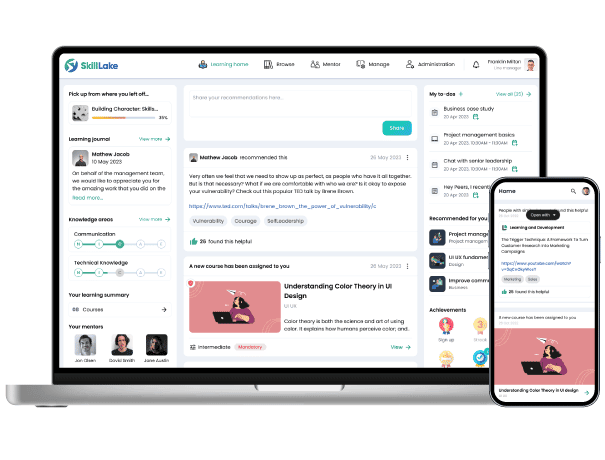
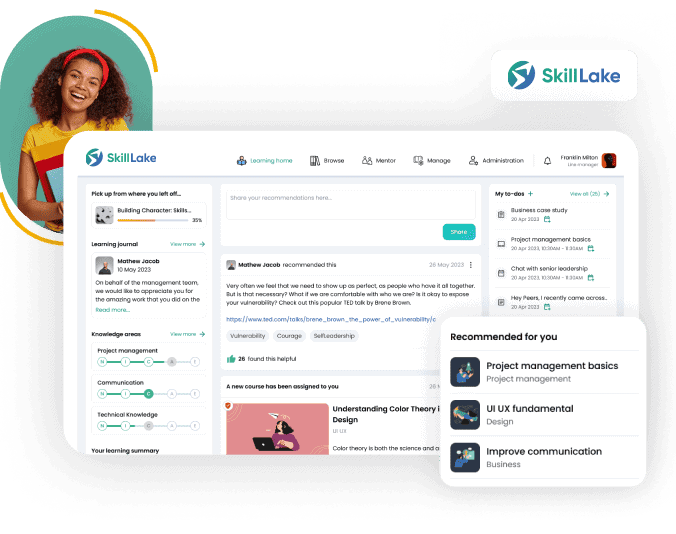
AI ML Course recommendation 1
Skill Lake Dashboard: Learning Management Platform

4. Offer Continuous Upskilling Opportunities

Provide upskilling and reskilling opportunities to become competent in emerging trends and technologies.

5. Foster Learning Culture

Encourage employees to embrace continuous learning and skill development for their professional growth.

The Role Of Learning Management System(LMS) In Bridging Skill Gap 

Learning Management Systems (LMS) are software systems that develop, share, and manage educational and training content. With the support of these platforms, skill development has gone from being a fixed, one-time event to a changing, ongoing process. An example of a perfect learning management system is the Skill Lake platform.

The Features and Benefits an Ideal LMS Offers:

1. Personalized Learning Opportunities

It can be tailored to people’s needs, jobs, and skill levels, increasing output, engagement, and job satisfaction. 

2. Flexibility and Convenience

Thanks to the learning materials, which are easily accessible anytime. It helps employees to upgrade their skills without interfering with their job or personal lives. 

3. Actionable Insights from Analytics

LMS analytics offer helpful information to pinpoint skill gaps and give learners individualized feedback, thereby gauging the success of training programs.

4. Seamless Integration 

Integrating smoothly with several platforms enables comprehensive employee administration and tailor-made planning.

5. Cost-effective

An LMS helps to save on various traditional training-related expenses like resource fees, travel and accommodation costs, and more.

Skill Lake: The Ideal Choice For Effective Upskilling 

Skill Lake is a corporate learning and development platform that fosters an employee-centric learning culture. It goes beyond conventional training approaches and facilitates holistic learning experiences.

The platform offers a range of benefits:  

1. Drive Business Growth.

Personalized training cultivates a knowledgeable and effective team, resulting in successful problem-solving and increased ROI.

2. Promote Learning Accountability

Increase program transparency, spot skill shortages, and promote a feeling of accountability among staff. Utilize interactive modes to deliver complex content for better learning and improved knowledge retention rate. 

3. Provide Flexible Learning Opportunities

Offer learning flexibility, such as synchronous, asynchronous, or mixed learning, depending on the nature of the course and the trainer’s availability. 

4. Knowledge Repository For Easy Reference 

The user can create a searchable course library and standardize the learning materials for quick access and easy reference, allowing employees to attain knowledge from anywhere possible. 

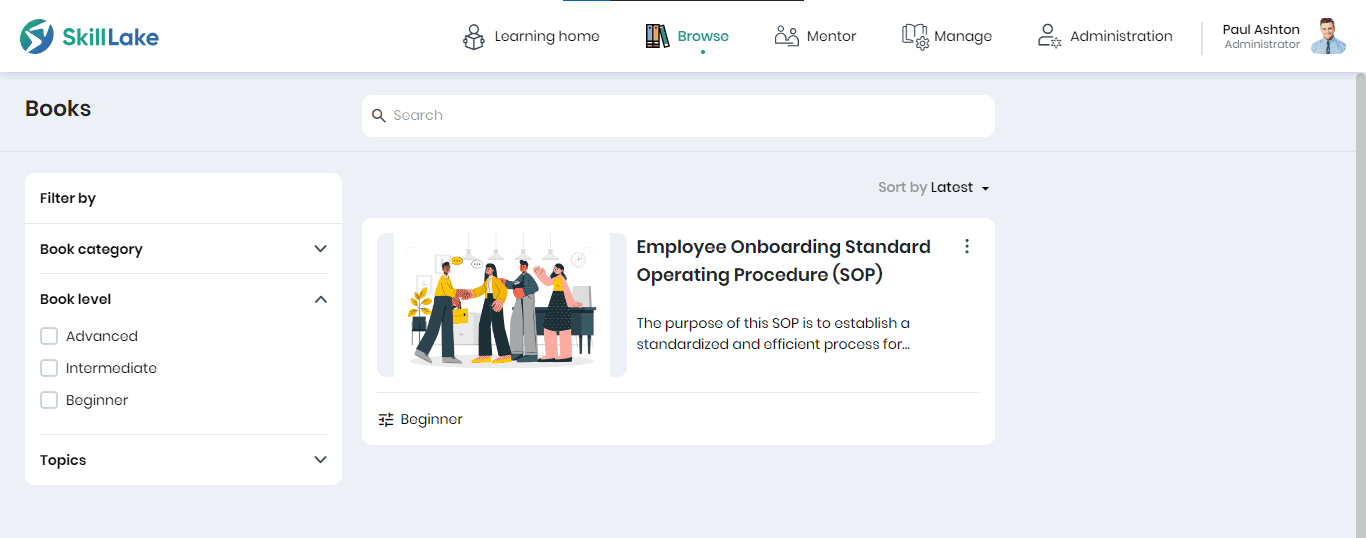
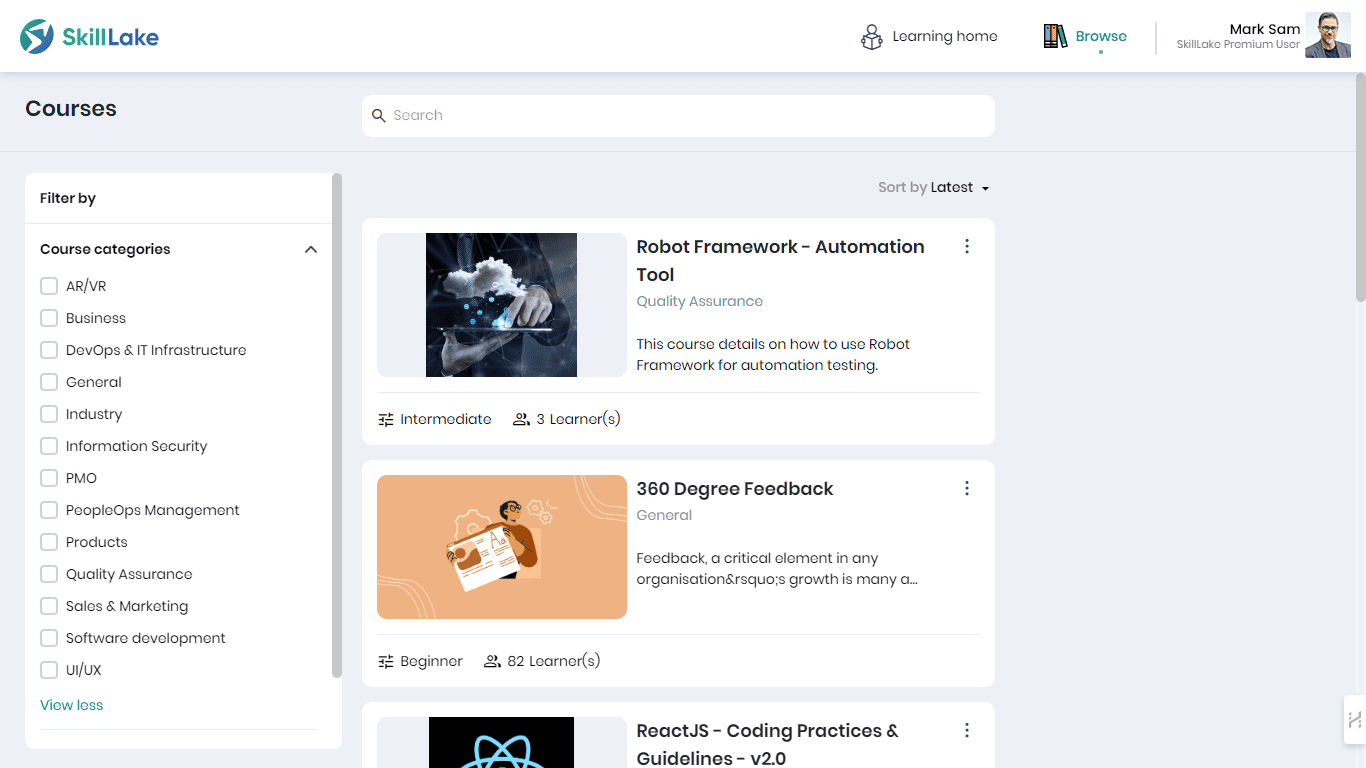
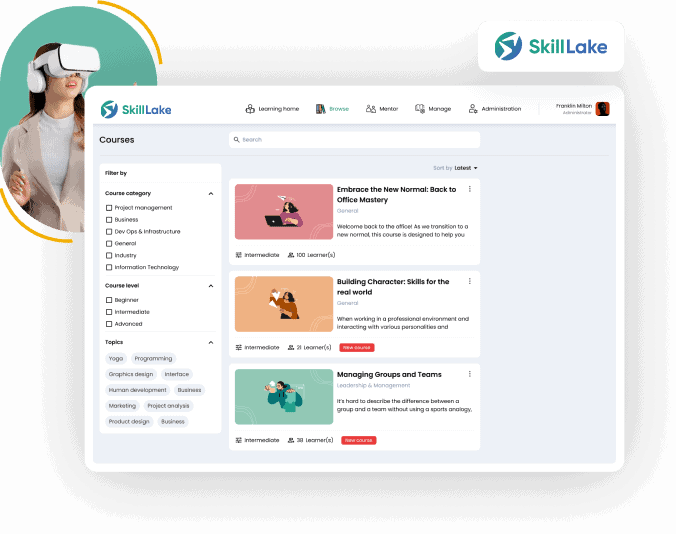
AR VR Course 1
Skill Lake’s Course Library

5. Motivate employees To Do Better

Allows mentors to utilize gamified badges and certificates to encourage employees to learn more and enable a skilled workforce with consistent and successful training. 

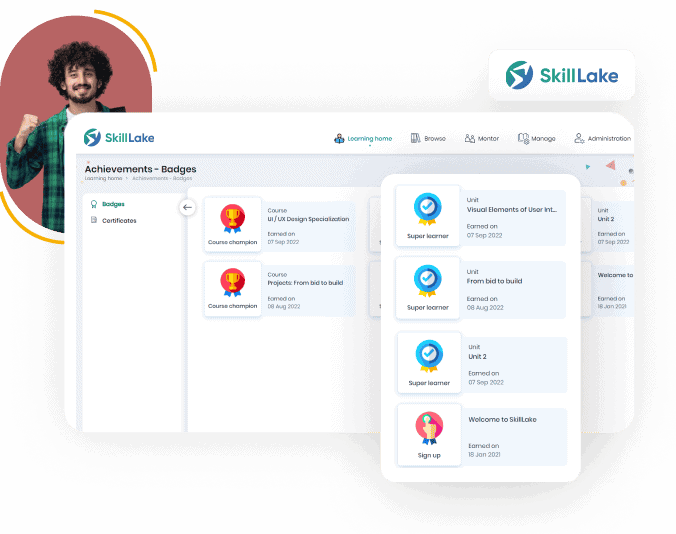
Gamification 1
Skill Lake’s Gamified Learning

Final Thoughts: 

Bridging the skills gap is crucial to achieving corporate success. Organizations looking to solve the skills gap can use Skill Lake, the comprehensive corporate learning and development platform. The platform facilitates continuous learning and growth, actionable insights, and a collaborative learning environment. This will help to accelerate company growth, improve employee retention, and maintain competitiveness in the ever-changing business environment.
Would you like to explore the possibilities of Skill Lake in bridging the employee skill gap? Connect with our experts today or request a free demo!

Ashmitha Chatterjee

Ashmitha is a learning and development enthusiast who shares her insights on e-learning. She loves to create engaging and informative content and is dedicated to helping people learn and grow through her deep expertise in the field.

Other Reads from Skill Lake

  • Top 10 Best LMS Software Systems for Modern Workforces

    Top 10 Best LMS Software Systems for Modern Workforces

    Scaling a business in 2026 requires scaling its workforce’s knowledge and performance readiness. Workplace dynamics have shifted and traditional employee training software doesn’t cut it anymore. Today’s market demands an AI-powered LMS that automates personalized learning journeys and delivers measurable ROI. In this LMS software comparison guide, we analyze the top 10 platforms designed to

    Read More
  • Top LMS Training Platforms for 2026: 10 Best Solutions for Corporate Learning

    Top LMS Training Platforms for 2026: 10 Best Solutions for Corporate Learning

    Legacy corporate training frameworks are failing to solve contemporary skill gaps. To build an agile, future-ready workforce, organizations need a modern corporate training LMS that drives active capability mastery. This post evaluates the top LMS training platforms for 2026 currently delivering measurable operational ROI. Top 10 LMS Training Platforms for 2026 Note: Pricing and features

    Read More

    Stay up to date on the latest in HR and L&D


    Highlights of Skill Lake

    • AI/ML Powered Course Recommendations
    • Courses with AR/VR Experiences
    • Competency & Course Management
    • Multiple Learning Modes
    • Mentoring & Feedback
    • Gamification
    • Learning Bytes
    • Mobile App
    • SCORM Compliance
    REQUEST A DEMO

    Highlights of Skill Lake

    • Sell-Paced & Instructor-Led Learning
    • Tracking & Reporting
    • Mentoring
    • Gamification
    • Learner Dashboard
    • Course Library
    • Enterprise IT Ready

      [recaptcha]

      Highlights of Skill Lake

      • AI/ML Powered Course Recommendations
      • Courses with AR/VR Experiences
      • Competency & Course Management
      • Multiple Learning Modes
      • Mentoring & Feedback
      • Gamification
      • Learning Bytes
      • Mobile App
      • SCORM Compliance
      • Multi-Cloud Hosting

        Watch Skill Lake in Action!

        REQUEST A DEMO

        How to Engage Gen Z in the Workplace

        The business world is amid considerable change, with a new generation of talent emerging rapidly. Generation Z members, born between the mid-1990s and early 2010s, are now stepping into the workforce, bringing innovative ideas and a renewed vision of success. To stay ahead in the evolving professional landscape, companies must adeptly attract, connect with, and retain individuals from this generation. This necessitates a deep understanding of the circumstances and the environment that shaped Gen Z’s values, desires, and career goals.

        We’ll explore the unique qualities of Generation Z and outline ways companies can effectively resonate with and attract this new wave of young professionals.

        Understanding Gen Z: Who are they?

        Generation Z (Gen Z) is the demographic cohort after Millennials. While there isn’t a universally agreed-upon range of birth years for Gen Z, researchers typically define it as individuals born from the mid-1990s to the early 2010s. 

        Understanding preferences and motivations is crucial when attempting to engage any group.

        •      Gallup found that 87% of millennials rate development opportunities as important to them in a job.
        •      According to a study by Dell Technologies, 80% of Gen Z employees believe that technology and automation will enhance their job performance and productivity.
        •      Gen Z prefers quick feedback rather than waiting for a once-a-year or half-yearly appraisal.
        •      83% of Gen Z job seekers say they prioritize the company’s diversity, equity, and inclusion stance.
        •      92% of surveyed Gen Zers seek alignment in personal values and purpose with the company’s.

        Gen Zers have grown up in a world dominated by the internet and digital technology. Most have never known a time without smartphones, social media, and instant access to information, making them the first true digital natives. Many Gen Z’s value independence and prefer to carve out their paths. They can access many online resources, allowing them to autonomously learn and develop new skills. This generation is one of the most ethnically diverse and inclusive, and they expect the same diversity and inclusion in the workplace and their daily lives. Understanding and addressing these characteristics is crucial for workplaces looking to attract and retain Gen Z talent. Companies that can offer a diverse and inclusive environment, opportunities for learning and development, and a strong alignment with values and purpose will likely be more appealing to Generation Z employees.

        What Does Generation Z Expect at Work?

        Companies must demonstrate a precise alignment between their organizational values and the opportunities they offer to attract Gen Z. This generation seeks meaningful work and values companies that are socially responsible and committed to positively impacting the world. Transparent communication, flexible working conditions, and opportunities for professional growth are also critical for appealing to Gen Z talents.

        Generation Z has a distinct set of values and expectations regarding work. They are inclined toward technology, value diversity, and inclusivity, and desire meaningful work. To cultivate a Gen Z-friendly company culture, organizations might consider emphasizing the following three themes:

        Technology

        For Generation Z, technology isn’t merely a tool; it’s integral to their existence. Born in the crux of the digital age, they have never experienced a world devoid of the internet, smartphones, or on-demand streaming services. This deep integration of technology impacts their expectations in the workplace significantly, with a staggering 91% claiming that the technological prowess of a prospective employer would influence their job selection. For them, modern, efficient, and advanced technology isn’t a luxury—it’s a standard requirement.

        Diversity and Inclusion

        Generation Z stands as the most ethnically and racially diverse generation. For them, diversity and inclusion aren’t about isolated initiatives or token gestures but about comprehensive representation at every organizational level. They aspire to see the rich tapestry of their generation mirrored in the workplace and expect inclusive values to be deeply ingrained within organizational culture and practices.

         A Desire for Openness and Clarity

        Growing up in an age of information abundance, Gen Z has developed a profound need for transparency. They desire clear insight into organizational decisions, particularly those impacting their roles, remuneration, and advancement opportunities. This generation isn’t just looking for personal growth avenues; they are keen to understand the ethos, values, and motivations driving the organizations they are part of. They seek open, value-driven employers and are willing to provide clear insights into organizational dynamics, objectives, and decisions.

        How do We Engage Gen Z Effectively in the Workplace?

        A concerning 54% of Generation Z and younger Millennials report feeling disengaged at work. This lack of engagement is not a byproduct of restlessness or a lack of focus often associated with early career stages; instead, it underscores this generation’s clear and defined expectations from their employers. They remain uninvolved and detached if their needs and desires still need to be addressed. 

        Once on board, keeping Gen Z engaged requires creating a supportive and inclusive environment where they feel valued and heard. Regular feedback, acknowledgment, and opportunities for learning and development are crucial. Companies should also foster collaboration and innovation, allowing Gen Z employees to contribute ideas and shape the organization’s future.

        Considering Gen Z’s distinctive experiences and expectations, how can organizations revamp their engagement strategies to resonate better with this increasingly influential segment of the workforce?

        1. Upskilling or Skill-based Training

        Generation Z is ambitious, but many are more interested in broadening their talents than climbing the corporate ladder. In addition, some Gen Zers who began working during the epidemic may have yet to acquire the soft skills typically linked to professional success, such as networking, and social endurance, as they may not have worked offsite.

         76% of Gen Zers thinking about changing jobs say they want more opportunities to acquire and practice new skills, the same proportion as those who wish to get more pay. They desire to develop the skills that will enable them to advance their professions in various ways since they have an entrepreneurial mindset. 

        When considering these data, it is well-understood that personalized options for learning and growth are effective ways to keep Gen Z engaged and interested in the workplace. 

        LP
        Skill Lake’s Personalized Learning Path

        2. Role of Feedback

        Generation Z seeks affirmation that their work is impactful and their contributions are acknowledged. This presents a golden opportunity for organizations to harness Gen Z’s inherent curiosity and drive, facilitating their personal and professional development. They value straightforward, constructive feedback, preferring clear, actionable insights to guide their improvement. By adopting transparent and inclusive approaches, organizations can meet Gen Z’s evolving needs and support them in realizing their full potential.

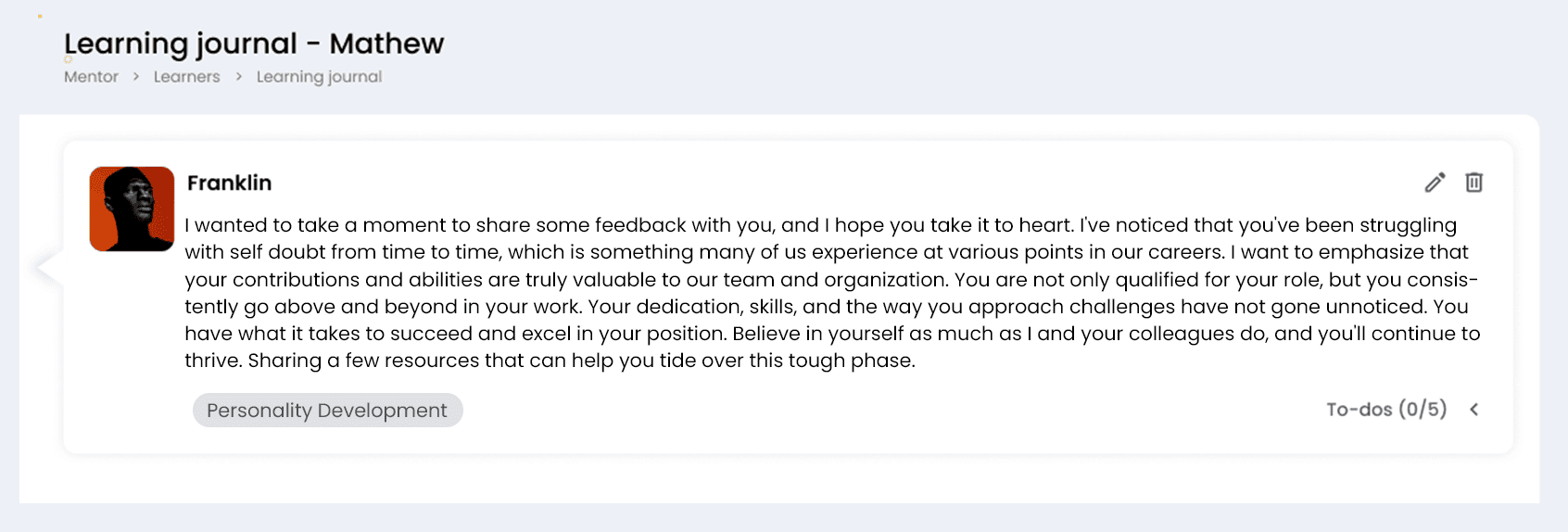
        Learning Journal 1
        Skill Lake’s Feedback System

        3. Fostering Meaningful Connections

        Most Gen Zers have inaugurated their professional journeys in remote environments. Hence, their keenness for human connection through their workplaces is understandable. Human Resources can play a pivotal role in facilitating profound connections by aligning individuals with shared goals, interests, and passions. Ensuring that Gen Z feels integrally connected to both the organization and their peers necessitates meticulous planning and a deliberate approach. Implementing appropriate strategies can significantly enhance the engagement and cohesion of a multigenerational workforce, addressing Generation Z’s specific needs and aspirations while fostering a harmonious and inclusive organizational culture.

        Strategies for Engaging Gen Z in Learning and Mentoring Programs

        Engaging Gen Z in learning and mentoring programs requires a thoughtful and tailored approach considering their unique characteristics, preferences, and expectations. 

        Here are strategies that organizations can implement to engage Gen Z in learning and mentoring effectively:

        1. Digital-first Learning Platforms

        Gen Z is the first generation to grow up in a digital world. Organizations can provide user-friendly, mobile-responsive, and interactive digital learning platforms to keep them engaged.

        2. Personalized Learning Paths

        Offer personalized learning experiences tailored to individual Gen Z learners’ needs, interests, and skill levels. This helps them feel that their learning is relevant and customized.

        3. Peer-to-Peer Learning

        Facilitate peer-to-peer learning opportunities. Gen Z often prefers learning from their peers. Encourage knowledge sharing through forums, chat groups, or virtual communities where they can collaborate and seek help from colleagues.

        4. Mentorship Programs

        Establish formal mentorship programs that pair Gen Z employees with experienced mentors. These mentorships can provide valuable guidance and insights, helping Gen Z employees navigate their careers and develop professionally.

        5. Reverse Mentoring

        Consider reverse mentoring, where Gen Z employees mentor older colleagues on digital trends, emerging technologies, and contemporary communication methods. This empowers Gen Z and promotes a culture of mutual learning.

        6. Bite-sized Learning

        Gen Z has a shorter attention span. Break down learning content into bite-sized, digestible pieces. Microlearning modules or short video tutorials will be more effective for them than lengthy lectures or training

        How to implement learning strategies efficiently?

        For the efficient execution of these learning strategies for Gen Z, it’s crucial to have a robust online training platform. An AI-integrated Learning Management System (LMS) is foundational in promoting a continuous learning and growth culture. It will ensure embedding crucial elements like accountability, cooperation, and customization to enhance the learning experience.

        Conclusion

        By understanding Generation Z’s unique perspectives and values, companies can build a more inclusive and appealing workplace, fostering a culture that resonates with this new generation of workers. Organizations can attract and engage Gen Z by aligning values, open communication, and continuous learning opportunities, harnessing their fresh perspectives and innovative ideas to drive success in the evolving business landscape.

        Sachin Krishna

        Sachin is a passionate advocate of e-learning with a profound knowledge of the field. He regularly writes compelling content that captivates readers and works to spread awareness of learning solutions.

        Other Reads from Skill Lake

        • Top 10 Best LMS Software Systems for Modern Workforces

          Top 10 Best LMS Software Systems for Modern Workforces

          Scaling a business in 2026 requires scaling its workforce’s knowledge and performance readiness. Workplace dynamics have shifted and traditional employee training software doesn’t cut it anymore. Today’s market demands an AI-powered LMS that automates personalized learning journeys and delivers measurable ROI. In this LMS software comparison guide, we analyze the top 10 platforms designed to

          Read More
        • Top LMS Training Platforms for 2026: 10 Best Solutions for Corporate Learning

          Top LMS Training Platforms for 2026: 10 Best Solutions for Corporate Learning

          Legacy corporate training frameworks are failing to solve contemporary skill gaps. To build an agile, future-ready workforce, organizations need a modern corporate training LMS that drives active capability mastery. This post evaluates the top LMS training platforms for 2026 currently delivering measurable operational ROI. Top 10 LMS Training Platforms for 2026 Note: Pricing and features

          Read More
        Managing a Multigenerational Workforce

        Today’s workforce includes people from five generations, resulting in many opportunities and obstacles for managers.

        According to a new LinkedIn research, 89% of talent experts believe a company’s performance relates to its multigenerational workforce. Baby boomers make up 15% of the workforce in the modern world, while Gen Xers make up 33%. With 40%, millennials have the most significant percentage, followed by Gen Z with 10%. Since these five distinct generations bring unique perspectives, values, and life experiences to the table, it’s essential to grasp the essence of each generation to foster learning, harmony and productivity within the workplace.

        In this blog, we will discuss:

        •      Types of Workforce Generations
        •      Challenges in multigenerational workforce learning
        •      Catering to the learning needs of a multigenerational workforce


        Types of Workforce Generations

        Generation X (born between the early 1960s and the early 1980s)

        Generation X, born between the 1960s and 1980s, are characterized by their self-reliance, capacity to adapt, and skepticism. 

        Millennials (born from the early 1980s to the mid-’90s)

        Millennials, born between the 1980s and 1990s, are part of the digital revolution and value purpose-driven work, diversity, and work-life integration. 

        Generation Z (born from the mid-’90s to the early 2000s)

        Gen Z was born in the early 2000s and are recognized for their adeptness with technology, entrepreneurial drive, and yearning for independence.


        Managing a Multigenerational Workforce: The  Importance of Learning and Skill Training

        When the workforce is multigenerational, recognizing and addressing the unique preferences, aspirations, and learning needs of each generation is crucial. 

        A 2021 Gallup survey for Amazon found that skills training is one of the top benefits that younger workers seek in a new job. In that survey, 66% of workers between 18 and 24 regarded the opportunity to acquire new skills as the third-most crucial benefit when assessing new job options.

        Failing to address employees’ learning needs can adversely affect organizations. Companies may only benefit from potential financial gains with comprehensive training programs, as highlighted by the Association for Talent Development (ATD), which reported a 218% higher income per employee for companies with robust training initiatives.

        The study also emphasized the importance of paying more attention to providing learning opportunities to retain engaged employees. 78% of employees are willing to learn during working hours, with 59% even open to dedicating personal time for skill enhancement. The fact that 76% of employees consider learning during working hours crucial for personal growth underscores the value of integrating training opportunities into the workday.

         Moreover, neglecting employee development can lead to higher turnover rates and hinder cultivating an innovative workplace culture. It’s crucial to recognize that investing in learning and skill development isn’t just beneficial; it’s essential for employee growth and satisfaction.

        Challenges of Multigenerational Workforce Learning

        As discussed in the previous section, we can see the different phases and prominence in which today’s workforce was born and grew up. Since the workforce spans different generations, it poses unique challenges to the organization regarding meeting their learning needs. These encompass distinct career expectations, diverse learning styles, technology disparities, communication obstacles, and personal preferences. Strategic solutions are essential to foster inclusive learning environments that empower employees of all ages to thrive in their careers.

        Different Expectations

        Each generation has distinct expectations regarding career growth, training, and development opportunities. 

        According to a recent survey, Skill development is a top priority for 83% of employees, and 88% have already taken steps to enhance what they can deliver at work. These numbers leap higher for Gen Z and Millennial employees, 74% of whom cite a lack of career mobility and skills development options. 

        Different Learning Styles

        Generations exhibit varying preferences for learning styles, such as classroom training, e-learning, mentorship, or self-directed learning. Organizations need to design learning programs that cater to the diverse tastes of traditionalists who may prefer classroom settings, Gen Xers who appreciate technology-enhanced learning, Millennials who favor collaborative and interactive approaches, and Gen Zers who thrive in digital environments.

        Technology Divide

        Generational differences in technology adoption can lead to a digital divide within the workforce. Bridging the technology gap between generations, Gen Xers are digital proficient but cautious, Millennials are tech-savvy, and Gen Zers are native digital users.

        Communication Barriers

        Differences in communication styles and preferences among generations can hinder effective learning and knowledge sharing.  Acknowledging and embracing the differences in communication styles and preferences among generations is crucial for fostering effective learning and knowledge sharing in today’s diverse workforce. By promoting understanding and adaptability, organizations can harness the strengths of each generation and create a more collaborative and productive work environment.

        Training Resource Allocation

        Allocating resources for training and development initiatives can be challenging when catering to the varying needs of different generations. Organizations must determine how to distribute training budgets effectively, considering the differing requirements for traditional training, coaching, mentoring, e-learning, and other forms of development.

        Traditional Education Online Learning
        High staffing and facility costs. Reduced staffing needs.
        Expenses on physical materials and maintenance. Elimination of facility costs.
        Transportation-related expenditures. Digital materials for cost-efficiency.
        Limited scalability. Enhanced accessibility and scalability.

        Overcome the learning challenges of a multigenerational workforce: Benefits of Upskilling for Employees

        Organizations can overcome the learning challenges of a multigenerational workforce by planning strategically. It is important to consider the diverse preferences of each generation when developing a training plan.

        Customize Learning Paths

        Acknowledging the diversity in career aspirations and development requirements among various generations is essential.

        Customized Learning Paths

        •      Recognize and respect the diversity in career aspirations and development needs across generations.
        •      Develop individualized learning paths for each employee.
        •      Curate tailored sets of courses and activities.
        •      Focus on specific knowledge areas and competencies relevant to their roles and learning styles.
        •      Ensure that employees receive training aligned with their professional growth needs.
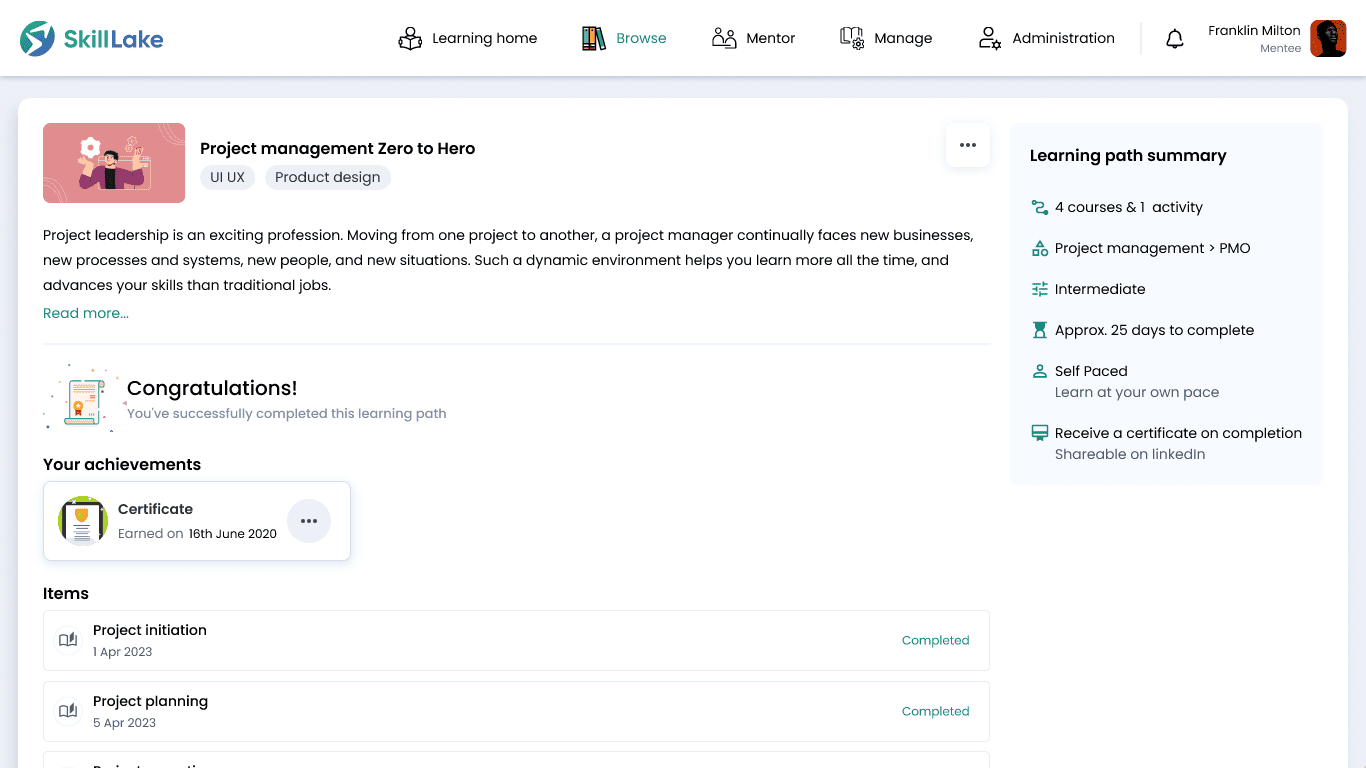
        learning path skill lake
        Creating Learning Paths on Skill Lake

        Personalized Career Development Strategies

        •      Collaborate closely with employees to understand their career aspirations and ambitions.
        •      Align their individual goals with the organization’s objectives.
        •      Establish a performance management system for continuous evaluation.
        •      Assess employees’ knowledge areas and competencies to identify strengths and areas for improvement.
        •      Use data to inform and adjust personalized career development strategies.
        •      Enable employees to excel and contribute effectively to the company’s success.

        Promote Flexible Learning Formats

        Generational preferences for learning formats can vary significantly, so developing a range of flexible learning options is essential. Consider the following:

        •        Synchronous and Asynchronous Learning

         Offer synchronous (real-time) and asynchronous (self-paced) learning opportunities. Synchronous learning can cater to those who prefer immediate interaction, while asynchronous learning allows flexibility for self-paced progress.

        •        Flipped Learning

        Implement a flipped learning approach where employees review materials independently (e.g., videos or readings) before engaging in collaborative discussions or activities during live sessions. This approach can work well for all generations, as it emphasizes independent learning and collaboration.

        •        Self-paced Learning

        This approach may appeal to Generation X and Millennials, who value autonomy and control over their learning experiences. They often prefer to progress at their own pace.

        •        Instructor-led Training

        Baby Boomers and some members of Generation X may prefer traditional instructor-led training, as they may be more accustomed to classroom-style learning experiences and value expert guidance.

        •        Microlearning

        Microlearning can be effective for Millennials and Generation Z, who are accustomed to consuming information in shorter, more digestible formats, often through digital media.

        •        Social and Collaborative Learning

        This approach can appeal to all generations, but it may be especially beneficial for Baby Boomers and Generation X, who appreciate the value of peer interaction and group discussions.

        •        Interactive Workshops

        Interactive workshops can be popular among Generation X and Millennials, who value hands-on and experiential learning. Baby Boomers may also benefit from interactive workshops, depending on their preferences.

        Choose a Learning Platform

        It is important to adopt a versatile learning platform that can cater to the diverse learning preferences of all generations. 

        •        Personalized Learning Paths

         Choose a platform that allows employees to customize their learning paths based on their preferences and learning styles.

        •        User-Friendly Interface

         Ensure the platform has an intuitive and easy-to-navigate interface, accommodating individuals with varying levels of tech proficiency.

        •        Mobile Accessibility

         Opt for a platform with a user-friendly mobile app that supports various devices, enabling employees to access learning materials on the go.

        eLearning Mobile App
        The Skill Lake Mobile App
        •        Diverse Content Formats

         Select a platform that offers a variety of content formats, including bite-sized modules, long-form resources, videos, and podcasts, to cater to different learning preferences.

        •        Seamless Software Integration

         Integrate the chosen learning platform seamlessly with existing software and systems in the organization, facilitating efficient tracking of employee progress and skill development.

        Promote Mentorship and Reverse Mentoring

        Introduce mentorship initiatives designed to match seasoned staff with younger colleagues, fostering the exchange of knowledge and nurturing professional advancement. Establish structured mentorship programs where older employees can guide younger ones in career development and workplace skills. Promote reverse mentoring, where younger employees mentor more senior colleagues in areas such as technology and digital skills.

        Embrace Technology

        Understand the technology gap among generations and adopt measures to bridge the gap. Provide technology training programs for employees who need to become more familiar with digital tools. To encourage continued skill development, offer advanced digital resources and tools for tech-savvy generations.

        Conclusion

        Navigating a multigenerational workforce requires acknowledging and accommodating diverse learning preferences. Each generation brings unique learning styles, necessitating customized training and development programs. Identifying essential competencies and knowledge areas is pivotal for crafting personalized learning paths to meet the multigenerational workforce’s diverse learning needs effectively.

        Aarathy Jayakrishnan

        Aarathy is an e-learning professional and enthusiast with a keen understanding of learning and development concepts. She writes insightful content, unraveling the possibilities that e-learning holds, and strives to make education open for all.

        Other Reads from Skill Lake

        • Top 10 Best LMS Software Systems for Modern Workforces

          Top 10 Best LMS Software Systems for Modern Workforces

          Scaling a business in 2026 requires scaling its workforce’s knowledge and performance readiness. Workplace dynamics have shifted and traditional employee training software doesn’t cut it anymore. Today’s market demands an AI-powered LMS that automates personalized learning journeys and delivers measurable ROI. In this LMS software comparison guide, we analyze the top 10 platforms designed to

          Read More
        • Top LMS Training Platforms for 2026: 10 Best Solutions for Corporate Learning

          Top LMS Training Platforms for 2026: 10 Best Solutions for Corporate Learning

          Legacy corporate training frameworks are failing to solve contemporary skill gaps. To build an agile, future-ready workforce, organizations need a modern corporate training LMS that drives active capability mastery. This post evaluates the top LMS training platforms for 2026 currently delivering measurable operational ROI. Top 10 LMS Training Platforms for 2026 Note: Pricing and features

          Read More
        employee development opportunities

        The Chief Human Resource Officer (CHRO) and Senior HR managers are crucial to an organization’s growth. Earlier, the HR department’s primary focus was recruiting, onboarding, and supporting employees. Now, the responsibility of these leaders has significantly changed, and they carry the responsibility of influencing an organization’s culture, encouraging innovation, and boosting employee engagement. Most organizations consider feedback as the key to increase employee performance and engagement. However, feedback alone cannot satisfy a workforce’s need for growth and progress. 

        According to a recent Gallup poll (1), only 26% of employees believe feedback helps them considerably improve their work performance. This study underscores that, while feedback remains a cornerstone of employee development, more is needed to ensure optimal performance and growth. Undoubtedly, developing a healthy and effective team necessitates a more all-encompassing strategy that goes far beyond feedback.


        Feedback: What is it, and why does it matter?

        Feedback provides valuable insights into one’s strengths and areas that need improvement. Constructive feedback offers specific suggestions for growth, allowing individuals to enhance their skills and performance. This guides individuals in refining their tasks and responsibilities. And, improves their performance and efficiency, contributing to personal success and the organization’s growth. However, more than merely providing feedback is essential for personal development, relationship-building, and achieving individual and collective goals. 


        What is good feedback?

        Good feedback is constructive and realistic comments from people or teams to promote development, improvement, and successful outcomes. It provides explicit, forward-looking, understandable, and situation-appropriate observations, recommendations, or insights. It aims to assist employees in understanding their strengths and potential development areas to accomplish their goals. It is polite and well-structured.

        3
        Skill Lake’s Feedback System

        Checklist for Good Feedback:

        •       Future-focused

        Suggests improvements for future actions rather than dwelling on past mistakes.

        •       Specific and Clear

        Good feedback is clear and provides concrete examples that help the employees understand improvement areas.

        •      Actionable and Applicable

        It should be actionable,  allowing employees to implement necessary steps or directions for achieving better results.

        •      Ideas or Thought-starters

        Feedback that offers ideas or thought-starters helps individuals consider alternative approaches or perspectives they might not have initially thought of.

        •      Intended to Improve

        Good feedback is meant to foster improvement rather than criticism. It’s framed in a way that encourages growth and progress.


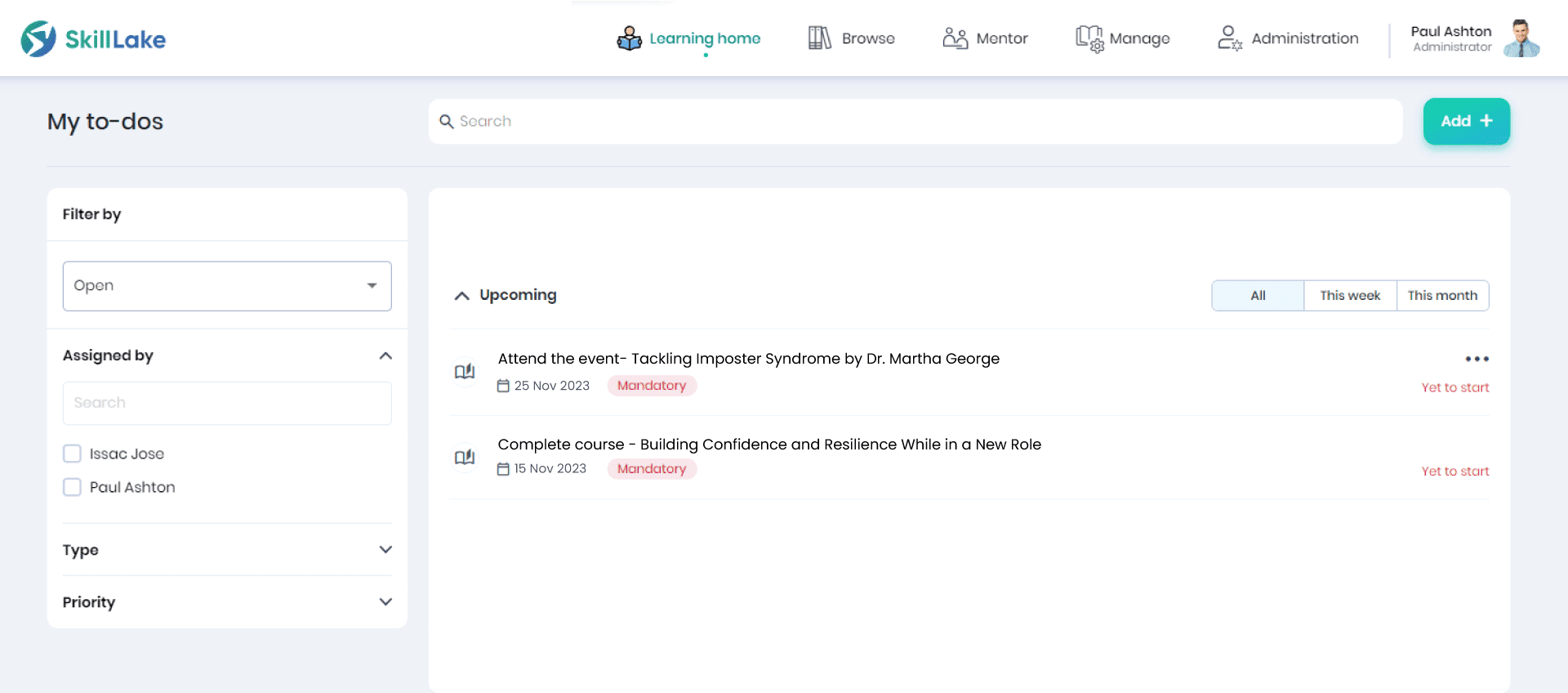
        My todos


        Is feedback by itself adequate?

        Feedback has its limitations, even though it is a crucial part of performance improvement and progress. When considered alone, feedback sheds light on past performance and problem areas.  Organizations should consider feedback only as the primary tool for direction and evaluation. However, its efficacy can be increased when combined with other developmental techniques. Understanding the challenges and drawbacks of feedback is crucial to move beyond relying entirely on feedback. By acknowledging these issues, organizations can prepare for a more comprehensive and effective strategy to promote employee development.

        The common challenges in feedback:

        •       Limited context

        Feedback frequently concentrates on specific tasks or projects. It might not offer a thorough knowledge of a worker’s long-term professional aspirations, personal development objectives, or general skill development requirements.

        •      Reactive approach

        Feedback frequently discusses performance. This reactive nature might only partially support employees’ future success or proactive skill-building.

        •      Emotional impact

        For employees, receiving feedback, particularly critical criticism, can be emotionally draining. This emotional impact may reduce their motivation and involvement if no other support exists.

        •      One-sided communication

        Managers or supervisors frequently give traditional feedback. A more well-rounded development strategy allows employees to share their goals, ask for advice, and work together for professional growth.

        •      Lack of comprehensive skill-building

        While feedback identifies areas that need work,  only at times does it provide a clear road map for skill development. Finding further mentorship, training, or educational possibilities is also essential.


        How to provide effective feedback?

        If provided appropriately, feedback can strengthen ties between workers and managers, increase trust and communication, and give opportunities for employees to grow.  To ensure feedback effectiveness, we need to communicate well and consider how helpful feedback is in professional development.

        1. Impactful delivery

        As discussed earlier, there are numerous challenges associated with feedback. A major one is the willingness of the employee to accept it. To elicit a reactive response, you must get beyond obstacles like mistrust, uncertainty, and doubt. One of the most significant ways to reduce it is by developing trust. The way the feedback is communicated and the relationship already built is crucial in this aspect. The objective should be to make the criticism more constructive than negative. 

        •      One effective approach is to frame feedback through suggestions or inquiries consistently.
        •      Another strategy involves maintaining a balance between providing negative feedback and positive feedback.
        •      When it’s necessary to emphasize adverse aspects over positive ones, always maintain a balanced and neutral tone.

        2. Focus on learning and development.

        Effective feedback is a valuable tool that addresses current issues or areas of improvement. It should help individuals or teams enhance their performance in the future.  When recipients understand where they fell short or what they should do, they become better equipped to make meaningful changes. 

        •      Effective feedback includes actionable steps, resources, or suggestions for future development, enabling individuals to acquire new skills and knowledge for future benefit.
        •      The goal of effective feedback extends beyond correcting current mistakes; it fosters ongoing growth and development. This approach cultivates a continuous learning and development culture.


        How does feedback facilitate growth and a learning culture?

        Feedback facilitate growth and learning by effectively incorporating upskilling and reskilling opportunities. It should highlight specific skill gaps or areas where an individual or team needs improvement.

        The feedback should align personal or team goals with skill development needs. The HR team should include training opportunities, resources, or access to Learning Management Platforms to help employees bridge these skill gaps.

        The feedback culture that promotes upskilling and reskilling opportunities creates a supportive learning environment, resulting in a positive relationship with employees and enhanced productivity.


        Tips to go above and beyond feedback

        To provide more than just feedback and offer valuable support and guidance, consider the following approaches:

        •      Go beyond feedback by providing ongoing guidance and mentorship.
        •      Help employees navigate challenges and make progress in their personal or professional life. 
        •      Rather than identifying areas for improvement, work together to define specific, achievable goals and a plan for reaching them. 
        •      Offer training opportunities or recommend resources such as Learning Management Platforms, books, courses, or workshops.
        •      Maintain open lines of communication through regular communication. 
        •      Acknowledge and celebrate achievements and improvements. 
        •      Tailor-make approach to meet specific needs and preferences. 


        To sum it up,

        The role of CHROs and senior HR managers has significantly shifted from recruiting and onboarding to shaping organizational culture, fostering innovation, and enhancing employee engagement. Though feedback is crucial in boosting employee performance, more is needed to meet these objectives. It is important to ensure feedback is forward-focused, actionable, and aimed at improvement.

        With attention to detail and bringing in more compassion, the HR team and the managers can overcome the limitations of feedback, like limited context, a reactive approach, emotional impact, one-sided communication, and a lack of comprehensive skill building. Organizations should offer ongoing guidance, mentorship, goal-setting, training opportunities, and open communication to ensure the effectiveness of feedback and support employee development. 


        Sachin Krishna

        Sachin is a passionate advocate of e-learning with a profound knowledge of the field. He regularly writes compelling content that captivates readers and works to spread awareness of learning solutions.

        Other Reads from Skill Lake

        • Top 10 Best LMS Software Systems for Modern Workforces

          Top 10 Best LMS Software Systems for Modern Workforces

          Scaling a business in 2026 requires scaling its workforce’s knowledge and performance readiness. Workplace dynamics have shifted and traditional employee training software doesn’t cut it anymore. Today’s market demands an AI-powered LMS that automates personalized learning journeys and delivers measurable ROI. In this LMS software comparison guide, we analyze the top 10 platforms designed to

          Read More
        • Top LMS Training Platforms for 2026: 10 Best Solutions for Corporate Learning

          Top LMS Training Platforms for 2026: 10 Best Solutions for Corporate Learning

          Legacy corporate training frameworks are failing to solve contemporary skill gaps. To build an agile, future-ready workforce, organizations need a modern corporate training LMS that drives active capability mastery. This post evaluates the top LMS training platforms for 2026 currently delivering measurable operational ROI. Top 10 LMS Training Platforms for 2026 Note: Pricing and features

          Read More
        upskill and reskill employees - skill lake

        In business today, the skills gap presents an increasingly formidable challenge. How can businesses bridge this gap and prepare for the future? This article explores upskilling and reskilling strategies, the role of digitization, and the importance of continuous training and labor retention. 


        The Skills Gap: A Growing Concern

        In today’s business, a pressing challenge that looms large is the skills gap. This term signifies the disparity between the skills employers require and those that employees possess. 

        An alarming 87% of businesses [1] are currently wrestling with this issue or foresee it in the near future, highlighting the urgency of addressing the skills gap for businesses to thrive and survive.

        We attribute this to multiple factors.

        The rapid pace of digitalization, the pandemic and global macroeconomic uncertainties have led many firms to rethink their business priorities. This has created a demand for new skills and accelerated the obsolescence of existing core competencies. In many sectors, the pace of digitalization has been so rapid that firms are unable to upskill their workers fast enough to cope with the changes, leading to a widening skills gap.

        Adapting to flexible work arrangements, including hybrid models, necessitates leaders and managers to excel in emotional intelligence and interpersonal skills. Interestingly, even non-managerial employees are now expected to hone their interpersonal abilities to levels previously not required. Most employees remain unclear about the skills needed for different roles, and there is often an expectation mismatch between what employers want and what employees perceive as important. Understanding these gaps will be instrumental in creating a workforce that is prepared for the future.

        The skills gap is a dynamic issue, continually influenced by market and technology trends. Automation and digitization are reshaping the labor market. Technological advancements in Robotic Process Automation, Artificial Intelligence, and Machine Learning are transitioning tasks from human hands to machines, diminishing the demand for previously sought-after skills. Concurrently, this shift is escalating the requirement for new technical and digital competencies. Competencies once considered niche, are now deemed essential even for roles that traditionally didn’t require them.

        This shift permeates all sectors, from manufacturing to healthcare, education, and retail. Companies need to evolve or face the risk of obsolescence. Yet, many find it challenging to keep up with the rapid pace of change, leading to an ever-widening skills gap. Those that fail to address this gap risk compromising their competitive advantage and market relevance

        Senior leaders often complain that the lack of skills within their organization represents one of the top barriers to implementing strategies needed for their business to evolve. Some workers’ skills may have atrophied while they experienced unemployment during the pandemic, and getting employees back up to speed is a challenge that hiring managers will now need to address.

        So, how can businesses equip their workforce with the necessary skills for the digital landscape? How can they anticipate and prepare for future skills needs? These are questions businesses must grapple with as they seek to bridge the skills gap. In the following sections, we will explore upskilling and reskilling as effective solutions.

        As we delve into these strategies, consider your own organization.

        •      What skills are in high demand in your industry?
        •      How is your business addressing the skills gap?
        •      Are you prepared for the future?


        Upskilling and Reskilling: Effective Strategies to Bridge the Gap

        As businesses grapple with the skills gap, two approaches have emerged as effective solutions: upskilling and reskilling. While these terms are often used interchangeably, they refer to distinct approaches to workforce development.

        Upskilling refers to the process of enhancing existing skills. It’s about taking the skills that employees already have and refining them to meet the evolving demands of their current roles. For instance, a marketing professional might upskill by learning how to use new digital marketing tools or techniques.

        Reskilling, on the other hand, involves training employees in entirely new areas to prepare them for different roles within the organization. This is particularly useful when technological advancements render certain roles obsolete. For example, a manufacturing worker whose job is automated might be reskilled to manage or maintain the automation technology.

        Creating an effective upskilling or reskilling strategy requires a deep understanding of your organization’s needs and the potential future direction of your industry. Such a strategy should be tailored to the specific needs of your organization and your people. This means considering factors such as the business’s strategic goals, the existing skill sets of employees, and the resources available for training and development.


        We suggest 5 different tactics below, which can be customized to help form the core of an Upskilling or Reskilling strategy.

        •      Identify the Gap

        An effective starting point to tackle the skills gap is to quantify it. This involves conducting a comprehensive projection of the skills and competencies your organization will require to implement its strategy over the next three years or beyond. This process requires insightful conversations among senior leadership, heads of business units, and R&D teams, led by the Chief Human Resources Officer’s team or by a senior leader chosen by the CEO. Incorporating this into the strategic planning process can be beneficial. Our experience suggests that being clear and specific in defining essential skills aids in generating more actionable insights.


        •      Look Internally Before You Search Outside

        Before seeking talent externally, consider the skills that already exist within your organization. A system audit can help catalog in-house talent and compare these with the areas in demand. This information can then be used to plan internal job mobility and flexible career paths. The real gaps may often be less than originally perceived and may need less external hiring, providing a cost-effective solution to bridge the gap.

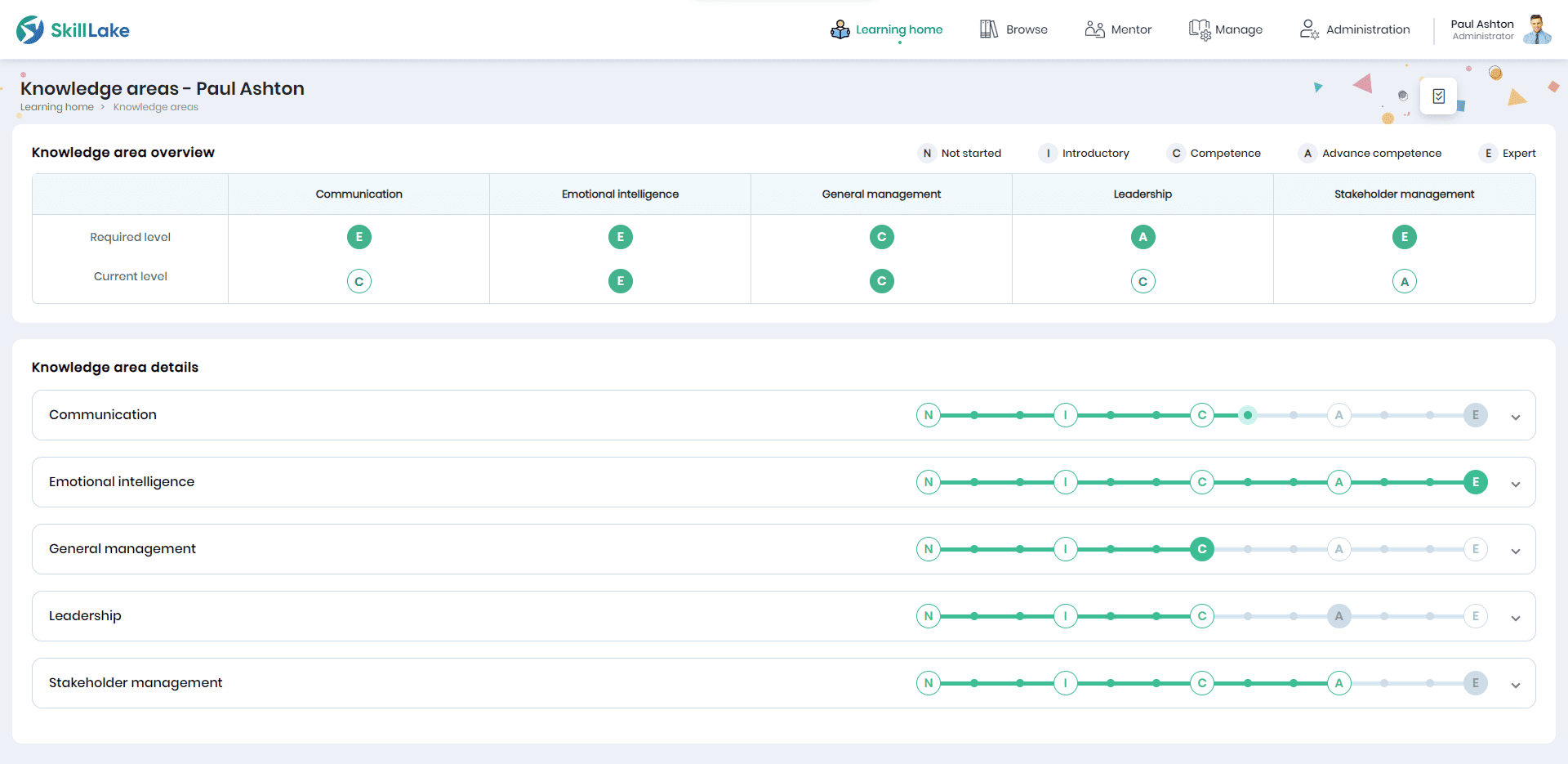
        Screenshot 2023 08 30 162335
        Skill Lake’s Knowledge Area Report


        •      Create a Learning Culture

        To address skill gaps, organizations typically launch pilot programs or focus on one unit. While these projects are important, they are too narrow to deliver the impact that modern businesses often need. The real impact often comes from learning that’s contextual, real-time, customized and actionable. This requires cultivating a learning culture across the organization. Continuous feedback, career pathing, and skills-based performance management can all help here. Connecting these to the organization’s core values acts as a catalyst for change

        Our experience shows that high-impact and agile organization-wide upskilling is often best achieved through micro-content like articles, short videos, and podcasts, rather than through traditional courses which need a high investment of time.

        1
        Skill Lake’s Snippets: Micro Content


        •      Empower Employees to Learn and Contribute

        Creating your strategy may require you to re-analyze what your employee value proposition offers in terms of learning and growth. Often you may discover that what you have is a one size fits all approach that finds a compromise between business goals on one hand, and aggregated employee needs on the other. It need not be this way. Digital technologies can introduce greater flexibility, allowing employees to select learning channels, paths, and options that best suit them. Employee-led skilling initiatives, such as cohort-based learning, in-house events, and cross-functional coaching and mentoring, can not only bolster your skilling strategy but also enhance engagement and morale. Our experience indicates that messaging centered on employability and career advancement tends to yield better results than those solely focused on learning.”

        Untitled
        Skill Lake’s Feed: Knowledge Area, Events, Snippets and more..


        •      Collaborate to Deepen the Talent Pool

        Filling some of the gaps may require a nuanced balance between reskilling and hiring. Solely focusing on hiring can be cost-inefficient and may yield particularly low returns in an unstable talent market. When it comes to highly specialized skills, multiple firms vying for the same talent pool can lead to a collective talent shortage in the short term. This can be circumvented through collaboration – joining forces with other companies to share talent, co-invest in training and talent development, or swap mentorship programs. While this requires a shift in mindset, it’s an effective strategy when specialized skills are difficult to source or cultivate internally..

        As you reflect on these strategies, consider how they might apply to your organization.

        •      What skills could be enhanced through upskilling?
        •      What new areas of expertise could be developed through reskilling?
        •      How can you tailor these strategies to meet the unique needs and goals of your business?

        In the next section, we will delve deeper into the future of work, exploring the importance of digitization, continuous training, and labor retention in bridging the skills gap.


        Adapting for the Future: Continuous Training, and Labor Retention

        As we navigate the complexities of the skills gap, it’s clear that the future of work will be shaped by several key factors: digitization, continuous training, and labor retention.

        As technology continues to evolve, businesses must adapt to stay competitive. This means not only implementing digital tools and processes but also ensuring that employees have the skills to use them effectively. Digitization presents both challenges and opportunities, and businesses that can harness its power will be better positioned to succeed in the digital age.

        Continuous learning with actionable feedback is another crucial component of the future of work. As the pace of change accelerates, the shelf-life of skills is decreasing. Both employees and organizations have to keep up.This means providing employees with opportunities to learn new skills and enhance existing ones, whether through formal training programs, on-the-job learning, or other forms of professional development. Given the short shelf life of skills immediate feedback and course corrections are critical to secure alignment across all levels.

        3
        Skill Lake’s Learning Journal – Feedback System

        Finally, labor retention is key. In a competitive job market, businesses must work hard to attract and retain top talent. This means creating a workplace where employees feel valued, challenged, and engaged. Reskilling and upskilling play a crucial role in this, as they not only equip employees with the skills they need to succeed but also show them that the business is invested in their growth and development.

        4
        Skill Lake’s Gamification – Badges and Certificates

        As we look to the future, these factors will play a crucial role in shaping the workforce and bridging the skills gap.

        •      But what does this mean for your business?
        •      How can you leverage digitization, continuous training, and labor retention to your advantage?
        •      And how can you ensure that your workforce is prepared for the challenges and opportunities that lie ahead?

        In conclusion, addressing the skills gap is a continuous journey. Through strategic upskilling and reskilling, embracing digitization, and fostering continuous learning, businesses can build a future-ready workforce. As we navigate this evolving landscape, the question remains:

        •      Is your organization prepared to bridge the skills gap and seize the opportunities of the future?


        Deepu Prakash

        Deepu's work spans the intersection of business, organizational culture and technology. He has a successful track record of scaling revenue and teams in multicultural, cross disciplinary, leadership roles across both startups and large enterprises. As an SHRM specialist, Deepu leads Fingent's organizational design, and the implementation and scaling of it's unique purpose driven culture.

        Other Reads from Skill Lake

        • Top 10 Best LMS Software Systems for Modern Workforces

          Top 10 Best LMS Software Systems for Modern Workforces

          Scaling a business in 2026 requires scaling its workforce’s knowledge and performance readiness. Workplace dynamics have shifted and traditional employee training software doesn’t cut it anymore. Today’s market demands an AI-powered LMS that automates personalized learning journeys and delivers measurable ROI. In this LMS software comparison guide, we analyze the top 10 platforms designed to

          Read More
        • Top LMS Training Platforms for 2026: 10 Best Solutions for Corporate Learning

          Top LMS Training Platforms for 2026: 10 Best Solutions for Corporate Learning

          Legacy corporate training frameworks are failing to solve contemporary skill gaps. To build an agile, future-ready workforce, organizations need a modern corporate training LMS that drives active capability mastery. This post evaluates the top LMS training platforms for 2026 currently delivering measurable operational ROI. Top 10 LMS Training Platforms for 2026 Note: Pricing and features

          Read More
        E-Learning Platform Requirements

        “An organization’s ability to learn, and translate that learning into action rapidly, is the ultimate competitive advantage.” – Jack Welch, former CEO, General Electric

        Every forward-looking organization, regardless of their size and scale, aims to build and retain a competent, future-ready workforce. With a corporate learning management system, you can train employees faster, deliver the knowledge and skills they need to perform their roles, and ultimately stay competitive and relevant in a fast-changing work world. Let’s explore the topic E-Learning Platform Requirements: LMS Requirements Checklist for Corporates.

        A corporate LMS simplifies and streamlines your organizational training management by automating routine activities and saving your team’s time and effort. However, the final outcome will depend on the corporate LMS platform you choose.

        There are more than hundreds of eLearning platforms in the market today and weighing up each one is a daunting task. To help you nail down the selection, we have prepared a list of common learning management system requirements.  

        Checklist: E-Learning Platform Requirements
        Checklist: E-Learning Platform Requirements

        Functional Requirements

        Functional requirements or features are the most important element of a corporate LMS platform. These features provide the LMS capabilities that learners, administrators and instructors need to succeed. Here is a list of LMS requirements to consider when choosing a corporate LMS.

        Content Creation and Publishing

        Before choosing a corporate LMS, you need to decide what kind of training materials you will offer to employees and whether you will create courses internally, or not. Make sure the LMS supports all your course creation, publishing, and delivery requirements. 

        Look for a corporate LMS that offers:

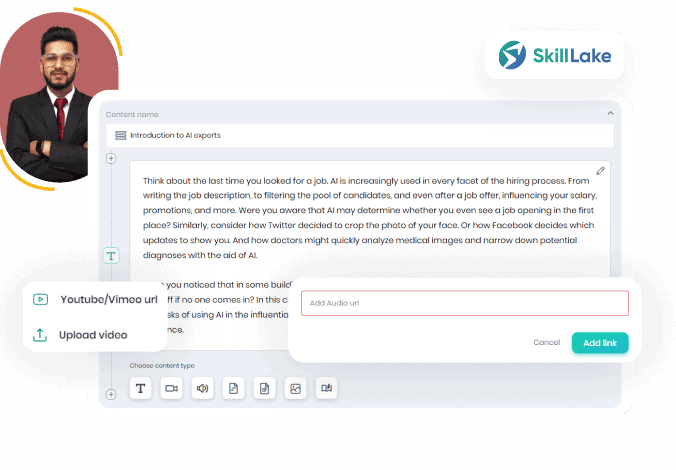
        Skill Lake's Content Authoring Tool
        Skill Lake’s Content Authoring Tool

        Course Management

        The corporate LMS should allow your L&D course administrators to:


        Skill Lake's Course Management
        Skill Lake’s Course Management

        User Management

        The eLearning platform should offer you the flexibility to define user roles and permissions based on the organizational hierarchy, create learning groups, manage learners and more. Check whether the eLearning platform allows you to perform the following functions. 

        •     Sanction user privileges for mentors (trainers) and mentees (learners) based on your organizational hierarchy
        •     Map learners (employees) to their departments and reporting managers 
        •     Set up custom roles with custom permissions
        •     Provide secure access control for users
        •     User management features fully controlled and centrally managed by your organization

        Event Management

        Your company may be offering various corporate training events for employees and sales partners. Make sure you choose an LMS platform that allows you to centrally manage all the events and registrations and also helps increase the events’ awareness, engagement and attendance.

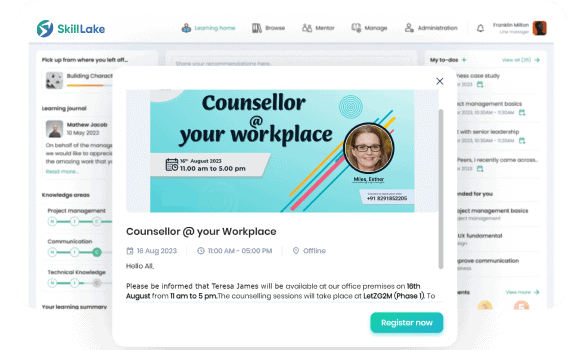
        Skill Lake's Event Preview
        Skill Lake’s Event Preview

        Multiple Learning Modes

        Traditional corporate training methods, such as in-person lectures and on-site education often eat up large chunks of employee time, eventually reducing their knowledge retention and performance. 

        By adopting a corporate LMS that supports multiple learning delivery modes, you can empower employees to lead learning on their own. Check whether the LMS facilitates these learning modes: 

        •      Instructor-led training: In this model, learners and instructors can interact and discuss the training material, either individually or in a group setting. Instructors may deliver training in a lecture or classroom format, or even virtually, using video conferencing tools. 
        •     Self-paced learning: In this model, learners progress through the training material at their own pace and on their own schedule. The content can be corporate training, technical tutorials, or any other subject that does not require the immediate intervention of an instructor. 
        •     Blended learning: Also known as hybrid learning, this approach combines online learning materials and online interaction opportunities with physical location-based classroom methods. 
        •     Microlearning: This learning strategy focuses on breaking down complex concepts and topics into bitesize training modules that are easy and quick for learners to consume. Examples include short and snappy quizzes and one-stop scrolling pages. 
        •     Synchronous learning: Synchronous learning refers to a learning event in which learner(s) and instructor(s) are in the same place, at the same time, in order for learning to take place. Live online meetings and live interactions or discussions are examples of synchronous learning. 
        •     Asynchronous learning: This approach constitutes instruction and learning that do not happen in the same place or at the same time. Examples include watching pre-recorded training lectures or demo videos.   

        Mentoring 

        The corporate LMS should allow you to map each employee to a suitable mentor who can monitor the learning progress and provide regular feedback to boost knowledge retention and learning accountability. 

        Look for a corporate LMS that enables you to:

        •     Assign Mentors or Coaches to leverage specialized knowledge or provide extra support to your learners
        •     Directly map subject matter experts to learners to facilitate personalized learning and guidance
        •     Mentors can share knowledge, provide continuous feedback through learning journals, suggest courses, and monitor the progress of their mentees regularly. 

        Tracking & Reporting

        An LMS platform that supports eLearning tracking and progress reporting will allow you to monitor how particular employees performed in training sessions and post-lesson assessments, without the hassle of paper reports and daunting spreadsheets. 

        Make sure you can do the following with the LMS you’re planning to adopt:

        •     Create customizable dashboards and progress reports displaying real-time insights on every aspect of employee learning
        •     Track course attendance, module-wise progress, course completion, and learners’ performance
        •     Connect your corporate LMS with third-party analysis tools to derive actionable insights on learning progress and employee performance    

        Skill Development & Competency Management

        The best corporate LMS equips your workforce to meet the rising business needs by allowing you to measure employees’ competencies, understand what skills they lack, and personalize your corporate training programs to upskill your team. 

        Check whether the eLearning platform assists you with these competency management tasks:

        Skill Lake's Competancy Mapping
        Skill Lake’s Competency Mapping


        Technical Requirements

        Mobile Learning

        A mobile-ready corporate LMS makes your training courses accessible to all your employees, and supports them to continue learning outside your organization’s working hours. 

        Anytime-anywhere, just-in-time mobile learning will engage employees and provide scenarios that contextualize learning to be applied in their real-world job roles. 

        Use the following questions to analyze the mobile learning features offered by a corporate LMS:

        Skill Lake's Mobile App Interface
        Skill Lake’s Mobile App

        Cloud-Hosted Solution

        A cloud-based corporate learning management system hosted on the web minimizes your deployment effort and allows you to get started immediately. 

        Cloud-hosted LMS platforms are specifically designed to comply with your company’s existing network and software architecture. They can be accessed anywhere, anytime, using any device, so you can centrally review all the information you need.     

        Choose a corporate LMS platform that can be deployed instantly on your private server or a public cloud server of your choice. 

        Integration With Other Platforms

        A corporate LMS that integrates with third-party learning content and delivery platforms like Udemy, LinkedIn Learning, Coursera, etc. will allow your employees to access internal and external courses and learning materials in one place. 

        Similarly, the ability of the corporate LMS to integrate with other business applications used by your organization, such as CRM, ERP, accounting software, HRMS, etc. will let you access and manage all the information in one place, without juggling multiple applications. 

        Security

        Find out whether the corporate LMS offers robust built-in security measures to ensure your organization’s content security and ownership, and protection of sensitive data, assets, and user information. This is highly important when you choose a third-party provider for hosting and distributing eLearning content and course materials. 

        Check whether the LMS comes packed with these in-built security measures:

        •     Encrypted passwords, walled communities, authenticated resource access, secure profiles, secure messaging, communications monitoring, secure storage, and secure servers to protect the LMS users and their resources.
        •     Check whether the LMS provider offers the essential support and tools for conducting regular security audits and running daily scans to automatically detect and report security issues.
        •     Measures opted by the LMS provider for fixing/ troubleshooting the reported bugs and errors without extended delays.
        •     Understand if the LMS allows your administrators to prevent selected users (such as resigned employees) from logging into the LMS, revoke their access rights, or delete their profiles entirely if necessary. 
        •     Review the official privacy policy of the LMS provider to understand their policies and procedures related to the collection, use, and disclosure of personal information gathered from visitors and registered users. 

        Compliance

        Most organizations require content standardization, so that courses are delivered consistently across systems and devices. SCORM, for example, is one of the most widely accepted eLearning standards which helps ensure that your e-learning content works seamlessly across different devices and platforms. The most prevalent versions of SCORM are SCORM 1.2 and SCORM 2004. 

        Here are a few things to look for when choosing a SCORM-compliant LMS:

        •     Which SCORM versions are supported by the LMS? Is there any preferred SCORM edition with which the LMS works best? 
        •     What level of SCORM Runtime Environment is supported by the LMS?
        •     How long ago was SCORM integrated with the LMS? The older the integration, the fewer the bugs. 
        •     What kind of reports are available in the LMS for SCORM courses and how are the reports presented in a SCORM training course?
        •     Does the LMS offer any tools for content updates that help preserve previous statistics?
        •     How is the content of SCORM-compliant LMS imported? Is there any content version control system? 
        •     How is user data submitted to the LMS while viewing eLearning courses?
        •     Does the SCORM LMS need any plugins or extensions to function?
        •     What are the debugging mechanisms offered by the LMS to cover data loss or other unexpected problems? 

        Additional Requirements

        Modern corporate learning management systems typically have many extra options to promote a sense of learning accountability among your employees. Some of the additional E-learning platform requirements to consider in a modern LMS are:

        AI-Based Personalization

        A corporate LMS that automatically recommends courses or delivers content personalized to your learners will save your time and effort considerably. 

        AI and ML-powered course recommendations place personalized content in front of your employees. 

        If you want to accelerate the discovery of relevant training content and subsequently promote better learner engagement, choose an AI-powered LMS. 

        AR/ VR-Based Training Programs

        AR/ VR technologies allow you to create 3D virtual experiences and training simulations that make your courses more interactive and immersive.

        Mandatory employee training programs, such as HR processes, occupational health and safety, cybersecurity, ISO, and other dreary content can be made more interesting and meaningful for employees through AR and VR integration. 

        If you want to create highly-enticing and interactive content that makes learning more interesting and fun for your workforce, choose an AR and VR-integrated eLearning platform. 

        Gamification

        Gamification in corporate learning will encourage learners to cross more milestones that positively impact their career growth and skill development. This, in turn, leads to improved employee performance, greater application of learning in upcoming projects, and increased knowledge retention. 

        If you are choosing an eLearning platform that supports learning gamification, you need to look for the following features:

        •     Does the LMS allow you to engage and incentivize learners with virtual incentives, badges, and points?
        •     Does the LMS support microlearning to boost learner engagement and attention?
        •     Does the LMS help deliver gamification on mobile devices in formats that can be appealing to learners?
        •     Does the LMS enable you to set up challenges (puzzles, mockup quizzes, short games, etc.) and prizes for learners at specific intervals?

        Certifications

        Several corporate LMSs automatically issue certificates to learners after they complete a course or a test. Rewarding employees with course certificates is a great way to motivate learners. 

        Companies that are into corporate or organizational training business can leverage the certification feature of the LMS to provide learners with professional certifications. 

        Cost Considerations

        When preparing a list of E-learning platform requirements, you cannot ignore the financial aspect. According to a report by Capterra, “people spend 59% more than they expect to on their Learning Management System”. 

        It’s important to consider the implications of different pricing models and choose the best LMS that matches your company’s L&D needs. Top LMS pricing models are listed here:

        •     Pay per learner: This plan is suitable for your organization when the number of learners is stable and your training requirements are obligatory.
        •     Pay per active user: If you need to conduct one-time training or add temporary users, or if you want to evenly spread training for multiple batches of learners throughout the year, it’s good to opt for this plan. 
        •     Pay as you go: If you are not sure whether there will be a consistent demand for learning, choose this option to pay only for what you use. 
        •     Subscription/ license fee: This plan is suitable for large organizations with more users. The license or subscription fee is set periodically (for a year/ for six months, etc.) based on the included features.   
        •     Free and open source LMS: This plan allows you to avoid vendor lock-in. However, you need to hire a team of IT professionals to customize and maintain the LMS. Though open source LMS access is free, you will have to spend more on setting up the LMS with features tailored to your needs.    

        Next Steps

        Once you have created a list of learning management system requirements, the next step is to choose an LMS that matches your needs. Here are the initial steps to take up when considering a corporate learning management system:

        •     Understand your challenges and identify your needs
        •     Know your target audience (LMS users)
        •     Define your learning management system requirements
        •     Shortlist and evaluate the LMS solutions and vendors in the market, including their pricing plans and features
        •     Test the LMS, or ask for a use case or demonstration
        •     Finalize the LMS that ticks all your checkboxes

        Choosing a corporate LMS can seem quite intimidating, but following this E-learning platform requirements checklist will definitely simplify the task. Keeping all of these helpful tips in mind will allow you to avoid a costly trial-and-error process. 

        Are you looking for a corporate eLearning platform that’s modern, powerful, and easy to use? Try Skill Lake LMS now! 

        Ashmitha Chatterjee

        Ashmitha is a learning and development enthusiast who shares her insights on e-learning. She loves to create engaging and informative content and is dedicated to helping people learn and grow through her deep expertise in the field.

        Other Reads from Skill Lake

        • Top 10 Best LMS Software Systems for Modern Workforces

          Top 10 Best LMS Software Systems for Modern Workforces

          Scaling a business in 2026 requires scaling its workforce’s knowledge and performance readiness. Workplace dynamics have shifted and traditional employee training software doesn’t cut it anymore. Today’s market demands an AI-powered LMS that automates personalized learning journeys and delivers measurable ROI. In this LMS software comparison guide, we analyze the top 10 platforms designed to

          Read More
        • Top LMS Training Platforms for 2026: 10 Best Solutions for Corporate Learning

          Top LMS Training Platforms for 2026: 10 Best Solutions for Corporate Learning

          Legacy corporate training frameworks are failing to solve contemporary skill gaps. To build an agile, future-ready workforce, organizations need a modern corporate training LMS that drives active capability mastery. This post evaluates the top LMS training platforms for 2026 currently delivering measurable operational ROI. Top 10 LMS Training Platforms for 2026 Note: Pricing and features

          Read More
        Mobile Learning

        The growth of technology has profoundly impacted various domains, and among these transformative waves is the resounding buzz of mobile eLearning, or mLearning. It redefines employee learning and offers businesses convenience and cost-effectiveness, trimming the shortcomings of traditional training logistics. It unites teams across geographical borders, fostering collaboration through a standardized learning experience. Businesses that adopt mlearning will stay ahead of technological trends, promote employee growth and ensure organizational success.

        In this blog, we will discuss:

        •      What is mLearning?
        •      Why Mobile eLearning?
        •      What are the Common Challenges and Solutions in mLearning?
        •      How to Design Effective Mobile Learning Experiences? 


        Skill Lake LMS: A Perfect Example For Designing Effective Mobile Learning Experiences.

        mLearning, or mobile learning, uses mobile devices like smartphones, tablets, and laptops to deliver learning content and training materials, providing learning opportunities to individuals on the go, anytime and anywhere.


        Why Mobile eLearning?


        mobile elearning stats

        1.  Anytime Learning

        Gone are the days when learning was confined to physical locations and dependent on their employer’s schedules. With mlearning solutions, the freedom to learn has expanded exponentially. Employees can now engage in learning opportunities as they prefer, at home, during their commute, or at leisure.

        2.  Preparation for International Assignments

        When assigning employees for international assignments, proper training is required. However, planning and executing activities is more challenging than it seems, and here comes mobile LMS app as an ideal solution giving employees and employers maximum freedom and flexibility. 

        3.  Adaptable to Technological Advancements

        The rapid evolution of technology poses a high demand for updating skills and expertise. Employees who don’t upgrade themselves become “underqualified” or outdated. With mobile learning, employees can become experts in their specific roles.

        4. To Meet the Changing Work Trends

        Learning experiences that cater to individual preferences take learning and training to a whole new level. Embracing mlearning tools ensures continuous skill development that aligns with work schedules and demands. An example is Skill Lake’s LMS system; we will discuss that in detail later in this guide. 


        What are the Common Challenges and Solutions in mLearning?

        1.  Device and Platform Fragmentation

        Device compatibility is a significant concern, and responsive device design techniques are crucial for mlearning. Testing device compatibility and resolution on various devices and operating systems is essential.

        2.  Internet Connectivity and Bandwidth

        Bandwidth requirements and internet connectivity issues are common, and to overcome this challenge, offering offline access and optimizing multimedia content for streaming at lower bandwidths is essential.

        3.  Content Adaptation

        No one likes lengthy content hence developing concise, focused, interactive, and easily digestible content on mobile devices will effectively engage learners without overwhelming them.

        4.  Security and Privacy Concerns

        Safeguarding sensitive data and ensuring user privacy becomes vital in eLearning and mLearning. Complying with data protection regulations and obtaining learners’ consent for data collection and usage will build learners’ trust and commitment. 

        5.  Content Updates and Version Control

        Managing content updates and version control across multiple mobile devices can be complex. Implementing a centralized content management system will help to overcome these issues. 


        How to Design Effective Mobile Learning Experiences?

        A. Responsive Design and Cross-platform Compatibility

        •     Create mobile learning experiences that adapt seamlessly to different screen sizes and devices.
        •     Ensure the content remains accessible and user-friendly across various smartphones, tablets, and laptops. 

        B. Mobile Learning Content Formats 

        Mobile learning content should meet diverse learning preferences. 

        •     Concise and easy-to-understand text-based content 
        •     Audio content allows on-the-go learning.
        •     Video content and interactive elements for better engagement 

        C. Microlearning and Bite-sized Content

        Microlearning, delivering content in short, focused bursts, is well-suited for mobile learning. Bite-sized modules allow learners to absorb information efficiently during short intervals.

        D. Gamification and Mobile Learning

        •     Integrating gamified elements like points, badges, and leaderboards into mobile learning experiences enhances motivation and engagement.
        •     Gamification transforms learning into an enjoyable and rewarding experience, encouraging learners to participate and progress through the training actively.

        E. Incorporating Social Learning in mLearning

        Social learning features enable learners to interact, collaborate, and share knowledge with peers, fostering community and camaraderie. 

        Discussion forums, live chat, and group activities promote collaborative learning experiences, enriching mobile learning programs with collective insights and perspectives.


        Skill Lake LMS: A Perfect Example For Designing Effective Mobile Learning Experiences.

        Skill Lake Learning Management System proves to be a perfect example for designing compelling mobile learning experiences. Are you interested to know how? 

        Skill Lake offers:

        •     AI/ML-powered recommendations for personalized content delivery
        •     Competency management and mapping for individualized learning plans
        •     Accountability for people development through time-sensitive competence goals
        •     SCORM-compliant LMS for hosting and managing SCORM content
        •     Mobile apps for anytime, anywhere learning and learner engagement
        •     Gamification features to enhance learner motivation and achievement
        •     Self-paced and instructor-led learning delivery options
        •     Lightweight content authoring tools for creating mashups, assessments, and tests
        •     Robust knowledge repository for single-point course storage
        •     Learner dashboard for tracking training progress
        •     User management with organizational hierarchy and performance tracking
        •     Enterprise IT readiness, customizable to brand and integrable with existing applications


        In Conclusion, 

        mLearning transforming the way organizations approach employee training and development. By focusing on accessibility, personalization, and engagement, it is now a game-changer in the learning landscape. A shining example of a mlearning platform is Skill Lake LMS which harnesses AI and ML’s power to provide a seamless and individualized learning experience. Its competency management, content customization, and gamification features empower organizations to create a culture of continuous learning and professional growth.

        Need to embrace the future of learning with Skill Lake and unlock new opportunities for success?

        Feel free to connect! 


        Sachin Krishna

        Sachin is a passionate advocate of e-learning with a profound knowledge of the field. He regularly writes compelling content that captivates readers and works to spread awareness of learning solutions.

        Other Reads from Skill Lake

        • Top 10 Best LMS Software Systems for Modern Workforces

          Top 10 Best LMS Software Systems for Modern Workforces

          Scaling a business in 2026 requires scaling its workforce’s knowledge and performance readiness. Workplace dynamics have shifted and traditional employee training software doesn’t cut it anymore. Today’s market demands an AI-powered LMS that automates personalized learning journeys and delivers measurable ROI. In this LMS software comparison guide, we analyze the top 10 platforms designed to

          Read More
        • Top LMS Training Platforms for 2026: 10 Best Solutions for Corporate Learning

          Top LMS Training Platforms for 2026: 10 Best Solutions for Corporate Learning

          Legacy corporate training frameworks are failing to solve contemporary skill gaps. To build an agile, future-ready workforce, organizations need a modern corporate training LMS that drives active capability mastery. This post evaluates the top LMS training platforms for 2026 currently delivering measurable operational ROI. Top 10 LMS Training Platforms for 2026 Note: Pricing and features

          Read More
        Return To Office

        A number of CEOs, leaders and managers want all employees to return to office. But a workforce now habituated to remote work is pushing back. This article explores strategies and methods that CHROs and HR professionals can apply to navigate a back to office transition effectively. These include techniques to set clear expectations,  foster communication, empower employees, promote collaboration and socialization, and embrace a culture of recognition and celebration.

        Introduction

        First the global upheaval caused by the pandemic, and now the unpredictable business environment marked by high inflation, geopolitical issues, and an ongoing economic quagmire. Over the last years,  businesses of all sizes have grappled with unprecedented challenges. Remote workforces were adopted, new business models were tested. However, as we move beyond the pandemic’s peak, attention now turns towards the “new normal” – a phrase that pervades boardroom discussions, media headlines, and watercooler conversations.

        For many businesses, especially for Small to Medium-sized Businesses (SMBs) dominated by white collar workers, the new normal entails reimagining how, where, and when work is done. While the COVID-19 crisis catalyzed a vast work-from-home experiment, we’re now entering a phase where companies are rethinking their remote work policies, contemplating a return to the office and grappling with the reality of managing hybrid work culture.

        With all eyes firmly focused on fiscal health, a significant number of leaders and managers are championing the cause for a return to office. On the other hand, a workforce now habituated to remote work is pushing back against the shift from virtual to physical. Finding themselves in the proverbial rock and a hard place are the Chief Human Resource Officers (CHROs) and HR professionals, walking a tightrope, balancing the edicts of leadership on one hand and the rebellion of a disgruntled workforce on the other.

        The task ahead is formidable and the pressure immense. But, with every challenge comes an opportunity to innovate, grow, and reimagine. 

        In this article, we explore strategies to navigate a back to office transition effectively. From understanding the new normal, setting clear expectations,  fostering communication, empowering employees, promoting collaboration and socialization, and embracing a culture of recognition and celebration. Each element plays a crucial role in shaping a positive, productive, and resilient post-pandemic workplace.

        This exploration is based on the insights gleaned from various international surveys, research findings, expert opinions and practical experiences. We hope that these insights will provide useful guidance for you and your team as you embark on this journey.

        Setting Clear Expectations and Open Communication

        As we embark on the transition back to the office post-pandemic, the establishment of clear expectations and open lines of communication becomes fundamental. In this transformative phase, ambiguity can breed anxiety, making it crucial for leaders to articulate the reasons behind the return and effectively communicate the benefits of an office environment.

        Take inspiration from Simon Sinek and “Start with Why.” Articulate why the return to the office is necessary for your organization. Is it to foster innovation through spontaneous collaboration, onboard new people faster, embed values and culture, create a sense of unity, or accommodate clients who prefer face-to-face interactions? The reasons may vary, but they must be clear and compelling to garner employee support.

        Once the reasons are well-understood, the next step is to set clear expectations for the office return. This includes everything from new office hours and meeting protocols to the revised use of communal spaces and the expectations for team collaboration. Employees should know what is expected of them and what they can anticipate from the organization in this new phase.

        A robust communication strategy is critical to this process. Leaders should utilize various channels and formats – emails, newsletters, webinars, town halls, and one-on-one meetings – to relay information consistently. Many of these channels should also be used to hear from employees. Listening to team feedback, understanding their concerns, and addressing them promptly and transparently can bolster trust and confidence during this transition.

        SkillLake events, back to office open discussion
        An open house event on SkillLake

        Communication is not a one-way street. Leaders should create an environment that encourages dialogue. Are your teams comfortable voicing their concerns? Are there mechanisms in place for them to share their feedback, both positive and negative?

        In conclusion, transparency and empathy should underpin all communications during this shift. Reflect on the effectiveness of your communication:

        •      Have you effectively communicated the reasons for transitioning back to the office?
        •      Have you set clear expectations for your teams?
        •      Are you open to feedback, and do you address concerns promptly?

        Understanding and Balancing Employee Needs

        Remember, this transition is not just about the organization, but also about individuals whose lives, personal responsibilities and routines have completely transformed over the last years. Understanding and addressing their concerns will not only create a sense of belonging but also help tailor strategies that make this transition smoother.

        Returning to the office is not a one-size-fits-all solution. Each employee’s circumstances are unique—some may have caregiving duties, health concerns, or long commutes, while others may thrive in the office environment. Some may need location flexibility, while for other schedule flexibility may help ease the transition.

        Focus on Inclusion. Rather than simply offering identical resources to all, the focus should be on crafting solutions that cater to the individual needs of each person. This could encompass initiatives such as flexible work hours, remote work opportunities, or assistance with childcare. By cultivating an environment where everyone feels acknowledged, respected, and supported, we can facilitate a smoother transition for all individuals involved.

        Involving employees in decision-making is one effective approach. Their input, preferences, and suggestions can guide the formation of balanced policies. It helps not just to understand their needs better but also fosters a sense of ownership in the transition process. Ask them: What kind of office environment will help them perform their best? What types of work or interactions do they believe need to be in the office? And how can a balance between office and remote work be achieved during the transition?

        Emotional reactions are another vital consideration during this transition. Different people may react differently – with excitement, anxiety, anger, or sadness. As leaders, acknowledging these feelings, displaying empathy and compassion, and providing support and resources can ensure a smoother transition.

        Blog images 2 2

        An upcoming event displayed on the Skill Lake Learning & Development platform

        Lastly, fairness is paramount. While accommodating every individual preference may be impractical, a fair process that transparently considers everyone’s needs can enhance employee trust and acceptance of final decisions.

        To sum up, understanding and balancing employee needs require a careful, empathetic, and inclusive approach.

        •      Have you taken steps to understand the diverse needs of your employees?
        •      Have you incorporated their feedback in decision-making?
        •      Have you been fair and transparent throughout the process?

        Promoting Collaboration and Socialization

        As organizations transition back to the office, there’s more to it than merely focusing on tasks and responsibilities. Collaboration and socialization form the bedrock of a vibrant workplace and can foster a sense of unity and collective identity that’s harder to achieve in remote settings.

        Encourage interactions that are both formal and informal, work-related and personal. Physical spaces can be designed to support various types of work and interactions, like focus work, collaboration, socialization, and learning. For instance, shared spaces for team collaboration, quiet zones for deep work, and common areas for informal socializing may encourage people to feel positive about coming back to work.

        Events, Trainings and activities that bring people together are an excellent means of fostering socialization and collaboration. They can range from team lunches, happy hours, games, training sessions, workshops to cross-team projects and initiatives. Encouraging communication and cooperation between teams can stimulate creativity, innovation, and a sense of community.

        shutterstock 2258557531

        The office culture also plays a key role. A culture that values trust, autonomy, inclusion, and recognition can make the office a more appealing place. Ask: Are we setting clear goals and expectations? Are we giving employees more autonomy over work? Are we promoting diversity and belonging among employees?

        Finally, think of the office as more than just a physical workspace. It’s a place to collaborate, learn, socialize, and celebrate. 

        To recap, promoting collaboration and socialization in the return-to-office strategy can be transformative. As a leader, consider:

        •      Are we designing spaces that support diverse work modes?
        •      Are we fostering socialization and collaboration?
        •      Are we making the office more than just a place to work?

        Embracing a Culture of Recognition and Celebration

        Recognizing and celebrating accomplishments is more than just a morale booster – it is essential to building a positive and engaging work environment. As we transition back to the office, it’s time to double down on these practices and use them as effective tools to navigate the change.

        Firstly, acknowledging team achievements and individual efforts is crucial in the post-pandemic work setting. In an era marked by resilience and adaptability, leaders need to show appreciation for the steadfast spirit of their teams. Ask:

        •      Are we acknowledging efforts, rewarding results, and providing constructive feedback and development opportunities?

        Secondly, celebrating small and big wins has to be an ongoing process rather than an occasional event. Celebrations should permeate everyday work life in the office space, forming a continuous thread of positivity and recognition that motivates and inspires employees.

        Blog images 4

        Continuous feedback captured on Skill Lake Learning & Development Platform

        Finally, encouraging teams to learn from their experiences and identify areas of improvement and growth fosters a culture of continuous learning and development. These learnings could be from accomplishments, but equally important are the lessons learned from challenges and setbacks. 

        In conclusion, cultivating a culture of recognition and celebration is more than just acknowledging achievements; it is also about learning from the journey. And nurturing an environment where people are valued and appreciated, fostering a sense of belonging that enhances engagement, productivity and job satisfaction. Ask:

        •      Are we fostering a learning environment?
        •      Are we using experiences as stepping stones for improvement and growth?     
        •      Are we embracing a culture of recognition and celebration in our transition back to the office?
        •      Are we celebrating not just the wins but the journey as well?

        Conclusion

        As we’ve explored, the return to the office post-pandemic is not about turning back the clock or restoring old ways. Instead, it’s an opportunity to learn from our experiences during the pandemic and redefine the future of work for the better. A chance to create a more flexible, more inclusive, more resilient, and more human-centered work environment.

        As a CEO, CHRO, or HR professional, you play a crucial role in leading this transition. Your leadership style, your strategies, and your policies can shape the work experiences and well-being of your employees during this transition and beyond. Remember, the transition back to the office is a journey, not a race. It’s a process of continuous learning, adaptation, and growth.

        Listen to your employees, give them the flexibility and autonomy they need, create a  work model that suits your organization, foster a culture of collaboration and socialization, and embrace a culture of recognition and celebration. In the end, it’s about people and results – not places or policies.

        The new world of work is still being written, and we have the unique opportunity to shape it in a way that aligns with our values, supports employees, and drives our organizations forward. So, let’s seize this opportunity to create a new normal that works for everyone.

        In conclusion, we hope this article has offered you some valuable insights and guidance for navigating the return to the office and shaping your new normal. Remember, your organization’s journey will be unique, but by staying focused on people, purpose, and possibilities, you can navigate this transition successfully.

        Related Reading: Top 5 Priorities For CHROs During An Economic Downturn


        Deepu Prakash

        Deepu's work spans the intersection of business, organizational culture and technology. He has a successful track record of scaling revenue and teams in multicultural, cross disciplinary, leadership roles across both startups and large enterprises. As an SHRM specialist, Deepu leads Fingent's organizational design, and the implementation and scaling of it's unique purpose driven culture.

        Other Reads from Skill Lake

        • Top 10 Best LMS Software Systems for Modern Workforces

          Top 10 Best LMS Software Systems for Modern Workforces

          Scaling a business in 2026 requires scaling its workforce’s knowledge and performance readiness. Workplace dynamics have shifted and traditional employee training software doesn’t cut it anymore. Today’s market demands an AI-powered LMS that automates personalized learning journeys and delivers measurable ROI. In this LMS software comparison guide, we analyze the top 10 platforms designed to

          Read More
        • Top LMS Training Platforms for 2026: 10 Best Solutions for Corporate Learning

          Top LMS Training Platforms for 2026: 10 Best Solutions for Corporate Learning

          Legacy corporate training frameworks are failing to solve contemporary skill gaps. To build an agile, future-ready workforce, organizations need a modern corporate training LMS that drives active capability mastery. This post evaluates the top LMS training platforms for 2026 currently delivering measurable operational ROI. Top 10 LMS Training Platforms for 2026 Note: Pricing and features

          Read More
        Customer Training Platform

        Customer training platform has recently gained a surge in popularity. This is because of its ability to improve customer experience and your brand reputation. 

        What is customer training? Customer training is the courses created to educate your users (customers) know about your products and services. This training aligns the customer’s product or service information with your organization’s business objectives. 

        Customer training’s basic objectives are to attract and retain users at every phase of the customer lifecycle, boost customer experience through value-added training, and create a good impact of your products or services on your customers. 

        Customer service training online is crucial to avoid the following challenges:

        1. New customers are the most vulnerable, and their unfamiliarity with your product can cause them to lose confidence in you. A negative review of your newbies can result in losing your potential customers.
        2. A lack of good trainers can negatively impact customer experience. Burned-out trainers fail to project positivity, and they add zero value to your products or your brand. This could lead to your customers driving straight into the arms of your competitor.
        3. Training materials getting outdated or lack of time to curate training content will affect your customers adversely. Training materials can go outdated as product changes, rebranding initiatives, and industry regulations change constantly.

        These are some of the everyday challenges of customer training. To deal with these challenges, it is important that modern companies identify the importance of customer training and implement it strategically. 

        Read more: How Can You Enhance Workforce Quality in Remote Work Settings?

        What is the Importance of the Customer Training Program?

        Many modern organizations deliver customer training to external parties like customers, integrators, partners, distributors, etc. It is true that customer training improves client relationships, and customer training will not cost your company anything extra.

        Equipping customers with essential knowledge and skills to use your products and services to the fullest possible extent is important. Here are a few compelling reasons why customer training programs are important to your organization:

        1. Boosts brand awareness
        2. Heightens customer satisfaction
        3. Minimizes support costs
        4. Improves customer relationships
        5. Increases product adoption
        6. Generates additional ROI
        7. Improves customer retention
        8. Accelerates customer experience

        How do you Strategize an Effective Customer Training Program?

        A customer training program should be more than an educational tool. If you want to make it a strategic tool, the following points will help you:

        1. Understand the customer pain points: First, identify the pain points with respect to your customer training. Discuss with your teams to understand every point where customer interaction is involved. You can expect potential pain points at any stage, from onboarding to user and account support. By involving your sales, customer success, support, and other teams, ensure your customers’ pain points are precisely addressed at each stage. You must identify what training is required at each stage and keep your communication funnel transparent and two-sided. If you can analyze the web traffic and collect customer-related data, delivering customer training content will be more efficient and data-driven.
        2. Use a versatile customer training LMS: If chosen rightly, your LMS platform will host customer training productively. When it comes to issuing certifications for extended training courses, providing content for global customer audiences, collaborating your brand with the training environment, or providing an opportunity to learn from anywhere, anytime, and from any device, make sure you choose the best LMS for customer training. An LMS can ensure customer training content is constantly updated and organized in a centralized repository. Your access to customers’ training data round the clock will catalyze your company’s ability to improve training and, on the bigger picture, your product. 
        3. Use many and various contents: Customers will have different learning preferences. So you must provide varied customer training materials in varied formats like videos, AR and VR, infographics, and similar. If the customer needs a comprehensive presentation, opt for webinars, and if you intend to give a glimpse of your product or service, provide them with a video tour. In whatever format you provide the content, make sure you make it simple and short, like the just-in-time training format. Gamifying learning approaches like points, badges, and levels will engage your customers more and imprint your brand in their minds. Bringing many and various contents will bring out a unique spin your customers will like.
        4. Measure the results: More than establishing training practices is required. You need to have success matrices to measure the results of the effectiveness of your customer training program. Measuring customer training should be included right from the planning stage. A customer training LMS can help you measure results by analyzing training data. The LMSs will show your program’s success and your customer’s response to the provided training program through different customer success matrices. When your customer satisfaction goes up, try to maintain the consistency of your training programs. If the graph fails to go up, take steps to improve your training agenda and customer training offerings. 

        Why Do You Need The Best LMS For Customer Training?

        Before we discuss why you need a customer training LMS, let us look at it.

        So what is a customer training LMS?

        Customer training LMS is a software toolkit that helps you train your customers with your products, services, and other offerings, familiarizing your brand and building customer loyalty. Your customers can acquire knowledge at their own pace and will have access to the learning content anytime, anywhere, and from any device.

        Regarding customer training, an LMS substitutes way better than actual mentors. LMS can help your organization quickly implement training materials, making them easily accessible, scalable, measurable, and engaging!

        LMS works parallelly with your customers and helps your organization with fast and easy adding of course content, setting user access privileges to various course contents, and tracking and monitoring customer progress with each course. 

        When you deploy the best LMS for customer training, your customers will have easy access to course content, find it engaging, and can progress with their learning at their own pace. 

        Read more: Why Should You Use a SCORM-Compliant Learning Management System for Corporate Training?

        How can an LMS help in customer training, and What are its Benefits?

        Choosing an LMS that supports customer training offers many impactful benefits for your organization and its customers. A few of the benefits of integrating an LMS in customer training include the following:

        1. Enhanced onboarding experience
        2. Higher product or service engagement
        3. Creates brand advocates and loyalties
        4. Reduced customer churn
        5. Help customers understand your product and its value
        6. Boost customer retention
        7. Reduce support tickets and support costs
        8. Improve company ROIs
        9. Improves customer engagement
        10. Creates upselling opportunities
        11. More word-of-mouth advertising
        12. Improved scalability to accommodate any audience size
        13. Training flexibility and convenience
        14. Customization with respect to customer needs and preferences
        15. Reporting and data-driven critical business decision making

        How Can Skill Lake Be the Best LMS for Customer Training?


        If you wish to see your customers use your products and services knowledgeably and with full confidence, you need a flexible, scalable, and easily customizable LMS solution like Skill Lake!

        Skill Lake LMS can offer cost-effectiveness and consistency for your customer training to increase customer satisfaction and loyalty. Implementing Skill Lake LMS ensures that your customer training efforts produce ideal outputs. 

        What indicators justify that a well-matched LMS like Skill Lake is an ideal tool for improving customer relations? Here are a few:

        1. Promotes learning accountability
        2. Empower customers to develop skills and knowledge
        3. Accelerate business growth through customer training
        4. Offers social and collaborative learning
        5. Provides personalized learning
        6. Gives multiple learning delivery options
        7. Promotes comprehensive learning

        Choosing the right LMS implies half of your job is done, and that is exactly why we day Skill Lake is the best fit for this job! Connect with us today to learn more about Skill Lake!

        Ashmitha Chatterjee

        Ashmitha is a learning and development enthusiast who shares her insights on e-learning. She loves to create engaging and informative content and is dedicated to helping people learn and grow through her deep expertise in the field.

        Other Reads from Skill Lake

        • Top 10 Best LMS Software Systems for Modern Workforces

          Top 10 Best LMS Software Systems for Modern Workforces

          Scaling a business in 2026 requires scaling its workforce’s knowledge and performance readiness. Workplace dynamics have shifted and traditional employee training software doesn’t cut it anymore. Today’s market demands an AI-powered LMS that automates personalized learning journeys and delivers measurable ROI. In this LMS software comparison guide, we analyze the top 10 platforms designed to

          Read More
        • Top LMS Training Platforms for 2026: 10 Best Solutions for Corporate Learning

          Top LMS Training Platforms for 2026: 10 Best Solutions for Corporate Learning

          Legacy corporate training frameworks are failing to solve contemporary skill gaps. To build an agile, future-ready workforce, organizations need a modern corporate training LMS that drives active capability mastery. This post evaluates the top LMS training platforms for 2026 currently delivering measurable operational ROI. Top 10 LMS Training Platforms for 2026 Note: Pricing and features

          Read More
        E-Learning Strategies

        The idea of traditional learning has changed radically in the last few years. E-learning has enabled access to quality education for professionals from anywhere. It has been one of the best learning modes for professionals in the corporate world as it offers flexible learning paces, a wide range of training programs, easy accessibility, customized learning experience, and cost-effectiveness. Discover top trends to follow while practicing E-learning strategies.

        The market size of the global corporate e-learning industry was estimated at 22.5 billion U.S. dollars in 2021. In the following years, the industry is projected to grow at an average of 10.5 percent year-on-year, reaching a value of almost 45 billion U.S. dollars by 2028.

        Like Henry Ford once said, “ The only thing worse than training your employees and having them leave is not training them and having them stay.”

        So it is not just about training; it is about effectively, strategically, and constantly training your employees. 

        How can you ensure that you create engaging e-learning strategies for your professionals?

        We understand how organizations can differ in size, products or services, culture, and other contributive factors. However, we have tried to outline a few common steps in setting the right e-learning strategies for your professionals:

        1. Know Your Audience

        Want to know what type of content suits your audience? Know them first! When you know your audience, what their educational backgrounds and learning behaviors are, the strategy you create resonates with them, and that will help you achieve your business goals effectively. You will have a more accurate idea of how much content you will need and what type of content you need for your audience and thus structure your course accordingly and provide a smooth e-learning experience for your employees. 

        1. Set Clear Course Objectives

        It is evident that without defining clear course objectives, your employees cannot complete the tasks. Setting learning objectives is crucial when there are multiple content and loads of content to learn Your course objectives should align with expected results. Suppose your organization already has an e-learning culture enabled for your employees. In that case, you might have heard of the jargon ‘SMART’, which denotes your e-learning should be Specific, Measurable, Attainable, Relevant, and Targeted- simply follow this!

        1. Use Interactive Content

        If you intend to provide your workforce with the best interactive learning experience, you must ensure that you have set a stage for effective learning. Communicate learning objectives upfront, design the content based on the employee’s skills and knowledge, use visuals wherever possible, and organize the content well, utilizing tools that facilitate easy delivery of such content. The ultimate goal of creating each piece of content should always be to help employees grasp knowledge easily, improve the knowledge retention rate, apply the acquired knowledge at work, provide quick feedback, and facilitate knowledge retention.

        Read more: AI in LMS: Why Incorporating AI in Learning Management Systems is Crucial?

        1. Gamify the Learning Experience

        Gamification features like leaderboards, badges, and rewards bring several benefits to your table, like making learning more interactive and fun, retaining knowledge, and other important benefits like improving engagement with the content, creating healthy competition between peers, getting encouragement to learn continuously, and achieving more. While employees progress in their career growth trajectory exponentially, your company will have individual performance data to track your employees’ progress against learning objectives.  

        1. Provide Real-life Examples

        Providing real-life examples is one of the best e-learning strategy examples. Based on your employees’ nature of work, providing practical scenarios through futuristic technology like AR and VR helps them connect to their responsibilities even before they are in the field. A real-life example is one e-learning strategy example that helps employees relate theory to practice and apply the knowledge they have acquired during the learning stage in the actual physical world. 

        1. Feed Small Chunks of Information

        How effectively do you think large volumes of information will help your employees? The processing capacity of the human mind is estimated to be 120 bits per second. That’s why it’s necessary to break large information into small chunks of processable size. Short content modules imply smaller goals that are easier to achieve in a small time period. You can organize content into logical sequences, differentiate large contents by headings, bullet points, and small lines, and even insert visual aids to make your content easily retainable. 

        1. Incorporate Multimedia

        If you have text-heavy content, then do not think twice: go for multimedia elements like videos, audio recordings, infographics, charts and statistics, interactive sessions, and other visually appealing content in your e-learning strategy. This helps deliver content to your learners more effectively, making them more engaged in learning. It has multiple benefits, like a deep understanding of the subject matter, improved problem-solving skills, and easy applicability of learned content due to better knowledge retention. 

        1. Foster Collaboration

        Interaction, collaboration, and feedback between peers and instructors are effective ways o doubling the impact of e-learning strategies. Collaborative learning can improve learning outcomes and learning experiences and, furthermore, create a sense of community and support group within your organization. Collaboration solves potential feelings of disconnection and improves teamwork, active learning, sharing of knowledge, and better social interaction. 

        1. Providing Regular Assessments

        Assessments are individual evaluation systems that identify learning gaps and drive learning. Constant assessments should be included in your company’s e-learning strategies as it helps improve employees’ skills and knowledge by recognizing errors and weak points, improving employee engagement, developing self-learning skills, and improving goals and objectives. Ensure you provide regular assessments through quizzes, interactive exercises, or other ways to encourage them to apply their knowledge. 

        1. Offer Personalization

        Every employee is unique, which is exactly why your e-learning strategies should consider them individually through customized learning approaches. Give them opportunities to choose their own learning paths or subjects that interest them based on their historical data and learning content elections This way they will feel valued and makes their best effort to give it back to your organization. Employees will start taking ownership of their learning content and adhere to relevant and engaging content.  

        Why Use a Corporate E-learning Platform and What It Is?

        Having been briefed about the examples of e-learning strategies, you must choose the right e-learning platform that fits your company well. Let’s examine the benefits an e-learning platform offers:

        1. Save your company’s operational costs
        2. Reduces learning time
        3. Elevates employee retention rates
        4. Round-the-clock accessibility to the e-learning content
        5. Facilitates a social and collaborative learning approach
        6. Learning can be adjusted as per your employee’s pace
        7. Scalable to match the needs of organizations of any size
        8. Supports a constant and transparent feedback mechanism
        9. Offers training consistency and standardization
        10. Provides a risk-proof environment for your employees 

        You now have the reasons why to nod YES to an e-learning platform. Care for a few tips before we conclude? Here are some tips we would like to share.

        Read more: A Quick Guide to Understanding Flipped Learning: Benefits and Challenges

        Tips to Select the Right Corporate E-learning Platform

        Implementing an e-learning platform is one of the best ways to ensure your company’s success through its employees. But choosing the right solution, especially with many players in the market, is a real call into question.

        Here is a checklist we provide for you to crosscheck which e-learning platform fits the specific needs of your company and offer you positive results:

        Tip 1: Facilitates e-learning through various modes of content delivery

        Tip 2: Interactive options and activities

        Tip 3: Simple to navigate, user-friendly platform

        Tip 4:  Tracking and analysis for measuring training progress and performance

        Tip 5: Compatibility with mobile devices

        Tip 6: Easy report generation

        Tip 7: Addition of interactive activities and  elements using authoring tools

        Tip 8: Customization of course design to match company needs

        Tip 9: Customize the assessment to match learning objectives

        Tip 10: Support various assessment types

        Tip 11: Automation of grade assessments and instant feedback

        Tip 12: Offer a wide range of assessment reports and employee progress

        Tip 13: Dedicated customer support team

        Tip 14: Options for getting help after-sales 

        Choosing Skill Lake will take you halfway through your company’s learning and development journey.

        Take a sneak peek into a few of Skill Lake’s features below…

        How Skill Lake Fits the Bill?

        Skill Lake adapts to the changing needs of your organization and builds a culture of growth by accelerating learning and development. Skill Lake offers:

        1. Beyond content consumption
        2. Leaning accountability
        3. Accelerated business growth
        4. Organization of learning materials
        5. Social and collaborative learning
        6. Customized learning 
        7. Multiple learning delivery options
        8. Comprehensive learning

        Now the final offering- Make sure you start your corporate e-learning journey on the right foot with Skill Lake!

        Sachin Krishna

        Sachin is a passionate advocate of e-learning with a profound knowledge of the field. He regularly writes compelling content that captivates readers and works to spread awareness of learning solutions.

        Other Reads from Skill Lake

        • Top 10 Best LMS Software Systems for Modern Workforces

          Top 10 Best LMS Software Systems for Modern Workforces

          Scaling a business in 2026 requires scaling its workforce’s knowledge and performance readiness. Workplace dynamics have shifted and traditional employee training software doesn’t cut it anymore. Today’s market demands an AI-powered LMS that automates personalized learning journeys and delivers measurable ROI. In this LMS software comparison guide, we analyze the top 10 platforms designed to

          Read More
        • Top LMS Training Platforms for 2026: 10 Best Solutions for Corporate Learning

          Top LMS Training Platforms for 2026: 10 Best Solutions for Corporate Learning

          Legacy corporate training frameworks are failing to solve contemporary skill gaps. To build an agile, future-ready workforce, organizations need a modern corporate training LMS that drives active capability mastery. This post evaluates the top LMS training platforms for 2026 currently delivering measurable operational ROI. Top 10 LMS Training Platforms for 2026 Note: Pricing and features

          Read More

        Posts navigation

        Older posts
        Newer posts

        Solutions

        • Learning Management System
        • LMS Mobile App
        • Learning & Development Platform
        • People Development Platform
        • Corporate Training Platform
        • Training Management System
        • Content Creation
        • Learning Experience Platform
        • Performance Review System

        Industries

        • Info Tech
        • Manufacturing
        • Hospitality
        • Insurance
        • Automotive
        • Telecom
        • Restaurant


        • Construction
        • Non-Profit
        • Energy
        • Retail
        • Franchise
        • Healthcare

        Resources

        • What is an LMS?
        • Case Studies
        • Blogs
        • Help
        • Use Cases
        • Videos
        • Downloads
        • Release Notes

        Company

        • About Us
        • Partners
        • Contact Us
        • Terms of Use
        • Privacy Policy
        alternet text alternet text alternet text alternet text

        © 2026 Skill Lake | All rights reserved. Skill Lake is developed and supported by Fingent.