Top 10 Best LMS Software Systems for Modern Workforces

Scaling a business in 2026 requires scaling its workforce’s knowledge and performance readiness. Workplace dynamics have shifted and traditional employee training software doesn’t cut it anymore. Today’s market demands an AI-powered LMS that automates personalized learning journeys and delivers measurable ROI. In this LMS software comparison guide, we analyze the top 10 platforms designed to help you deploy efficient, high-impact employee training at scale.
Top 10 Best LMS Software Systems 2026
1. Skill Lake
Skill Lake is an AI-powered learning management system software built to transform static corporate training into active skill and role mastery. It provides businesses with personalized and structured upskilling ecosystems focused on addressing real-world organizational skill gaps.
Key Features:
- AI course generator, AI copilot, AI question/ quiz builder, document to course AI
- Interactive AI role play simulations and learning gamification
- Vital enterprise LMS integrations and in-built content authoring tools
- Native mobile learning apps (iOS and Android) with offline access
- AR/VR immersive training to validate high-risk operational procedures
- Competency mapping to align training with corporate KPIs and employee skills
- Dual Learning: Blends synchronous, asynchronous, and micro-learning streams
Best Use Case: Ideal for small, mid-market organizations and large-scale global enterprises requiring a flexible, AI-powered upskilling platform. Minimizes learning friction by helping employees gain practical job skills and pivotal compliance.
Why It Stands Out: Transitions traditional enterprise compliance and onboarding programs into immersive, experiential learning tracks featuring interactive, automated role-play practice and real-time behavioral coaching.
Pricing: Offers scalable pay-per-user subscription tiers alongside customized, white-labeled corporate packages optimized for deployment across preferred private or public cloud architecture.
2. Disprz
Disprz is an AI-powered enterprise training and workforce enablement platform that combines LMS and LXP capabilities into a unified ecosystem. It focuses on addressing organizational skill gaps, driving continuous learning, and optimizing front-line or deskless workforce productivity.
Key Features:
- AI-powered autonomous content creation workflows
- AI-driven sales coaching, role play, and personalized upskilling
- Mobile-first frontline enablement and remote learning
- On-the-go byte-sized immersive micro-learning experience
- Centralized content hub with high-impact, actionable content
- Learning analytics to detect skill gaps and drive targeted development
Best Use Case: Ideal for knowledge-intensive mid-market firms and large global enterprises operating across distributed sectors like retail, banking, manufacturing, healthcare, and logistics.
Why It Stands Out: Helps upskill distributed teams and front-line employees while automatically aligning daily training progress directly with real-time operational performance and business KPIs.
Pricing: Follows an enterprise subscription model based on the user’s scale and requirements alongside platform capabilities, usage scope, and deployment complexity.
3. Tovuti LMS
Tovuti is an AI-powered, cloud-based LMS software designed to drive employee engagement and streamline administrator workflows. It emphasizes rapid content production, highly customizable design options, and gamified learning.
Key Features:
- AI-powered learning paths, automation, and course creation tools
- Learning program management for internal teams and external audiences
- Enterprise integrations for secure user management and scalable operations
- Built-in virtual classrooms featuring group breakout spaces
- Gamification, multi-language support, and personalized learner landing pages
- Granular data reporting with custom automated delivery
Best Use Case: Perfect for mid-market companies, nonprofits, and growing organizations that want a flexible and secure learning environment with rapid course creation.
Why It Stands Out: Helps unify multi-format corporate training into centralized, interactive pipelines. Allows companies to quickly build and scale onboarding, regulatory compliance, and sales enablement courses.
Pricing: Provides customized annual subscription plans based on total learner counts, administrative needs, technical integrations, and required setup services.
4. Continu
Continu is a modern, cloud-based LMS software system designed to simplify enterprise-wide enablement. It bridges the gap between complex legacy systems and contemporary user experiences by focusing on administrative automation, high adoption, and deep integration with daily work tools.
Key Features:
- AI authoring tools to create courses, workshops, and certifications
- Smart and targeted learner segmentation and assignments
- Conversational learning, AI copilot, prompt-to-answer conversion
- Branded portals and academies to train external audiences
- External software integrations through APIs, connectors, and webhooks
- Stripe-integrated e-commerce tools for course sales
Best Use Case: Suits mid-market organizations and scaling enterprises that require an intuitive LMS to drive modern workforce engagement without heavy administrative overhead.
Why It Stands Out: Streamlines corporate onboarding, regulatory compliance, and sales enablement while simultaneously providing a managed, controlled learning portal for external customer or partner networks.
Pricing: Provides customized enterprise annual pricing plans that scale based on selected features, technical integrations, and total monthly active users.
5. Absorb LMS
Absorb LMS is an AI-powered enterprise LMS system built to optimize administrative workflows and deliver data-driven training. The platform unifies employee development, customer education, and compliance management within a highly customizable, branded interface.
Key Features:
- AI-driven personalized upskilling and skills-mapping
- Integrated AI course authoring software tools
- HCM and CRM system connectors and content integrations
- Fully integrated e-commerce module for course monetization
- Social learning, gamification, and learning-in-the-flow-of-work
- AI-powered contextual video search tool
Best Use Case: Excellent for mid-market organizations and scaling global enterprises requiring deep custom branding options, robust data reporting, and automated workflows to reduce training management overhead.
Why It Stands Out: Automates large-scale training administration while running simultaneous programs for internal employee development, regulatory compliance, and external client or partner product enablement.
Pricing: Utilizes an Enterprise subscription model based on user scaling, customized around setup scope, active versus enrolled user counts, and selected add-on modules.
6. LearnUpon
LearnUpon is an enterprise-grade cloud LMS engineered to unify, track, and scale training delivery for multiple audiences. It acts as a centralized hub to streamline both internal employee development and external customer education.
Key Features:
- AI-assisted rapid course authoring tools to scale learning
- Multi-tenant portals to deliver unified training for distinct audiences
- Integrations and partnerships to automate training tasks and data flow
- Automated user management and learner engagement tools
- AI personalization to connect people, skills data, and learning programs
- Scheduled automated reporting and KPI tracking features
Best Use Case: Perfect for mid-market organizations and high-growth commercial enterprises seeking a low-maintenance, easily integrated platform to connect training directly to revenue-driving business outcomes.
Why It Stands Out: Manages multifaceted training strategies that require separate, custom-branded portals to execute employee compliance, partner enablement, and customer onboarding simultaneously.
Pricing: Offers structured subscription plans for Employees, Customer Education, and Associations. Custom quotes are available upon request.
7. 360Learning
360Learning is an AI-powered learning platform that merges LMS capabilities with collaborative learning features to drive bottom-up knowledge sharing. It allows internal subject matter experts to easily co-create, launch, and optimize training courses.
Key Features:
- AI-powered course builder and interactive quiz generator
- Automated performance reporting and compliance tracking
- Personalized content delivery and real-time mentoring
- HCM and HRIS Integrations, HR data-based user auto-enrollments
- Multi-audience Academies for secure extended enterprise training
- Peer-to-peer collaborative creation and feedback loops
Best Use Case: Designed for mid-market companies and large data-mature organizations seeking high user engagement through interactive, peer-led education and rapid knowledge distribution.
Why It Stands Out: Decentralizes course production by enabling internal team specialists (SMEs) to quickly build, update, and scale onboarding, sales enablement, or technical skill workflows.
Pricing: Offers a fixed per-user monthly rate for smaller teams alongside customized Business and annual Enterprise subscriptions featuring flexible monthly active user structures.
8. Docebo
Docebo is an AI-powered enterprise learning platform built to handle complex, large-scale training programs for multiple audiences. It leverages a centralized, smart ecosystem to optimize training operations and align employee learning directly with business goals.
Key Features:
- AI copilot tool for contextual learning guidance
- Advanced skills intelligence and live capability mapping
- Agentic AI automated workflow and task assignment tools
- Multi-tenant architecture for extended enterprise deployment
- Customized white-label branding and localized interfaces
- Seamless integrations with Salesforce, Microsoft Teams, and CRM
Best Use Case: Ideal for mid-market organizations and fast-expanding global enterprises looking for a flexible, highly secure learning architecture that scales easily across multiple geographic regions.
Why It Stands Out: Centralizes global, high-volume training across internal departments, product enablement teams, customer onboarding networks, and external franchise partners through a single system.
Pricing: Offers tailored enterprise subscription tiers based on total monthly active users. Packages are structured around platform scaling, sandbox access, and integration limits.
9. Litmos
Litmos is a cloud-based corporate learning platform that combines an intuitive user interface with a built-in content library. It focuses on rapid deployment and high-scale training delivery for internal and external workforces.
Key Features:
- Automated AI playlists and smart AI assistant tools
- Interactive AI/ML video assessment capabilities
- Built-in content authoring for fast module design
- External training and instructor-led training (ILT/vILT) modes
- Native mobile learning apps with offline access
- Gamified learning and multi-lingual learning support
Best Use Case: Excellent for mid-market companies and high-growth global enterprises that need a user-friendly platform to minimize administration time while maintaining deep security and analytics.
Why It Stands Out: Helps deploy highly scalable, rapidly implemented training programs that span internal employee compliance, specialized sales enablement, and extended enterprise partner or customer onboarding.
Pricing: Uses a tier-based subscription model based on user headcount. Features plans ranging from “Foundation” for smaller departments up to “Platinum AI” for large enterprise needs.
10. Degreed
Degreed is an AI-powered enterprise learning platform designed to integrate internal training systems, third-party content providers, and talent development resources into a centralized hub. It focuses primarily on measuring, tracking, and building workforce skill capabilities.
Key Features:
- AI-powered personal development recommendations
- Real-time enterprise skill-gap analysis
- Customized learning pathways and structured plans
- Conversational AI virtual coaching and role-play tools
- Robust third-party content and LMS integrations
- Advanced operational reporting and skill validation
Best Use Case: Perfect for large global enterprises and technology-driven companies requiring deep visibility into real-time employee capabilities and scalable talent infrastructure.
Why It Stands Out: The LMS helps consolidate fragmented corporate training ecosystems into an integrated, skills-first portal for handling continuous employee upskilling and internal workforce mobility.
Pricing: Customized, scalable enterprise pricing plans calculated on total headcount, integration needs, and deployment complexity.
Comparison of the Best LMS Software Systems 2026
| LMS Platform | Core Training Focus | Defining Feature |
|---|---|---|
| Skill Lake | Experiential learning and role mastery | AI-powered role-play simulations, AI course generator, LMS integration, gamification |
| Disprz | Frontline and distributed workforce enablement | AI roleplay coaching simulators, mobile-first operational tracking |
| Tovuti LMS | Engagement-driven multi-format education | Interactive gamification tools, built-in virtual breakout classroom |
| Continu | Administrative automation and workflow enablement | Native Slack/Teams communication pipeline, automated rule triggers |
| Absorb LMS | High-volume administration and compliance mapping | Contextual AI-driven video search tools, native CRM connectors |
| LearnUpon | Multifaceted internal and external audience training | Centrally managed, independent, custom-branded learning portals |
| 360Learning | Bottom-up knowledge sharing and team collaboration | Peer-to-peer rapid co-authoring tools, collaborative feedback loops |
| Docebo | High-volume global training lifecycle management | Scalable multi-tenant architecture, AI copilot ecosystem |
| Litmos | Turnkey deployment and fast-paced course execution | Pre-built off-the-shelf course libraries, automated AI playlists |
| Degreed | Skills-first talent experiences and workforce mobility | Consolidation of fragmented internal and third-party content streams |
Which LMS Software is Best for Different Business Needs?
The best LMS software depends on your specific business goals, audience size, compliance needs, and deployment criteria. Top LMS platforms are specialized for different use cases, such as:
For SMBs and Fast-Growth Startups
An easy-to-use corporate LMS minimizes administrative overhead by offering an intuitive user interface, rapid setup timelines, and transparent, scalable pricing models.
For Customer and Partner Training
An extended enterprise LMS featuring white-label branding and robust multi-tenant architecture allows to quickly onboard clients and drive partner product adoption.
For Enterprise Scalability & Global Teams
Companies with frontline or remote workers can implement a mobile-first LMS offering offline learning modes, multi-language localization, and microlearning modules.
For High-Impact Performance & Skills Mastery
A corporate training platform featuring interactive AI role-play simulations, AR/VR-based immersive learning, and gamification helps build and measure practical, hands-on employee competencies.
For Enterprise-Wide Compliance and Security
Choose a secure corporate training LMS with in-built compliance automation, automated certification renewals, audit-ready reporting tracking, and enterprise-grade security protocols like SOC 2 and SSO.
What is an LMS Software System?
A Learning Management System (LMS), is a digital platform designed to host, deliver, track, and manage employee training programs. The best LMS for corporate training combines personalized learning, automated skill tracking, compliance management, and scannable performance reporting into a centralized system that drives rapid upskilling and measurable business growth.
Why Do Organizations Need LMS Software in 2026?
Legacy training models cannot keep pace with today’s shifting operational demands. Investing in an innovative LMS software system this year is pivotal for:
- AI-Driven Upskilling: Instantly identifies skill gaps and automates personalized learning paths to accelerate talent readiness.
- Rapid Onboarding: Slashes time-to-productivity for remote and dispersed teams through on-demand, mobile-first training.
- Automated Compliance: Mitigates risk by automatically tracking certifications, managing renewals, and generating audit-ready reports.
- Measurable ROI: Connects learning data directly to performance metrics, giving leadership transparent cost-to-value clarity.
- Scalable Knowledge Retention: Centralizes and distributes critical institutional knowledge seamlessly to protect your organization against talent attrition.
Key Features of the Best LMS Software Systems in 2026
To maximize your technology investment, ensure your corporate training platform delivers these critical capabilities:
- AI-Driven Automation: AI-powered course and quiz generation, role play simulations training, copilot, and personalized learning paths and content.
- Intuitive User Experience (UX): Provides a clean, self-explanatory interface that drives high adoption and lets employees focus entirely on training.
- Mobile-First Design: Supports on-the-go learning with responsive formatting, native LMS apps, and offline capabilities for remote or frontline teams.
- Microlearning Delivery: Delivers byte-sized modules to promote on-the-job (in-workflow) learning and eliminate unnecessary context switching.
- Compliance & Certification Automation: Tracks mandatory training, triggers expiration alerts, and automatically generates audit-ready compliance reports.
- Deep Software Integrations: Connects seamlessly via APIs to existing HRIS, CRM, and enterprise management tools for unified learning and data access.
- Automated Skills Mapping: Identifies employee competencies and dynamically structures personalized learning and career development pathways.
- Multi-Tenant Architecture: Creates isolated, uniquely branded sub-portals to train external partners, franchises, or distinct customer bases from one system.
Benefits of Using LMS Software Systems
Implementing a modern learning management system drives tangible business impact through these key operational advantages:
- Reduced Training Costs: Self-paced eLearning courses lower expenses related to travel, physical venues, printed materials, and on-site instructors.
- Faster Skill Development: An AI-powered LMS automatically identifies employee skill gaps instantly and delivers tailored courses to accelerate workforce readiness.
- Streamlined Admin Workflows: Automates user enrollments, course reminders, and compliance tracking, reducing manual L&D administrative tasks.
- Centralized Performance Data: A modern corporate LMS tracks all learning metrics in one place, making it simple to evaluate training effectiveness.
- Consistent Training Standards: Every employee receives the exact same high-quality training content, ensuring regulatory compliance across global divisions.
AI Trends Shaping the Best LMS Software Systems in 2026
Artificial Intelligence has shifted corporate learning from a passive compliance checkbox into a dynamic engine for immediate workforce productivity. The top-notch AI trends defining the market include:
- Immersive Role-Play Simulations: Learners practice workplace scenarios through interactive, real-time AI role-play that offers instant performance feedback without business risks.
- AI Course & Assessment Building: AI tools can instantly build targeted course modules, convert legacy documents into structured learning, and generate smart quizzes within seconds.
- Context-Aware Learning Copilots: Embedded virtual tutors guide employees through complex modules, answering specific workflow questions directly inside the learning interface.
- Dynamic Learning Paths: AI identifies individual competency gaps and automatically builds tailored course recommendations based on real-time performance data.
Read More: Why AI Role Play in LMS Will Be a Core Feature in Learning Management
How to Choose the Best LMS Software System
Selecting the right platform requires filtering options based on business outcomes. Use these guidelines to find the best LMS for corporate training:
- Define Clear Training Objectives: Identify whether you need compliance tracking, quick remote upskilling, or partner onboarding before starting your LMS software comparison.
- Evaluate Integration Capabilities: Ensure the software connects with your existing HR systems, CRM, and other vital enterprise tools to prevent data silos.
- Prioritize the User Experience: Choose a user-friendly interface that employees can navigate easily without requiring extensive training on the platform itself.
- Test the Mobile Accessibility: Verify that the LMS system performs perfectly on smartphones and tablets for on-the-go and frontline workers.
- Assess Future Scalability: Pick a flexible platform that accommodates user growth, multi-tenant setups, and advanced AI features as your business scales.
Challenges in Corporate Training (and How LMS Software Solves Them)
Managing corporate workforce development comes with distinct operational friction. Here is how modern LMS software systems solve those challenges:
- Low Engagement Rates: Static training bores employees. A corporate training LMS solves this with role-playing sessions, microlearning, and interactive, mobile-friendly formats.
- Decentralized Tracking Systems: Scattered spreadsheets mask progress. Centralized employee training software consolidates all learning data and performance metrics into one dashboard.
- High Administrative Overhead: Manual enrollments drain L&D time. Automated features trigger course assignments, reminder alerts, and certification renewals automatically.
- Scaling Training Globally: In-person training fails distributed teams. An enterprise LMS scales unified training (localized and multi-lingual) to remote and frontline workers simultaneously.
- Proving Training ROI: Executives rarely see the financial impact. Up-to-date performance tracking in the LMS software connects learning outcomes directly to performance and revenue goals.
The Future of LMS Software Systems Beyond 2026
With the enterprise learning landscape increasingly shifting toward deep utility and business impact, forward-thinking business leaders should track these five defining trends:
- Core AI Learning Infrastructure: Agentic AI is moving past basic chatbots to run complex training simulations and automatically create personalized learning paths.
- Contextual In-Flow Learning: Training integrates directly into everyday communication and workplace tools, serving micro-learning bursts exactly when employees need them.
- Dynamic Capability Ecosystems: LMS platforms are replacing generic course catalogs with live capability dashboards, tracking real-time workforce readiness and closing strategic skill gaps.
- Performance-Driven ROI Metrics: Executives shift from completion rates to tracking hard business KPIs, proving L&D’s direct impact on retention and revenue.
- Monitored Immersive Simulations: Organizations leverage interactive XR and AI-simulated environments for high-stakes coaching and hands-on, heavily monitored tactical practice.
Read More: AI Role Play for Learner Engagement in Modern LMS Platforms
The Next Step: Choose the Best LMS Software to Transform Training into a Growth Engine
As corporate training evolves through AI automation, dynamic skill mapping, and contextual in-flow learning, your choice of LMS platform dictates your competitive edge. Sticking with legacy, rigid systems stagnates your team’s capabilities. Review our comprehensive breakdown of LMS software systems, select the tool that aligns with your operational goals, and build a highly capable workforce positioned for continuous growth.
Upgrade From Basic Training to Complete Talent Readiness
Let’s discuss your unique Learning & Development requirements and discover how AI-powered learning can help your workforce grow faster.
Frequently Asked Questions
Q: What are the top 5 LMS systems?
A: The top-tier choices for enterprise leaders include Skill Lake, Docebo, 360Learning, Disprz, and Absorb. These scalable LMS platforms enable organizations to drive employee upskilling and align workforce talent with corporate revenue goals.
Q: Which LMS is better?
A: The best LMS software for a business is primarily defined by organizational alignment. Decision-makers must evaluate platforms based on specific deployment criteria, such as cost-effectiveness, configuration flexibility, rapid implementation, compliance structures, and long-term infrastructure scalability.
Q: Which LMS do tech companies prefer?
A: Technology enterprises prioritize highly scalable, modular learning ecosystems. They demand developer-centric architecture—including open APIs and headless capabilities—alongside advanced AI tools that automate technical compliance validation and complex engineering skill lifecycle management.
Q: How does an LMS protect our proprietary corporate training data?
A: Enterprise LMS platforms safeguard intellectual property through rigorous, multi-layered security infrastructure. This includes mandatory SOC 2 Type II compliance data standards, single sign-on integration, end-to-end data encryption, and strict, role-based user access management.
Q: How to measure the direct business ROI of a modern LMS?
A: Tie learning analytics directly to operational performance data. Track concrete business outcomes by analyzing metrics including, reduced new-hire time-to-productivity, improved sales closing velocity, and lower safety or compliance-related liabilities.
Q: Can an LMS handle training for external partners and franchises?
A: Yes, using a multi-tenant architecture. This feature lets you launch completely isolated, custom-branded sub-portals to train external networks while managing everything from one central system.
Build a culture of continuous learning with Skill Lake’s state-of-the-art people development platform. Give your employees professional training to help them excel in their job roles and propel your business to greater efficiency and success.
Start Today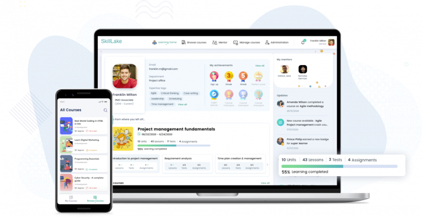

Other Reads from Skill Lake
-

When to Replace an Employee Learning Management System: 10 Signs to Look For
Read MoreIs your employee learning management system helping you build real skills, or is it just frustrating your team? Outdated software wastes your budget and turns training into a tedious chore. If your current LMS platform feels hard to use, lacks modern features, or takes too much manual work to run, it’s time for a change.
-
Top 10 Best LMS for Restaurant Training in 2026
Read MoreRestaurant training is a daily challenge, especially with high staff turnover and evolving safety standards. Traditional methods rarely keep up with today’s fast-paced teams and rising industry demands. Having an enterprise-grade AI learning platform makes it easier to train everyone in your organization, from employees and franchise owners to customer-facing teams – all in one


Anoop Kumar MS
Anoop Kumar MS, Product Manager of Fingent Global Solutions Pvt. Ltd., is an experienced product specialist with expertise in identifying customer needs and delivering innovative, data-driven solutions. Skilled in wireframing, UX, requirements analysis, risk assessment, team management, and root cause analysis, he excels in managing product lifecycles and fostering seamless collaboration to address real-world challenges.