Skip to content
Logo
search
  • Features
    • Overview
    • AI Role Play
    • Content Authoring Tools
    • AI Course Generator
    • SCORM Compliant LMS
    • Integrations
    • Pre-Loaded Courses
  • Solutions
    • Learning Management System
    • LMS Mobile App
    • Learning And Development Platform
    • Learning Experience Platform
    • People Development Platform
    • Corporate Training Platform
    • Training Management System
    • Content Creation Services
    • Performance Review System
  • Resources
    • Case Studies
    • Blogs
    • Help
    • Use Cases
    • videos
    • Downloads
    • Release Notes
  • Industries
    • Info Tech
    • Construction
    • Manufacturing
    • Non-Profit
    • Hospitality
    • Energy
    • Insurance
    • Retail
    • Automotive
    • Franchise
    • Telecom
    • Healthcare
    • Restaurant
  • Pricing
  • Company
    • Partners
    • About Us
  • Contact Us
  • search
  • Request A Demo
×
  • Features
    • Overview
    • AI Role Play
    • Content Authoring Tools
    • AI Course Generator
    • SCORM Compliant LMS
    • Integrations
    • Pre-Loaded Courses
  • Solutions
    • Learning Management System
    • LMS Mobile App
    • Learning And Development Platform
    • Learning Experience Platform
    • People Development Platform
    • Corporate Training Platform
    • Training Management System
    • Content Creation Services
    • Performance Review System
  • Resources
    • Case Studies
    • Blogs
    • Help
    • Use Cases
    • videos
    • Downloads
    • Release Notes
  • Industries
    • Info Tech
    • Construction
    • Manufacturing
    • Non-Profit
    • Hospitality
    • Energy
    • Insurance
    • Retail
    • Automotive
    • Franchise
    • Telecom
    • Healthcare
    • Restaurant
  • Pricing
  • Company
    • Partners
    • About Us
  • Contact Us
  • search
  • Request A Demo

Category: Blogs

AI-Powered Learning

65% of Employees Forget What They Learned in Their First 90 Days. This knowledge loss especially occurs with new employees who are loaded with information as soon as they join a company. They face heavy learning demands with very little reinforcement or real-world context to support what they learn. The result? Low confidence, repeated errors, and a drop in engagement.

Modern workplaces can’t afford this gap. Productivity, satisfaction, and retention depend on how well employees retain and use knowledge. Many training models fail to support this. Organizations need to adopt AI-powered learning — a smarter and more adaptive way to help employees remember and grow.

Skill Lake LMS stands at the forefront of this transformation. It’s an AI-based learning platform designed to support every learner. It helps employees adapt skills, stay engaged, and perform better.

Why 65% of Employees Forget What They Learn — The Science Behind It

The challenge of retention depends on how the human brain processes information. According to a study, learners forget 70% of new information within a day. So, regular support helps them retain what they’ve learned. In the workplace, this problem is magnified by

  • Information overload: Onboarding programs turns weeks of material into a few days.
  • Lack of practice: Employees understand the concept, but rarely get a chance to apply it randomly.
  • Minimal feedback: Without proper guidance, mistakes become practice.
  • Poor course sequencing: Courses are not listed or organized accurately, so employees don’t know what to learn first or next.

Learning should be continuous and adaptive to each employee’s performance. Most traditional training methods fail to do so. AI-powered learning tools, on the other hand, make it possible by tracking behavior and knowledge in different ways.

Why Traditional Training Models Are Failing Modern Learners

Traditional training models were built for a different time. They focused on classrooms and long PowerPoint sessions. These methods are no longer practical in today’s business world. Let’s look at why these models fail today’s learners.

  1. Low engagement: Employees lose interest during long sessions. They stay engaged when the content connects to real-world challenges.
  2. Limited accessibility: Limited access and static content make it hard for employees to learn on a mobile device.
  3. One-size-fits-all: A uniform training approach doesn’t meet employees’ different learning speeds or learning styles.
  4. No reinforcement: Once training ends, there’s little follow-up to test recall or retention.

These flaws create a cycle of “learn and forget.” Employees attend sessions, pass assessments, and then lose most of the knowledge within weeks. This cycle wastes organizational resources and undermines performance.

To break it, learning must be continuous, data-driven, and interactive. That’s exactly what AI powered learning management platforms like Skill Lake deliver. They build a learning environment that adapts to each user. It understands individual needs and helps knowledge stay longer.

How AI Transforms Engagement and Learning Retention

Artificial Intelligence has completely transformed how organizations deliver learning experiences. AI-powered learning builds a dynamic system. It makes learning more effective for each learner. Here’s how!

  • Personalized Learning Paths
    AI tailors the learning journey to each employee. It studies each role, performance level, and skill gap. Then it creates a personalized learning path that stays relevant and effective.
    Each learner has a unique route. So, they can get exactly what they need.
  • Smart Content Recommendations
    Employees don’t need to search for courses on their own. AI automatically creates the right learning materials for them. Such AI-powered recommendations keep the content relevant and engaging.
  • Quick Assessments & Performance Evaluation
    LMS software with AI capabilities can also be utilized to draft assessments and test questionnaires based on course content or the targeted audience. This helps mentors evaluate skills faster and identify gaps, ensuring improved training approaches.
  • AI-Driven Role Play
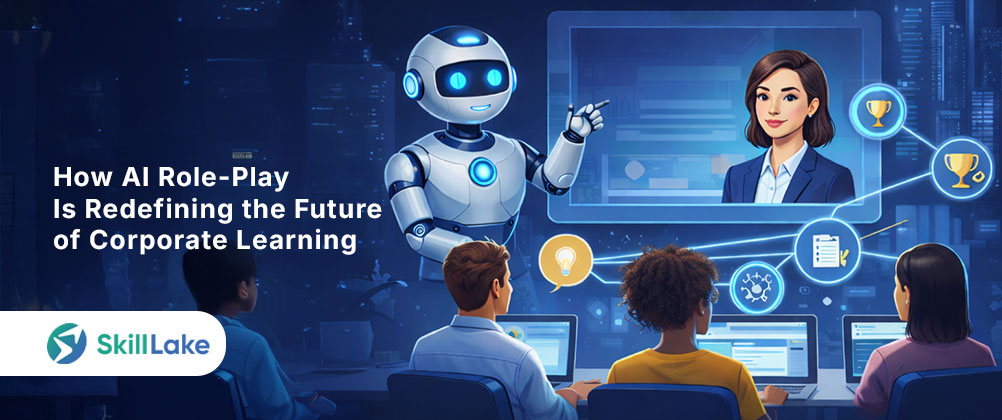
    AI-driven role play allows employees to practice real situations in a safe and realistic way. It gives instant guidance and adapts to their skill level. This helps them build confidence and improve skills faster. It helps employees who need to improve communication, decision-making skills for long-term success.

How Continuous Learning Boosts Long-Term Knowledge Retention

Continuous learning boosts long-term knowledge retention. Employees revisit concepts often. They apply ideas in daily tasks. This steady practice sharpens skills. It also keeps information fresh. Learners build deeper understanding.

They recall knowledge when they need it. This approach supports growth and confident performance in real work situations every day.

AI-powered learning improves this approach with smart reinforcement. It identifies when a learner needs extra support and what type they need. When someone struggles, AI sends related content or a short challenge to strengthen memory. This keeps the learning alive and relevant.

Organizations that support continuous learning see better results and higher performance. Their teams adapt faster to change. Employees who feel valued stay longer and contribute with confidence.

Skill Lake: The AI-Powered LMS That Makes Learning Stick

Skill Lake LMS follows one simple idea — learning should create lasting performance. It uses a modern LMS design to make training engaging and effective. Advanced AI tools personalize, automate, and measure every learning experience.

Key advantages include

  • Adaptive Learning Paths
  • AI Role Play
  • Gamified Learning
  • Intelligent Analytics
  • Smart Notifications

How Skill Lake LMS Can Reduce the Forgetting Curve in Onboarding

Overloaded information is mostly the reason why most learners face a low knowledge retention rate or knowledge loss. Skill Lake’s AI LMS addresses this head-on with its power-packed features.

Let’s check:

  • Multiple Learning Modes: Learners can choose from instructor-led to self-paced, synchronous, and asynchronous learning modes.
  • Learning Bytes: Learners can avoid information overload. Learners can consume large and complex content in tiny bites.
  • AI features: AI course recommendation and content generation features keep learners in the loop of engaging learning with new and relevant content.
  • Scenario-Based Role Play: This particular AI feature on Skill Lake strengthens soft skills and prepares employees for real conversations.
  • Quick Feedback and Progress Analytics: Managers see exactly where learners stand, enabling quick intervention.

Skill Lake’s power-packed features let employees remember information and gain confidence quickly. It also speeds up employees’ time in the first 90 days.

Building a Learning Culture That Lasts Beyond 90 Days

Long-term learning success depends on culture. A strong learning culture keeps employees growing and improving. It motivates them to share their knowledge and use their new skills.

AI LMS platforms like Skill Lake give HR and L&D teams better tools to create engaging and data-driven programs. This allows HR to focus more on strategy, mentoring, and people growth.

The Future of Employee Learning Retention

The next generation of learning systems will be more immersive, conversational, and data-aware. AI powered LMS platforms will soon mirror real workplace situations and interactions. They will also detect emotions and deliver adaptive content instantly.

As AI grows smarter, it will do more than predict learning gaps. It will fill them through real-time interaction, coaching, and feedback. Systems like Skill Lake are already leading this change. Its AI- powered learning combines intelligence and personalized experiences for each learner. This makes it a powerful tool to support training management initiatives and employee retention strategies.

Conclusion: Use AI and Skill Lake To Make Learning More Meaningful

The 90-day forgetting curve is real, but it doesn’t have to define your workforce. With Skill Lake LMS, organizations can turn learning into a continuous, memorable experience.

Skill Lake uses personalization, analytics, and tools like AI Role Play. These features help employees learn faster. They also support better knowledge retention and performance. Employee learning retention doesn’t fade after onboarding—it grows through continuous practice.

When employees learn with purpose and context, they become confident contributors. When learning uses AI, it grows with them.

FAQs

Q: How does Skill Lake’s AI Role Play work?

A: It lets learners practice real-world workplace interactions with AI-driven responses. The system evaluates communication skills and provides feedback for improvement.

Q: Why is employee learning retention important?

A: Strong retention helps employees remember for a long time. It also improves performance and reduces training costs.

Q: How does Skill Lake help HR and L&D teams?

A: It offers real-time insights and automated assessments to guide learning. AI tools or an employee development software simplify employee development and help build a strong learning culture.

Q: What makes Skill Lake a modern LMS?

A: Its smart automation and adaptive learning paths create personalized experiences. AI-driven simulations make it a modern LMS built for today’s changing workplace.


Anoop Kumar MS

Anoop Kumar MS, Product Manager of Fingent Global Solutions Pvt. Ltd., is an experienced product specialist with expertise in identifying customer needs and delivering innovative, data-driven solutions. Skilled in wireframing, UX, requirements analysis, risk assessment, team management, and root cause analysis, he excels in managing product lifecycles and fostering seamless collaboration to address real-world challenges.

Other Reads from Skill Lake

  • Top LMS Training Platforms for 2026: 10 Best Solutions for Corporate Learning

    Top LMS Training Platforms for 2026: 10 Best Solutions for Corporate Learning

    Legacy corporate training frameworks are failing to solve contemporary skill gaps. To build an agile, future-ready workforce, organizations need a modern corporate training LMS that drives active capability mastery. This post evaluates the top LMS training platforms for 2026 currently delivering measurable operational ROI. Top 10 LMS Training Platforms for 2026 Note: Pricing and features

    Read More
  • How AI Simulation Training in LMS Prepares Teams for Real-World Scenarios

    How AI Simulation Training in LMS Prepares Teams for Real-World Scenarios

    Traditional corporate training methods often fall short when preparing employees for high-stakes, real-world challenges. Today’s business landscape demands a drastic shift from passive consumption to active mastery. This is why forward-thinking business leaders are adopting simulation-based learning in LMS to bridge the gap between theory and execution. By integrating advanced AI role play training, organizations

    Read More

    Stay up to date on the latest in HR and L&D


    Highlights of Skill Lake

    • AI/ML Powered Course Recommendations
    • Courses with AR/VR Experiences
    • Competency & Course Management
    • Multiple Learning Modes
    • Mentoring & Feedback
    • Gamification
    • Learning Bytes
    • Mobile App
    • SCORM Compliance
    REQUEST A DEMO

    Highlights of Skill Lake

    • Sell-Paced & Instructor-Led Learning
    • Tracking & Reporting
    • Mentoring
    • Gamification
    • Learner Dashboard
    • Course Library
    • Enterprise IT Ready

      [recaptcha]

      Highlights of Skill Lake

      • AI/ML Powered Course Recommendations
      • Courses with AR/VR Experiences
      • Competency & Course Management
      • Multiple Learning Modes
      • Mentoring & Feedback
      • Gamification
      • Learning Bytes
      • Mobile App
      • SCORM Compliance
      • Multi-Cloud Hosting

        Watch Skill Lake in Action!

        REQUEST A DEMO

        AI-Powered Recommendations

        Employee skills are changing rapidly and making constant learning important. Evolving market needs are reframing the rules of how businesses grow and compete. So, organizations must adapt these technologies to stay competitive. Also, employees must learn and relearn to stay competitive and relevant.

        Traditional training methods, though valuable, often fail to address this rapid evolution. Traditional training uses fixed learning paths and generic courses. These often miss an employee’s current role or growth needs. AI-Powered recommendations now reshape how organizations handle learning and development.

        Companies use artificial intelligence in learning management systems to design personalized learning paths. This helps each employee get training that fits their specific needs. These suggestions change as employees grow and learn. This approach builds a skilled workforce ready for future business needs.

        How AI-Based Recommendations Work in an LMS

        A modern learning management system software focuses on personalizing and improving the learning experience. Traditional LMS platforms share structured content but lack flexibility. They often fail to provide the right content that can meet learners’ needs.

        AI-Powered Recommendations bridge this gap. AI studies learner behavior, skill levels, job roles, and performance data to find learning patterns. It then suggests the most relevant courses for each learner. This transforms the LMS into a smart system that adapts to changing learning needs.

        An AI powered LMS gathers data from many sources like course progress, quiz scores, interests, and job performance. It uses predictive analytics to find skill gaps and recommend focused learning content.

        For example, an employee in the logistics team finishes a module on supply chain automation. The LMS then recommends advanced courses on AI in logistics or data analytics. These AI-driven course recommendations guide employees to the next level of learning. Each course builds skills that add real business value.

        Beyond individual learning, AI also enables managers to track organizational skill readiness. L&D teams find common learning needs among employees. They plan group sessions, workshops, or blended learning programs to address these needs. This data-driven approach creates a continuous learning culture across the organization.

        Key Benefits of AI-Powered Learning Recommendations

        AI-Powered Recommendations strengthen an organization’s training system. They create clear benefits for both employees and leaders. Check some of the benefits.

        Personalized Learning

        Employees learn better when courses match their goals and strengths. So, personalized learning paths make training more relevant and easier. It removes unnecessary materials and highlights what matters most. This approach increases engagement and boosts learning retention.

        Traditional training follows a single path for everyone. But, AI-powered recommendations help employees learn, grow, and take on new challenges. Also, it makes learning more meaningful and efficient.

        Continuous Skill Development

        AI-driven learning systems can help bridge skill gaps faster. Based on a learner’s career path and learning goals, AI in LMS recommends courses and content that align with the skill development needs.

        AI analyzes the types of content consumed and suggests suitable learning resources, like videos or certification courses. These AI-driven course recommendations guide employees to close gaps faster. This helps organizations stay aligned with modern technology changes.

        Enhanced Engagement

        Employees feel more connected to organizations that support their growth. When courses match their goals and interests, learning becomes meaningful. Personalized recommendations keep them engaged, inspired, and ready to grow within the company.

        AI-powered systems make learning continuous and intuitive. Employees no longer need to search through long course lists. They receive guided suggestions that match their interests and goals. This approach increases engagement and helps retain top talent.

        Efficiency for L&D Teams

        For Learning and Development professionals, managing training programs is not easy. AI-powered recommendations automate this task and reduce the workload easily.

        L&D teams focus on strategy and key skill priorities. The AI-based LMS manages daily course recommendations and increases employees’ efficiency.

        How AI is Helping Build Future-Ready Employee Skills

        AI is changing the way industries work. This shift makes future-ready skills a top priority for companies.

        • Building New Skills

        AI is not only about efficiency—it’s also about foresight. AI studies current market trends and employee performance to find what skills will matter further. It then connects these insights to learning paths for each employee. AI-powered recommendations help learners build new skills before the demand rises.

        • Continuous Learning

        AI helps organizations focus on building employees’ skills before they become essential. Also, AI ensures that learning becomes a continuous cycle rather than a one-time event. As employees complete courses, the system analyzes their skills and provides new recommendations.

        • Aligns Learning with Business Goals

        AI connects training programs to organizational objectives. This continuous optimization keeps employees’ skills updated and aligned with evolving business needs. It ensures that employees’ growth supports company goals.

        Indeed, using an AI-powered LMS helps industries improve employees’ skills. Personalized course recommendations and continuous learning make the business ready for future challenges.

        Conclusion – How Skill Lake Makes It Happen

        Skill Lake brings the power of AI directly into corporate learning ecosystems. Skill Lake is a next-generation AI-powered LMS that connects technology with training. It automates learning while keeping it aligned with real workplace needs. This approach helps employees build skills that stay useful and future-ready.

        Skill Lake’s AI engine includes several advanced capabilities that set it apart:

        • AI Course Recommendation

        Skill Lake studies each learner’s profile, role, and performance data. It then suggests courses that match individual learning needs. This approach helps employees follow training paths aligned with their goals and job roles.

        • AI Course Generation

        Skill Lake’s AI Course Generator can create courses based on specific skill updates or target learners. Skill Lake helps organizations create targeted training for any team or role. With an AI copilot, Skill Lake enables instant refinement of training content, helping organizations build targeted courses for any team or learner group.

        • AI Test and Assessment Generation

        Skill Lake simplifies the evaluation of learning outcomes through automated quizzes and assessments. These tools align each test with the intended learning objectives. These adaptive assessments ensure employees truly master the skills they learn.

        These features turn Skill Lake into a smart LMS built for growth. It evolves with the workforce and adapts to changing skill needs.

        Anoop Kumar MS

        Anoop Kumar MS, Product Manager of Fingent Global Solutions Pvt. Ltd., is an experienced product specialist with expertise in identifying customer needs and delivering innovative, data-driven solutions. Skilled in wireframing, UX, requirements analysis, risk assessment, team management, and root cause analysis, he excels in managing product lifecycles and fostering seamless collaboration to address real-world challenges.

        Other Reads from Skill Lake

        • Top LMS Training Platforms for 2026: 10 Best Solutions for Corporate Learning

          Top LMS Training Platforms for 2026: 10 Best Solutions for Corporate Learning

          Legacy corporate training frameworks are failing to solve contemporary skill gaps. To build an agile, future-ready workforce, organizations need a modern corporate training LMS that drives active capability mastery. This post evaluates the top LMS training platforms for 2026 currently delivering measurable operational ROI. Top 10 LMS Training Platforms for 2026 Note: Pricing and features

          Read More
        • How AI Simulation Training in LMS Prepares Teams for Real-World Scenarios

          How AI Simulation Training in LMS Prepares Teams for Real-World Scenarios

          Traditional corporate training methods often fall short when preparing employees for high-stakes, real-world challenges. Today’s business landscape demands a drastic shift from passive consumption to active mastery. This is why forward-thinking business leaders are adopting simulation-based learning in LMS to bridge the gap between theory and execution. By integrating advanced AI role play training, organizations

          Read More
        Training and Development Software

        Today’s business world demands engaged, motivated, and skilled employees. With tech updates, the need to keep employees updated and skills are becoming more important. So, continuous learning keeps your teams productive and ready for new challenges.

        Businesses that don’t focus on employee development may face weak retention and poor performance. Training and Development Software solves this problem. It delivers structured and measurable learning through a single platform. It turns training into a fast, goal-driven process. Employees gain knowledge, stay motivated, and see real growth through digital learning.

        How Training and Development Software Enhances Employee Performance

        Modern training software helps organizations create and track personalized learning easily. Such software makes continuous learning easier and drives success. A report shows that 94% of employees stay longer with companies that invest in their growth.

        Also, companies with strong training programs earn 218% more income per employee than those without structured learning. It helps employees to learn at their own pace. Also, it helps managers monitor progress and identify gaps that stop growth.

        • Enhancing Productivity Through Structured Learning

        According to eLearning Industry, online learning can improve employee performance by 15 % to 25 %.

        By using skill development software, organizations can deliver structured, on-demand training. It supports performance improvement.

        • Enhanced Engagement and Retention

        Employee development software drives engagement and retention by giving people clear paths. It helps employees create new skills, track progress, and see their impact. When teams learn and grow, they feel valued and stay committed.

        • Smooth Course Management

        Efficient management of courses reduces administrative burden. A smart training software simplifies course management. It allows L&D teams to focus on improving performance.

        • Closing Skills Gaps

        Training software helps organizations identify skill gaps and deliver role-based modules. It helps managers meet employees’ real needs to boost employee performance.

        • Facilitating Corporate Training at Scale with Consistency

        For organizations managing several programs or global teams, employee skill development software ensures consistent delivery and structured workflows. It drives stronger performance across the organization.

        • Enhancing Continuous Improvement and Growth

        A culture of continuous learning makes workplaces a productive asset. By adopting training and development software, organizations get continuous improvement and higher employee performance.

        Key Benefits of Training and Development Software

        Modern businesses face constant change. So they also demand changes in skill development. For employee performance improvement, organizations must invest in smarter, data-driven learning solutions.

        Training and development software transforms traditional training into an interactive and employee-centric experience. It smoothens the learning operations and brings continuous growth.

        90% of industries say that L&D programs are essential to closing skill gaps and driving business success.

        These tools not only enhance employee performance but also improve their engagement and retention.

        Ease of Course Management

        Creating, scheduling, and managing training programs becomes easy. With Skill Lake, managers can create dedicated sessions, self-paced modules, or integrated programs.

        The platform supports SCORM-compliant content and multimedia lessons. It also includes AI tools that help design and customize courses. Together, these features make curriculum development and delivery simple and efficient.

        Ease of Learner Enrollment

        Manual enrollment and tracking are things of the past. Skill Lake automates learner registration, course assignments, and batch management. Managers can track progress and course completion in real time.

        The system automates enrollment for each learner. It helps everyone join the right programs faster and learn without delays.

        Easily Evaluate Learner Performance

        Assessing performance is crucial for employee performance improvement. Skill Lake includes quiz builders, assignments, and leaderboard tracking. These tools help managers evaluate learner progress with ease.

        Trainers can review results and spot areas that need improvement. They can then update programs to build stronger skills and better outcomes.

        Enable Mobile-Enabled Training for Learning Convenience

        Modern learners demand flexibility. Skill Lake offers mobile-enabled learning through its LMS mobile app. Employees can access courses anytime and anywhere. They can learn during commutes, at home, or even on breaks. This flexibility makes learning continuous and convenient.

        Easily Manage Corporate Training

        Managing several training programs for different corporate clients can be challenging. The employee performance improvement software makes corporate training a fun and engaging activity. Moreover, it helps managers to track attendance and customize learning paths with ease.

        How Skill Lake Builds a Responsive Training Business

        Skill Lake goes beyond standard employee development software. It provides the infrastructure to scale, manage, and monetize training programs efficiently.

        • Leaderboards to View Performance Rankings

        Trainers and learners can monitor performance rankings at organizational or departmental levels. This gamified visibility fosters healthy competition and motivation to excel.

        • Restrict Course Preview and Access

        Skill Lake allows admins to limit course previews to enrolled learners, maintaining exclusivity and protecting intellectual content.

        • Operational Ease for Content Managers

        Trainers can upload audio-based lessons, share visuals, and enable sequential learning (content dripping). It improves user experience and learning progress.

        • SCORM-Compliant eLearning

        Skill Lake supports SCORM packages for easy integration with other systems. This ensures smooth content migration and consistent learning standards across platforms.

        • Time & Progress Tracking

        Detailed tracking allows instructors to monitor learner engagement and completion times. This data helps improve and refine training effectiveness.

        • Blended and Mobile Learning

        Skill Lake supports both in-person and online training with integrated video sessions and multimedia elements. Learners can switch devices easily and continue learning without interruption.

        • Manage Client and Corporate Training

        Corporate clients can manage employee learning journeys and track performance. They can also view detailed reports, all within a single dashboard.

        How Skill Lake Transforms Employee Performance

        With its robust features and learner-focused design, Skill Lake goes beyond training software. It acts as a performance accelerator for employees and organizations.

        It helps organizations with:

        • Consistent, high-quality learning experiences.
        • Build an agile workforce equipped for change.
        • Continuously measure learning impact and ROI.
        • Drive engagement and satisfaction through accessible, mobile-first learning.

        Skill Lake bridges the gap between training and employee performance. It helps organizations develop talent, reduce costs, and reach their business goals.

        Conclusion

        In today’s tech world, employees need more than traditional training. They require continuous, managed, and accessible learning opportunities. An efficient training and development software helps organizations manage their training efficiently. Such software brings desired outcomes and drives growth.

        Skill Lake offers AI-powered tools, mobile convenience, and effective course management abilities. These capabilities make it the ideal software for building a responsive, future-ready workforce.

        Planning to invest in Skill Lake training and development software? Call us today!

        Anoop Kumar MS

        Anoop Kumar MS, Product Manager of Fingent Global Solutions Pvt. Ltd., is an experienced product specialist with expertise in identifying customer needs and delivering innovative, data-driven solutions. Skilled in wireframing, UX, requirements analysis, risk assessment, team management, and root cause analysis, he excels in managing product lifecycles and fostering seamless collaboration to address real-world challenges.

        Other Reads from Skill Lake

        • Top LMS Training Platforms for 2026: 10 Best Solutions for Corporate Learning

          Top LMS Training Platforms for 2026: 10 Best Solutions for Corporate Learning

          Legacy corporate training frameworks are failing to solve contemporary skill gaps. To build an agile, future-ready workforce, organizations need a modern corporate training LMS that drives active capability mastery. This post evaluates the top LMS training platforms for 2026 currently delivering measurable operational ROI. Top 10 LMS Training Platforms for 2026 Note: Pricing and features

          Read More
        • How AI Simulation Training in LMS Prepares Teams for Real-World Scenarios

          How AI Simulation Training in LMS Prepares Teams for Real-World Scenarios

          Traditional corporate training methods often fall short when preparing employees for high-stakes, real-world challenges. Today’s business landscape demands a drastic shift from passive consumption to active mastery. This is why forward-thinking business leaders are adopting simulation-based learning in LMS to bridge the gap between theory and execution. By integrating advanced AI role play training, organizations

          Read More
        Mobile Learning Trends

        In today’s digital workplace, employees work remotely, in hybrid setups, or on the move. Training and development no longer fit within training rooms only. For this reason, mobile learning has become essential. It allows learners to access their training course at their convenience. The modern workforce demands dexterity and flexibility. So, mobile-first learning is now vital, not optional.

        Modern learning management systems support this mobile-first approach. These platforms help organizations change how learning is delivered, consumed, and measured.

        Mobile devices, strong connectivity, and advanced LMS features now work together. This combination makes a new phase in workplace learning transformation.
        Let’s check why mobile learning matters and the key mobile learning trends for 2025.

        Why Mobile Learning Matters?

        The big shift towards mobile learning has changed the way we utilize and implement the knowledge in our workplace. About 83% of the people worldwide now have a smartphone. Also, the estimated time they spend daily on their mobile device is 3+ hours.

        The rise of mobile learning indicates that employers can now offer more engaging and accessible content to their employees. Mobile learning platforms allow employees to access the content anytime, anywhere.

        The benefits are huge, but several companies are still thinking about adopting this new learning approach. Here are some reasons to start implementing an LMS mobile app to increase engagement and knowledge retention.

        Higher Flexibility

        The flexibility of accessing the content anytime, anywhere removes barriers to learning and keeps training accessible. It helps people retain knowledge better and apply it when needed.

        Mobile learning supports quick, on-the-job learning moments. It also builds a strong culture of continuous development. Mobile access fits how people live and work today. It makes learning more relevant and immediate.

        On-the-go Learning

        Learning through mobile devices helps companies fit training into the flow of work. Employees learn while working, not after tasks end.

        This approach supports dispersed teams, frontline staff, and global organizations across time zones. As mobile use grows, companies must understand and apply key mobile learning trends. Doing so keeps their workforce skilled, connected, and ready for change.

        Enables Real-time Content Delivery

        Mobile learning increases real-time content delivery. Managers can update courses, share new resources, or launch quick refreshers instantly. This keeps learning current and aligned with business needs.

        Real-time delivery ensures teams stay informed and act fast. It also supports consistent communication across departments and locations.

        Time and Cost-efficient

        Mobile learning makes training time and cost-efficient. Companies save on travel, venue, and printed materials. Short, focused modules reduce learning time while keeping productivity high.

        Managers can update or reuse content easily, lowering development costs. It helps organizations train more people in less time with better results.

        The Top Mobile Learning Trends

        Mobile learning trends include personalized learning paths and gamification in LMS features that engage employees. Mobile learning allows organizations to track progress and results to analyze training effectiveness. These mobile learning trends showcase a big shift toward this flexible approach.

        Microlearning

        Microlearning offers short and intensive training programs. These modules help employees retain knowledge in less time. It is utilized by organizations to detect the gaps in skills and enhance performance.

        Modern LMS platforms allow microlearning through mobile applications. The strategy of micro learning makes the training process easy, hassle-free, and efficient.

        Gamification in Learning

        Gamification in learning makes training more interactive and outcome-oriented. Gamification in LMS enhances employees’ engagement and brings them success.

        It keeps employees motivated, and they find it easy to compete with other employees. In LMS, gamification enhances consistency and prolongs the productivity of employees.

        AI-based Personalized Learning

        AI helps build employee-specific learning strategies based on jobs, goals, and skill levels. The LMS tracks performance and recommends courses for each learner.

        This narrow methodology helps to save time and enhance learning. The employees acquire applicable skills, and organizations receive insights based on data. Machine-based learning is more specific and measurable with AI-based recommendations.

        Mobile-First Learning Experience

        Mobile-first learning specifies that all training materials be available on smartphones and tablets. During breaks, travels, and fieldwork, employees can learn without interruptions.

        Modern LMS platforms include smaller, user-friendly interfaces. Such a design makes it more accessible and learning convenient. With mobile-first strategies, organizations reach every learner—regardless of location or schedule.

        Integration with Performance Analytics

        Modern LMS platforms combine performance analytics with training data. Managers can track learners’ progress, completion, and results in real time.

        These understandings allow them to adjust training programs and improve performance. Integration links learning to business performance measures. It proves that all learning programs boost employee productivity and growth.

        How Modern LMS Platforms Enable Flexible Access

        A modern LMS is like an innovative tool now. It’s a mobile-friendly ecosystem enabling access anytime, anywhere. Let’s see how modern LMS platforms support this shift

        Native mobile app experience

        A mobile learning platforms provide an intuitive mobile experience — the learning experience travels with the user. Offline mode provides access even when no or limited connectivity.

        Easy and responsive interface

        The modern LMS platform responds easily to different screen sizes. In this way, it makes the user experience consistent across different devices.

        Personalized learning

        With smart algorithms, the LMS apps suggest the next best learning activities based on the learner’s history, role, and skills gaps. It ensures relevance and reduces friction.

        Push notifications and reminders

        The mobile experience is proactive — reminding learners of upcoming tasks. It pushes learners towards quick course completion and keeps them engaged.

        Tracking & analytics

        Mobile data flows back into the LMS so administrators and L&D teams can measure mobile usage, progress, engagement, and outcomes — ensuring mobile learning isn’t just accessible, but also measurable.

        Of course, modern LMS systems enable flexible access for learners and help organizations to deliver training that fits their training needs.

        Top Benefits Skill Lake Offers With A Mobile-first Approach

        • Anytime, Anywhere Learning: Skill Lake LMS offers anywhere, anytime learning convenience. It enables easy access to courses on any mobile device and provides offline support.
        • Improved Engagement: Skill Lake comes with micro-learning modules and gamification features. This helps keep learners engaged and motivated.
        • Hassle-free Training: Mobile access to courses reduces the need for trainers to travel to different training venues. This helps reduce logistics costs, simplifies onboarding, and enables continuous skill development without hassle.
        • Better Skill Alignment & Performance Impact: Dedicated learning journeys help managers address skill gaps. Staff performance can be easily aligned with company goals.
        • Efficient Content Management & Centralization: Our unified platform puts all content in one place. It reduces duplication, enabling consistent updates and simplifying administration.
        • Measurable Outcomes: Mobile learning platforms enable detailed tracking. Course completion rate, progress, and competency mapping can be measured more realistically. This helps the L&D team get actionable insights to plan training better.
        • Stronger Learning Culture: Allowing learners the convenience of mobility, you build habits of continuous development. This helps empower frontline teams faster and create a culture of agile learning.
        Five Steps To Get Started With Mobile Learning Experience

        Conclusion

        Mobile learning platforms now play a key role in skill development and employee growth. It helps organizations stay competitive. Trends like microlearning, personalized paths, and immersive learning shape modern training. Employees can learn anytime and anywhere with ease.

        Modern LMS platforms — especially those built with mobile in mind — are the enablers of this transformation. Skill Lake offers a full mobile-capable learning ecosystem that helps organizations not just deliver mobile learning, but deliver flexibility and scalability.

        If your organization wants flexible learning access, start now. Mobile-first learning makes your workforce stronger and more skilled. It increases engagement, improves performance, and brings better outcomes. Request a free demo with Skill Lake today!

        Anoop Kumar MS

        Anoop Kumar MS, Product Manager of Fingent Global Solutions Pvt. Ltd., is an experienced product specialist with expertise in identifying customer needs and delivering innovative, data-driven solutions. Skilled in wireframing, UX, requirements analysis, risk assessment, team management, and root cause analysis, he excels in managing product lifecycles and fostering seamless collaboration to address real-world challenges.

        Other Reads from Skill Lake

        • Top LMS Training Platforms for 2026: 10 Best Solutions for Corporate Learning

          Top LMS Training Platforms for 2026: 10 Best Solutions for Corporate Learning

          Legacy corporate training frameworks are failing to solve contemporary skill gaps. To build an agile, future-ready workforce, organizations need a modern corporate training LMS that drives active capability mastery. This post evaluates the top LMS training platforms for 2026 currently delivering measurable operational ROI. Top 10 LMS Training Platforms for 2026 Note: Pricing and features

          Read More
        • How AI Simulation Training in LMS Prepares Teams for Real-World Scenarios

          How AI Simulation Training in LMS Prepares Teams for Real-World Scenarios

          Traditional corporate training methods often fall short when preparing employees for high-stakes, real-world challenges. Today’s business landscape demands a drastic shift from passive consumption to active mastery. This is why forward-thinking business leaders are adopting simulation-based learning in LMS to bridge the gap between theory and execution. By integrating advanced AI role play training, organizations

          Read More
        Modern LMS

        Indeed, training and learning methods have changed a lot. But engagement is still an issue for organizations. Traditional learning methods are not enough to fulfill the modern-day learning needs. These methods depend on the static content. Also, with these methods, learners often lose their focus and motivation during training. It leads to poor completion and retention rates.
        Organizations today need learning methods that match how people learn and engage. Here, a modern LMS comes into play and creates a difference. Modern learning management platforms create personalized and engaging experiences for learners.

        How Modern LMS Platforms Drive Engagement

        An LMS does more than deliver training. It supports personalized learning paths, continuous skill development, and tracks performance in real time. Modern LMS platforms use data analytics and AI-powered recommendations to guide learners. They give teams mobile access to learn anytime and anywhere.

        With the right LMS, organizations build a skilled and adaptable workforce. Employees stay ready for current tasks and future challenges. This results in an effective learning culture that drives consistent growth and agility.

        Let’s look at how a modern LMS platform boosts engagement:

        Gamification makes learning fun

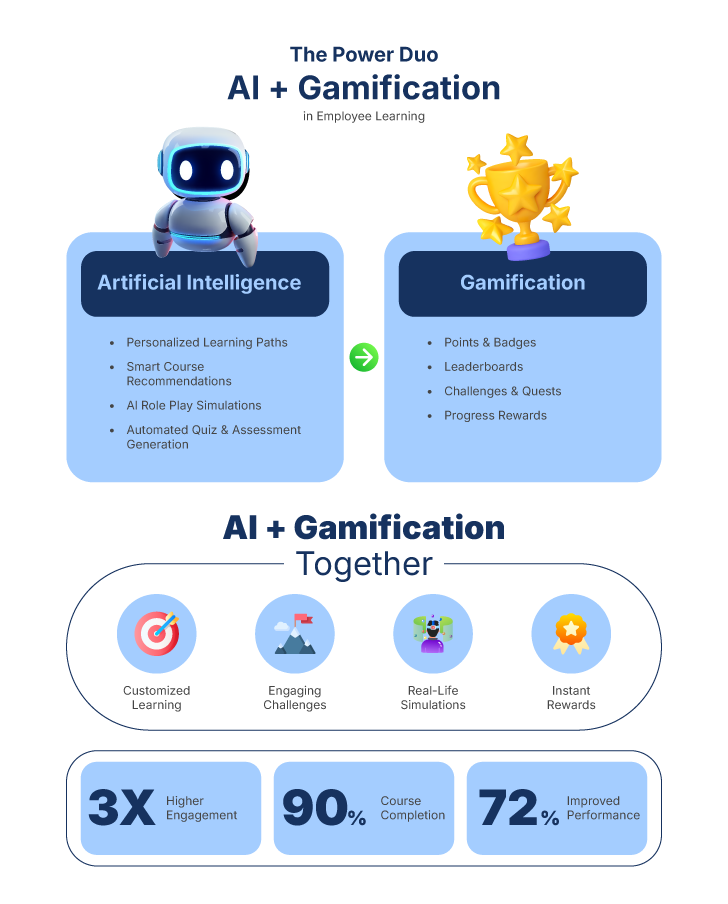
        When training feels like a game, participation increases. Gamification feature makes learning fun and bring motivation to training. It uses leaderboards, points, and rewards to turn training into a fair competition. It allows learners to easily interact with content longer and retain more knowledge.

        Even gamified elements make repetitive training more engaging and memorable. By indulging gamification with business goals, organizations can create a positive learning culture and purpose.

        It further turns in better job performance and long-term retention. Indeed, gamification in LMS approach turns engagement into a regular practice.

        Personalized Learning Paths

        Every learner is different. Some learn fast, while others take time. Modern learning management platforms address this difference using personalized learning paths.

        A personalized learning approach guides learners through relevant content based on role, skill level, and goals. So, learners get content that fits to their training needs. This approach saves time and improves the motivation of learners.

        With personalized learning approach managers can track employee’s performance and fill the skills gaps. Also, personalized learning ensures that every minute of training adds value to employees’ growth and productivity.

        Mobile Learning Trends

        Modern learners prefer all-time easily accessible learning. Modern LMS platforms support mobile learning, making training accessible anywhere, anytime. So, AI-powered mobile LMS can give learners the flexibility to learn anytime, anywhere.

        Microlearning modules and assessments fit easily into their busy schedules. So, employees can learn during travel, in between tasks, or while working remotely. This flexibility increases participation and keeps learning continuous. It keeps learners connected without feeling pressured or restricted to a desk.

        Moreover, mobile accessibility makes learning flexible and consistent. It brings continuous development and growth for employees. Mobile learning also benefits organizations in terms of higher participation rates, increased productivity, and consistent growth.

        AI Role Play Simulation for Real-World Practice

        One of the most powerful ways to boost engagement is through AI role play simulation. Instead of just reading or watching content, learners actively participate in realistic scenarios that mirror real workplace situations.

        Whether it is handling a customer conversation, managing a team conflict, or making quick decisions, AI role play allows employees to practice in a guided environment. They can try, learn, make mistakes, and improve without real-world consequences.

        What makes this even more effective is the instant, personalized feedback. Learners understand what they did well and where they can improve right away. This continuous feedback loop builds confidence and sharpens real-world skills.

        It transforms learning from passive consumption into active experience, making training more meaningful, memorable, and impactful.

        Improving Learner Retention with Modern LMS

        Engagement sparks interest. Retention builds results. When learners identify with the learning process, they retain and put the knowledge into practice. A Modern LMS improves retention in several ways:

        • Reinforcement through reminders: Frequent reminders and periodic reviews guide the learners to review important issues.

        • Progress tracking: Learners will understand the progress they are making, which makes them motivated to finish courses.

        • Instant feedback: In-built tests and examinations provide learners with fast feedback on their performance.

        • Recognition: Badges and certificates are given as rewards, and learners come back to get more.

        Contemporary learning management systems foster the culture of continuous learning. Learners do not merely go through training; they use, share, and develop out of it.

        Role of AI in Engagement and Retention

        Artificial Intelligence introduces strong additions to a modern LMS. It assists organizations in developing smarter and more relevant learning experiences.

        AI Course Creation

        AI enhances the speed of creating content through analysis of the existing content and provides recommended structures that align with the learning objectives. It saves trainers’ time and provide high-quality course content within a shorter time.

        AI-Based Course Recommendation

        AI analyzes the learners’ performance, interests, and behavior. It suggests new courses based on these insights that suit their learning needs. This keeps the learners engaged and continuously developing.

        AI-Powered Assessment and Test Question Generation

        Quiz questions are created by AI to adjust to learner advancement. It maintains assessments fresh, challenging, and accurate. The learners remain active, and the trainers obtain clear information on the gaps in skills.

        All these AI functionalities make the learning process dynamic and personalized. Learners receive what they require, when they require, but not overwhelmed.

        AI Role Play

        AI role play adds a practical layer to learning by turning theory into real-world practice. Through AI role play simulation, learners can step into realistic scenarios and interact as they would in their actual job roles.

        It allows employees to practice communication, decision-making, and problem-solving in a guided environment. Instant feedback helps them understand their strengths and improve quickly.

        This hands-on experience keeps learners engaged and builds confidence, making learning more effective and long-lasting.

        A Look Into a Few Case Studies & Success Stories

        Client Overview: The Repairers Of The Breach (TROTB) Ministries is a global Christian non-profit. It works to raise and equip disciples of Jesus Christ. The ministry reaches many nations through discipleship training programs.

        Its focus areas are

        • REACH (leadership networking),
        • TRAIN (spiritual and leadership growth), and
        • TRANSFORM (community projects).

        Challenges: TROTB faced major issues in managing volunteer training and retention.

        • Their challenges included
        • High volunteer attrition rates
        • Rising training costs and effort
        • Dependence on in-person training became difficult during the pandemic.

        Solution Skill Lake Learning Experience Platform

        TROTB adopted Skill Lake’s Learning Experience Platform to create a flexible, structured, and engaging learning environment. Key features included:

        • Dual-mode learning
        • Interactive content.
        • Personalized mentoring.
        • Built-in tests and assessments.
        • A searchable course library for easy access to training materials.

        Results: The transformation brought measurable improvements across several areas

        • 60% reduction in overall training costs.
        • 30% increase in training efficiency.
        • 50% improvement in volunteer retention.
        • Over 200 volunteers trained across global locations.

        Best Practices for Maximizing LMS Impact

        A Modern LMS assists employees to learn quickly and provides improved results. Organizations can realize their objectives through clear, interesting, and goal-oriented training.

        By making use of the interactive and custom-made material and implementing a modern LMS platform, one is likely to maximize the effect. In addition, the intelligent application of tools and data makes learning continual and purposeful.

        Set Clear Goals

        Start with specific goals. Be aware of which skills you want to develop in learners. Monitor progress and make corrections. Goal tracking becomes very easy with the aid of a modern LMS and allows a team to remain focused on measurable outcomes.

        Personalize Learning Experiences

        Allow every learner to take a course that suits them. Individual lessons make individuals interested and driven. Personalized learning keeps the employees on the right path.

        Reinforce Collaboration and Feedback

        Allow teamwork and open feedback. Allow learners to communicate, ask questions, and support one another in their development. Teamwork makes learning a collective and motivating experience.

        Use Gamification in LMS

        Gamification in modern LMS makes learning fun and motivating. It makes the process of training a game and challenges the learners to achieve their objectives.

        Monitor Data and Analytics

        Track information and metrics to understand improvement. Test reports to identify what is performing and what requires improvement. Data can assist you in enhancing courses, maintaining the learners, and enhancing performance.

        Keep Content Updated and Relevant

        Keep the training content updated and relevant. Include new examples and real-life stories. New information keeps the learners eager and eager to use new skills in the workplace.

        Conclusion

        Modern LMS platforms are about engagement, relevance, and growth. These platforms combine personalization and gamification to keep employees engaged. With AI and mobile flexibility, it helps organizations meet learners’ needs. They make learning an experience—not a chore.

        With the right learning management system software, organizations can keep their teams motivated, build skills faster, and improve long-term retention.

        Skill Lake helps organizations create these outcomes through an engaging, AI-powered platform built for modern learners.

        Start your transformation today. Sign up and get a 14-day free trial with Skill Lake.


        Anoop Kumar MS

        Anoop Kumar MS, Product Manager of Fingent Global Solutions Pvt. Ltd., is an experienced product specialist with expertise in identifying customer needs and delivering innovative, data-driven solutions. Skilled in wireframing, UX, requirements analysis, risk assessment, team management, and root cause analysis, he excels in managing product lifecycles and fostering seamless collaboration to address real-world challenges.

        Other Reads from Skill Lake

        • Top LMS Training Platforms for 2026: 10 Best Solutions for Corporate Learning

          Top LMS Training Platforms for 2026: 10 Best Solutions for Corporate Learning

          Legacy corporate training frameworks are failing to solve contemporary skill gaps. To build an agile, future-ready workforce, organizations need a modern corporate training LMS that drives active capability mastery. This post evaluates the top LMS training platforms for 2026 currently delivering measurable operational ROI. Top 10 LMS Training Platforms for 2026 Note: Pricing and features

          Read More
        • How AI Simulation Training in LMS Prepares Teams for Real-World Scenarios

          How AI Simulation Training in LMS Prepares Teams for Real-World Scenarios

          Traditional corporate training methods often fall short when preparing employees for high-stakes, real-world challenges. Today’s business landscape demands a drastic shift from passive consumption to active mastery. This is why forward-thinking business leaders are adopting simulation-based learning in LMS to bridge the gap between theory and execution. By integrating advanced AI role play training, organizations

          Read More
        Personalized Learning Paths

        In today’s digital world, no one-size-fits-all, when it comes to an LMS solution. Every employee has a unique learning style. They often have unique skills and responsibilities and require specific learning paths. That’s why personalized learning paths are more on demand now. Framing training according to individual needs can help organizations boost employee engagement. They also help businesses accelerate skill development, achieve desired outcomes, and improve business performance.

        Modern AI LMS platforms make it easy to strategize personalized learning paths. They can analyze learners’ data and suggest the best content that meets their learning needs.

        This blog will explore personalized learning paths, why they matter, and more. Read on!

        What Are Personalized Learning Paths?

        A personalized learning path is a customized, structured roadmap for employees. Instead of a fixed course list, each learner follows a path designed for them. For example, a new finance associate may start with accounting basics and compliance lessons. At the same time, a senior manager can focus on leadership and financial forecasting.

        Each learner gets what they need—nothing generic, but targeted learning that drives growth. Each person learns what’s relevant to them. Personalization includes smart recommendations, progress tracking, and microlearning. So, employees get the right training content at the right time. It keeps them productive and motivated.

        That’s why businesses prefer the best LMS for personalized learning experiences. They deliver flexible, meaningful, and result-driven learning for every individual.

        Why Personalized Learning Paths Matter

        Employees of modern workplaces are expected to be future-ready. They need consistent training to easily adapt to the changing market trends. Following traditional training methods may restrict fostering a skilled workforce. Traditional training often curbs the ability to enable specified training. Learning content & courses might not always align with the skill development requirements. Learners might also feel a lack of personalization.

        Here’s more on why personalized learning paths matter:

        • Higher engagement: When training feels relevant, learners pay more attention and participate.
        • Time efficiency: Personalized training eliminates wasted effort. It focuses on offering the right and required skills.
        • Employee satisfaction: Personalization is like an investment in employees’ growth. Also, it boosts their morale and satisfaction.
        • Business impact: Organizations get faster skill development, higher productivity, and desired ROI.
        • Indeed, more organizations are adopting the best LMS for personalized learning experiences. It helps them stay competitive and keep their workforce future-ready.

        How Can A Modern LMS Enable Personalized Learning Paths

        A modern AI-powered LMS can ease content generation, help recommend relevant courses, and enable aligning individual goals with company objectives. Here’s more on how a learning management platform elevates learning experiences with personalized learning paths.

        AI Course Recommendation

        An AI LMS uses intelligent algorithms to analyze learner profiles, progress, and preferences. It then recommends the most suitable training materials to learners to keep them hooked to learning. This saves hours of time in searching for new content. It also helps learners quickly update on new skills.

        AI Course Generation

        Quickly generate content specific to learners’ needs, skill development requirements, or targeted audiences. AI makes creating content a breeze. Mentors can regularly engage employees with new content and skill updates.

        Interactive Feed

        A social and interactive feed promotes collaboration, discussions, and peer learning. An LMS encourages interaction to make learning dynamic. This creates a personalized experience. It works well for learners who grow in community-driven environments.

        To-Dos

        A clear to-do list guides learners through their personalized learning paths step by step. This list keeps learners on track and reduces confusion in their training journey.

        Learning Path

        The learning path itself is at the core of personalization. Structured modules adapt to each learner’s skill level and progress. These modules ensure every learner gets training that fits their development needs and goals.

        Learning Bytes

        Bite-sized microlearning modules allow learners to adopt concepts quickly. This approach fits into busy schedules and delivers targeted knowledge. It keeps learning paths efficient and effective without overwhelming the learner.

        Learning Journal

        Journals promote reflection and documentation of insights. It makes the learning process more personal. Employees can also record experiences, track growth, and engage with their path on a more meaningful path.

        Books & SOPs

        The LMS provides access to SOPs, manuals, and digital books. This strengthens Personalized Learning Paths by offering essential resources. Learners can explore reference material freely, improving understanding and applying knowledge.

        Multiple Learning Modes

        Not all employees adopt information in the same way. They may have different choices for learning modes. Employees can choose from integrated learning, self-study, or collaborative sessions. Everyone can follow their personalized path and learn at their own pace.

        eLearning Mobile App

        Modern employees always need more flexibility. Thus, an LMS mobile app helps them get training on the go. So, they can complete tasks during their commutes or breaks. This keeps learning paths more accessible and aligned.
        These features define what makes the best LMS for personalized learning experiences. Also, these features define Skill Lake’s features that stand out in enabling effective personalization.

        How Personalized Learning Path Works In Practice: Use Cases & Real-World Examples:

        • Employee Onboarding
          When new people join, the best LMS software automatically customizes their learning paths. For example, sales executives receive product training and learn to use CRM tools. Meanwhile, engineers focus on technical modules and compliance training. This level of personalization speeds up onboarding and productivity.
        • Leadership Development
          Personalized Learning Paths help future leaders grow. They help learners focus on key skills such as decision-making and strategy development. This improves learners’ growth and brings measurable outputs.
        • Compliance Training
          Instead of generic compliance sessions, departments receive role-specific training. For example, finance staff focus on audit standards, while HR teams can focus on workplace ethics.
        • Upskilling and Reskilling
          When organizations undergo digital transformation, personalized learning paths remove skill gaps. For instance, marketing professionals learn AI analytics. Finance teams focus on predictive modeling. This ensures all employees stay relevant in their roles.
          These examples show how personalized learning paths enhance learning experiences.

        Taking Steps Towards Implementing Personalized Learning Paths?

        Know how organizations can implement personalized learning paths with the best LMS software.
        Define goals: First, set your learning goals that meet your business priorities and employees’ needs.

        • Use AI recommendations: An AI LMS provides automatic recommendations for courses. Offer different learning modes – Integrate self-paced, instructor-oriented, and mobile learning.
        • Increase collaboration: Add interactive journals, feeds, and discussions.
        • Leverage analytics: Track learners’ performance to refine Personalized Learning Paths.
        • Select the right LMS: Select the best LMS that maintains scalability and long-term productivity. Organizations that follow these practices see higher training ROI and more satisfied employees.

        Conclusion

        Personalized Learning Paths are shaping the future of corporate learning. Learners no longer need to follow static, generic programs. They experience learning journeys dedicated to their needs and training goals. AI recommendations, mobile learning, interactive feeds, and journals make their path easy. Also, these features make every learning journey engaging and relevant.

        Choosing the best LMS for personalized learning experiences is vital for success. Skill Lake, an AI LMS, boosts productivity, empowers employees, and creates a future-ready workforce for your business. Its top features, like AI course creation, AI course recommendation, learning journals, to-dos, and more, enable fostering personalized learning paths for employees. Try out Skill Lake today. Request a free demo!


        Anoop Kumar MS

        Anoop Kumar MS, Product Manager of Fingent Global Solutions Pvt. Ltd., is an experienced product specialist with expertise in identifying customer needs and delivering innovative, data-driven solutions. Skilled in wireframing, UX, requirements analysis, risk assessment, team management, and root cause analysis, he excels in managing product lifecycles and fostering seamless collaboration to address real-world challenges.

        Other Reads from Skill Lake

        • Top LMS Training Platforms for 2026: 10 Best Solutions for Corporate Learning

          Top LMS Training Platforms for 2026: 10 Best Solutions for Corporate Learning

          Legacy corporate training frameworks are failing to solve contemporary skill gaps. To build an agile, future-ready workforce, organizations need a modern corporate training LMS that drives active capability mastery. This post evaluates the top LMS training platforms for 2026 currently delivering measurable operational ROI. Top 10 LMS Training Platforms for 2026 Note: Pricing and features

          Read More
        • How AI Simulation Training in LMS Prepares Teams for Real-World Scenarios

          How AI Simulation Training in LMS Prepares Teams for Real-World Scenarios

          Traditional corporate training methods often fall short when preparing employees for high-stakes, real-world challenges. Today’s business landscape demands a drastic shift from passive consumption to active mastery. This is why forward-thinking business leaders are adopting simulation-based learning in LMS to bridge the gap between theory and execution. By integrating advanced AI role play training, organizations

          Read More
        Gamification in LMS

        The tech advancements have changed the way people learn. Learners now look forward to training experiences that are interactive, fun, and rewarding. Keeping employees motivated is also a big challenge for organizations. This is where gamification in LMS makes a real impact. By adding game-like elements, companies can turn training into an exciting and enjoyable experience.

        In this blog, we will explain gamification in learning management systems. You will see why it matters, what Skill Lake offers, and how it benefits organizations. We will also share best practices for using gamification effectively. By the end, you will know why gamified learning is not optional but a must for modern training.

        Understanding Gamification in LMS

        Gamification in LMS is a strategy that incorporates game-like elements such as badges, awards, etc. into an LMS. It helps engage and motivate learners in the organization. Indeed, gamification has shown its efficacy over traditional methods.

        A gamified system works differently. It rewards learners for completing courses, scoring high in tests, or spending time learning. Every small action earns recognition.

        Through gaming, typical tasks become engaging. It also facilitates information retention and makes learning more immersive. Every small action of learners helps them earn recognition. This approach turns training into a meaningful journey. Each achievement feels like progress. 

        Why Gamification in LMS Matters

        Many employees lose interest in training. Traditional learning methods are often mundane and lack the ability to hook learners on the journey. That is why organizations struggle to keep them engaged. Gamification in LMS helps by making learning fun and rewarding.

        Gamification in a corporate training platform for employees keeps them motivated with the training. Instead of just scrolling through lessons, they take part actively. A leaderboard also pushes them to try harder. Seeing their name on top makes them want to finish more courses and do better in quizzes.

        • Making Learning Fun: Indeed gamification changes the learning experience. It makes learning more fun and engaging. 
        • Enhance Motivation: Visible progress motivates learners towards training. Thus, employees feel an achievement for every point or badge.
        • Healthy Competition: Leaderboards promote friendly competition. Employees push themselves to complete more modules to score higher. This sense of challenge keeps them committed to training.
        • A Social Learning Experience: Gamification also makes learning collaborative. Employees connect with the training programs by competing, sharing, and celebrating their success.

        Key Features of a Gamified Learning Management System

        A gamified learning management system often adds elements that help keep learners coming back to learning without feeling a burden. Here are a few common elements offered by a gamified LMS.

        • Badges Based on Scores: Skill Lake rewards learners with badges when they achieve high scores. Each badge reflects employees’ smart efforts and expertise in the course material. It further increases continuous engagement and keeps the learners revisiting content. Also, earning badges becomes a fun challenge and makes the learning more exciting.
        • Course Completions: Employees receive recognition for completing courses in Skill Lake. Course completion tracking keeps learners focused on their target with dedication and consistency. Each completed course creates confidence and pushes learners to achieve their learning goals faster.
        • Duration of Learning: Skill Lake tracks the time learners spend on courses. Consistent learning hours earn rewards and recognition. This encourages learners to stay engaged longer and complete content thoroughly. Monitoring duration also helps learners develop discipline and good learning habits.
        • Game-Like Experiences: Skill Lake makes learning immersive with game-like experiences. Progress visuals, points, and quizzes keep learners engaged. Interactive learning experiences improve understanding and knowledge retention. By making learning fun, Skill Lake encourages active participation.
        • Promote Healthy Competition Among Peers: Leaderboards and scores in Skill Lake create friendly competition. Learners can compare progress and achievements with peers. Healthy competition improves employees’ engagement and collaboration. Watching peers succeed inspires learners to push themselves. It also makes learning a dynamic, goal-oriented, and social experience. By integrating all these features, Skill Lake makes learning more effective and enjoyable. 

        Benefits of Gamification in LMS for Organizations

        Gamified Learning Management System

        Gamification has benefits beyond making learning fun. Organizations that adopt it in LMS can reap several benefits.

        • Increased Participation: Increased participation is one of the top benefits of adopting a gamified LMS. Employees who might ignore training programs become active learners when they are rewarded.
        • Better Knowledge Retention: A gamified learning management system software also tends to better knowledge retention. Some studies have shown that people remember things better when they are involved in them. By rewarding employees for practicing, gamification makes learning complete and memorable.
        • Faster Course Completion: Another benefit of gamification in LMS is faster course completion. With gamification, employees earn badges, which keep them motivated. They finish training quickly. It helps organizations achieve their training goals faster.
        • Useful Performance Insights: From a management perspective, gamification provides useful insights. Progress tracking allows managers to identify skillful people and those who require more support. This data-driven approach keeps everyone ahead of the curve.

        Real-World Use Cases of Gamification in LMS

        Indeed, lots of industries have adopted gamified learning management systems to improve employees’ performance and engagement. Let’s check some of its use cases:

        1. Corporate Training Platforms

        Companies often struggle with compliance training. Also, this training can feel dull and repetitive to employees. So, by adopting a gamified learning management system, organizations can make compliance training engaging. Employees earn recognition and points for completing training on time. It further ensures higher completion rates.

        2. Leadership Development Programs

        Leadership development is another use case of implementing gamification in LMS. A gamified LMS allows future leaders to adapt and solve challenges in a complex environment. Earning badges turns real-world challenges into a fun journey.

        3. Continuous Skill Development

        Gamification in LMS can motivate learners to continuously improve their skills. For example, IT firms can use digital badges to motivate employees to pursue certifications. Each milestone can be awarded with digital badges.

        Best Practices for Using Gamification in LMS

        While gamification offers many benefits, it should be implemented effectively:

        • Align Rewards with Learning Goals: The first best practice is aligning rewards with learning goals. Points or badges should not be random. They must reflect actual learning achievements.
        • Maintain Healthy Competition: Badges inspire performance. Organizations can also utilize gamified elements to encourage collaboration and teamwork alongside competition.
        • Keep Systems Simple: Another practice is keeping the system simple. Too many features can overwhelm employees. A clear structure makes gamification easy to understand and enjoyable to use.
        • Collect Continuous Feedback: Collect continuous feedback from the employees. It inspires your employees to share whether they enjoy the existing features and what improvements they need. Continuous improvement makes the gamification in LMS more effective and relevant.

        Conclusion: Gamification is the Future of Learning

        Of course, engaging employees in training is a tough challenge for organizations. Gamification in LMS provides a solution that can turn training into a rewarding and engaging experience. A gamified learning management system like Skill Lake brings game-like features to make training fun and effective.

        Gamification in training is a powerful way to improve curiosity. This approach makes learning more interesting and interactive. With gamification, employees stay motivated and involved throughout the process.


        Anoop Kumar MS

        Anoop Kumar MS, Product Manager of Fingent Global Solutions Pvt. Ltd., is an experienced product specialist with expertise in identifying customer needs and delivering innovative, data-driven solutions. Skilled in wireframing, UX, requirements analysis, risk assessment, team management, and root cause analysis, he excels in managing product lifecycles and fostering seamless collaboration to address real-world challenges.

        Other Reads from Skill Lake

        • Top LMS Training Platforms for 2026: 10 Best Solutions for Corporate Learning

          Top LMS Training Platforms for 2026: 10 Best Solutions for Corporate Learning

          Legacy corporate training frameworks are failing to solve contemporary skill gaps. To build an agile, future-ready workforce, organizations need a modern corporate training LMS that drives active capability mastery. This post evaluates the top LMS training platforms for 2026 currently delivering measurable operational ROI. Top 10 LMS Training Platforms for 2026 Note: Pricing and features

          Read More
        • How AI Simulation Training in LMS Prepares Teams for Real-World Scenarios

          How AI Simulation Training in LMS Prepares Teams for Real-World Scenarios

          Traditional corporate training methods often fall short when preparing employees for high-stakes, real-world challenges. Today’s business landscape demands a drastic shift from passive consumption to active mastery. This is why forward-thinking business leaders are adopting simulation-based learning in LMS to bridge the gap between theory and execution. By integrating advanced AI role play training, organizations

          Read More
        LMS Content creation

        Staying competitive in today’s market is tough! Businesses must prioritize upskilling their workforce. However, traditional LMS content creation might hinder continuous training and development for employees. It is slow and would require excessive manual effort to initiate fast and regular content creation. Studies reveal that creating a one-hour-long e-learning content can take approximately 40 to 160 hours. Of course, the timeline will vary based on complexities and team expertise. It involves planning, creating content, producing multimedia, and testing for quality learning outcomes.

        This timeline delays employee training and hampers organizational agility. Traditional course content creation is often complex and requires hours of critical research. It also ends up costing a large budget. A modern LMS content creation simplifies these issues with AI-powered features.

        Indeed, we know Artificial Intelligence (AI) is emerging as a transformative solution. With an AI-powered LMS, organizations can reduce development time. It automates daily operations and provides personalized learning experiences. AI-driven course content creation improves adaptability, accuracy, and learner engagement.

        Limitations of Traditional LMS Content Creation

        Traditional training content has been central to corporate learning. But it comes with limitations that slow agility and reduce effectiveness.

        Time-Intensive Process

        Creating training content requires a lot of time. Teams spend weeks planning, writing, and designing courses. The process often moves slowly from storyboarding to production. This delay makes it hard to launch training on time.

        High Development Costs

        Developing training content needs many resources. Companies hire designers, writers, and subject experts. Each role increases the overall cost. Multimedia elements like videos and graphics make it even more expensive. For rapid training needs, these high costs make traditional course content creation hard to sustain.

        Inconsistent Quality

        Different creators or vendors have their own style and approach to creating training content. This leads to inconsistent quality across courses. Some course content may be clear and engaging, but others may be weak. This inconsistency makes the training experience less effective.

        Lack of Personalization

        Traditional training modules limit the scope for personalization. Study materials in traditional content creation methods are often shared as regular PDFs, presentations, or hard copies. Such materials are difficult to edit or update and lack the quality to improve skills over time. They not just lack personalization, but also restrict learning convenience. Learners lose interest in the course over time, which affects the training outcomes.

        How AI Is Transforming LMS Content Creation

        AI is transforming LMS content creation in powerful ways. It cuts long development times into minutes. Complex courses that once took weeks are now ready faster. AI tools generate outlines, lessons, and even assessments instantly.

        Personalization makes every course more relevant to each learner. Multimedia suggestions add videos, visuals, and interactivity without extra effort. Updates happen in real time, keeping training always fresh.
        For businesses, this means lower costs and faster rollouts. For learners, it means engaging, dedicated experiences. AI is not just changing LMS content creation, but also reshaping learning itself.

        Faster Course Development with AI

        AI makes LMS course content creation quick and simple. It can create outlines and full-fledged courses in minutes and break weeks of work into hours. This speed helps organizations launch training on time. Faster development means employees gain skills quickly. It enhances business performance without delays.

        Engaging Content That Aligns With Learning Goals

        One of the most eminent features of AI-powered LMS is course recommendation. AI studies a learner’s behavior on the app. It maps skill development requirements and the kind of content a user engages with to recommend relevant content. Such an AI feature on an LMS can immediately boost engagement rate, and keep learners engaged for long without the need for human intervention.

        Smarter Learning Assessments

        Assessments and tests are an important part of learning. Although, creating effective assessment tests or questionnaires that accurately evaluate skill achievements might be time-consuming. They even sometimes lack the requirement to efficiently analyze learning gaps. With AI, however, such assessment tests and questionnaires can be easily generated based on the completed courses or learners’ skill achievements.

        Personalized Learning Paths

        AI analyzes learner performance and preferences to create relevant learning journeys. So, the learners feel more engaged and motivated at work.

        Why AI Matters for Smarter and Speedier Course Development

        AI-driven tools are changing how organizations handle LMS content creation. Now, training courses that previously took months can be ready in days. This speed helps businesses respond faster to change.
        At the same time, AI adds intelligence to course content creation. It makes learning personal, engaging, and always up to date. It brings smarter and stronger results to your organization.

        Accelerated Course Deployment

        AI cuts long development cycles into short ones. Courses are built quickly without losing quality. Training can roll out when it’s needed most. This speed gives organizations the power to stay agile. Learners benefit too, because skills reach them at the right time.

        Cost Efficiency

        AI reduces the need for large content teams. It handles repetitive tasks like structuring, editing, and generating quizzes. This saves both time and money. Businesses can create more courses with fewer resources. Cost savings make continuous learning easier to sustain and scale across the organization.

        Consistency Across Training Modules

        AI validates that every module follows the same style and tone. Learners get an interactive experience from one course to the next. This consistency builds trust in the training program. It also improves the company’s learning culture and keeps learners focused.

        Why Choose Skill Lake AI-Powered LMS?

        • AI Course Creation: Skill Lake’s AI feature assists in creating training courses from scratch. It helps organizations create content based on a learner’s requirements, skill development needs, or company goals. It also simplifies assessments by the quick generation of AI questionnaires.
        • AI Content Recommendation: Skill Lake’s AI feature can analyze a user’s learning behavior to recommend relevant courses so that they are continuously engaged and motivated.
        • Meet Your Training Needs Faster: Skill Lake is suitable for all business sizes. It can help your training initiatives easily blend with organizational goals.
        • Implement Modernized Content: Skill Lake supports modernized content with its content creation services. Skill Lake encourages breaking free from traditional learning methods. It simplifies the delivery of interactive AR/VR-powered content, gamification, animation, motion graphics, and more.
        • Manage All Your Content in One Place: Skill Lake offers a centralized, reliable course management platform. In this way, it helps you publish and distribute content from anywhere. It also integrates all training resources for efficient management.
        • Multiple Learning Modes: Skill Lake elevates learning experiences by enabling multiple learning modes. Users have the option to choose from self-enrolled or instructor-led courses. Mobile e-learning ability enhances learning convenience.

        Conclusion

        AI is reshaping the future of LMS content creation. By reducing development time and ensuring consistent quality, AI makes training faster and smarter. It brings benefits for both in different ways. Learners get benefits with personalized and engaging content. Trainers and managers get benefits with efficient and stronger learning outcomes. Organizations that adopt this shift can prepare themselves for tomorrow’s training challenges. Explore Skill Lake today. Request a free demo.

        Anoop Kumar MS

        Anoop Kumar MS, Product Manager of Fingent Global Solutions Pvt. Ltd., is an experienced product specialist with expertise in identifying customer needs and delivering innovative, data-driven solutions. Skilled in wireframing, UX, requirements analysis, risk assessment, team management, and root cause analysis, he excels in managing product lifecycles and fostering seamless collaboration to address real-world challenges.

        Other Reads from Skill Lake

        • Top LMS Training Platforms for 2026: 10 Best Solutions for Corporate Learning

          Top LMS Training Platforms for 2026: 10 Best Solutions for Corporate Learning

          Legacy corporate training frameworks are failing to solve contemporary skill gaps. To build an agile, future-ready workforce, organizations need a modern corporate training LMS that drives active capability mastery. This post evaluates the top LMS training platforms for 2026 currently delivering measurable operational ROI. Top 10 LMS Training Platforms for 2026 Note: Pricing and features

          Read More
        • How AI Simulation Training in LMS Prepares Teams for Real-World Scenarios

          How AI Simulation Training in LMS Prepares Teams for Real-World Scenarios

          Traditional corporate training methods often fall short when preparing employees for high-stakes, real-world challenges. Today’s business landscape demands a drastic shift from passive consumption to active mastery. This is why forward-thinking business leaders are adopting simulation-based learning in LMS to bridge the gap between theory and execution. By integrating advanced AI role play training, organizations

          Read More
        AI-Powered Mobile LMS

        The modern workforce is always on the go. They are often juggling between multiple products and deadlines. With such busy schedules, prioritizing regular training or skill development is difficult. Moreover, traditional learning formats like weekend workshops or day-long sessions can be cumbersome to them. That’s why leading enterprises are largely shifting to modernized training. Tools like AI-powered Mobile LMS can help boost learning convenience.

        Ensuring employees are skilled, and updated is imperative. However, teams need a system that fits well into their daily workflow. This is where an AI-powered mobile LMS comes into play. AI-powered mobile LMS offers enhanced personalization and convenience. Employees can manage and learn at their own time and pace. The flexibility powers training anytime, anywhere, without disrupting work productivity.

        AI, to top the convenience of mobility, recognises a user’s learning patterns to recommend relevant courses. This helps keep learning on track, boosts engagement, and enables personalized learning paths. For organizations, this means a smarter workforce that learns continuously instead of irregularly. This blog will take you through more ways in which AI-powered Mobile LMS improves learning engagement and retention.

        Why Engagement and Retention Are Challenges for Busy Teams

        Employee engagement in workplace training has always been a complex task for organizations. Employees often feel learning is an additional task rather than a part of their career growth. Employees don’t prioritize it above work deadlines, and long-form courses add to the burden. What they really miss out on, however, is the real strength of skill development.

        Another big challenge for organizations is the low retention rate. Often, information overload and limited opportunities to practice reduce knowledge retention. Without continuous support, the knowledge isn’t sustained. Teams may attend training but fail to apply it effectively at their workplace.

        Low retention and poor engagement have serious costs. Also, training budgets get wasted when employees forget or skip what they learn. All this negatively impacts productivity because skills don’t convert into results. Employees also feel disappointed if training feels inconvenient or irrelevant.

        Mobile LMS app helps organizations address both of these challenges. It makes training personalized and interactive. Delivering training content through a mobile LMS app can increase employees’ engagement. Short sessions, personalized path, and reminders keep employees motivated.

        How AI Enhances Mobile LMS to Boost Engagement

        AI converts mobile learning into an engaging and interactive experience. Instead of just delivering content, the mobile LMS app adapts to learners, making every session meaningful. Employees feel more engaged because the training is dedicated to them.

        Personalized Learning Paths

        Every employee understands and learns differently. AI builds customized learning paths based on skill levels, goals, and job roles. Employees no longer need to spend time searching for relevant content. They get recommendations of courses and training materials that match their skill development needs and organization goals. When such AI features combine with Mobile LMS, it amplifies learning efficiency with convenience. It keeps a learner interested, motivated, and always on the go to learn something new.

        Relevant Training Content

        Most LMSs, although offering mobile convenience, fail to provide relevant and interesting content. Trainers also often depend on mundane course materials available online that may or may not be specific to learners’ career growth or skill improvements. Upskilling the modern workforce needs updated courses. However, it’s also true that constantly updating or creating new courses that are relevant to a user’s skill development may be cumbersome.

        An AI-powered mobile LMS can help trainers generate learner-specific content easily. Using AI, trainers can develop full-fledged courses. These can be targeted to a specific audience or learning goals. Such content can easily be accessed by learners on their mobile devices. This can elevate personalization, and convenience.

        Assessments & Questionnaires

        AI not only helps generate course content but also simplifies course assessment. The AI feature in AI-Powered Mobile LMS can be utilized to generate course-specific or audience-targeted tests, assessments, or questionnaires. Such personalized and unique assessments can help simplify performance reviews. Learners can be assessed more accurately. Users can also recognize their learning gaps faster and enable more effective learning.

        How AI-Powered Mobile LMS Improves Retention for Busy Teams

        AI is transforming how organizations support busy teams. An AI-powered mobile LMS can help reduce information overload and reinforce key skills. Automated reminders, content recommendations, and real-time practice can be enabled to help employees stay updated and knowledgeable. By offering knowledge on demand, AI boosts retention, performance, and drives long-term growth.

        Just-in-Time Knowledge Delivery

        Busy teams need knowledge on demand. Short and focused content can help them grasp knowledge faster, even in busy schedules. An AI-powered mobile LMS can give quick access to easy-to-grasp content snippets. Learners can quickly stay updated and improve skills and implement them easily at their jobs.

        Continuous Reinforcement Through Microlearning

        Knowledge fades if not used or implemented now and then. LMS mobile app supports continuous microlearning. Short contents, quick reminders, and quizzes fit into daily tasks. These short contents improve retention without overwhelming employees. Teams build their skills with an AI-powered mobile LMS that helps them stay updated and useful for long-term performance.

        Smarter Recommendations for Skill Growth

        AI tracks the progress and learning behaviour of employees. It suggests the next steps that align goals. Smart recommendations keep employees engaged. This saves a lot of time for both employees and the organization. By guiding learning paths intelligently, AI ensures retention is built in the right areas.

        Easy Access To Learning

        AI-Powered Mobile LMSs allow employees access to training within apps they already use. This eliminates friction and saves time. Smooth integration reduces barriers to learning. With minimal effort, knowledge flows into daily work. This makes retention natural, efficient, and consistent for busy professionals everywhere.

        Conclusion – How Skill Lake Helps

        Skill Lake is a modern AI-powered mobile LMS for organisations that want to make learning smarter and more impactful. This AI-powered mobile LMS is designed with busy teams in mind. It makes learning more engaging and suitable for employees’ roles and goals. Skill Lake’s personalized learning paths, short learning modules, and reminders make training more effective.

        For businesses, this means higher engagement and stronger retention. It also builds a workforce that is always equipped with the right skills. Skill Lake makes training an ongoing process. It creates confident, knowledgeable employees who drive organizational growth. With its AI-driven approach, businesses can transform workplace learning. Explore Skill Lake today. Request a free demo now and get a 14-day free trial!

        Anoop Kumar MS

        Anoop Kumar MS, Product Manager of Fingent Global Solutions Pvt. Ltd., is an experienced product specialist with expertise in identifying customer needs and delivering innovative, data-driven solutions. Skilled in wireframing, UX, requirements analysis, risk assessment, team management, and root cause analysis, he excels in managing product lifecycles and fostering seamless collaboration to address real-world challenges.

        Other Reads from Skill Lake

        • Top LMS Training Platforms for 2026: 10 Best Solutions for Corporate Learning

          Top LMS Training Platforms for 2026: 10 Best Solutions for Corporate Learning

          Legacy corporate training frameworks are failing to solve contemporary skill gaps. To build an agile, future-ready workforce, organizations need a modern corporate training LMS that drives active capability mastery. This post evaluates the top LMS training platforms for 2026 currently delivering measurable operational ROI. Top 10 LMS Training Platforms for 2026 Note: Pricing and features

          Read More
        • How AI Simulation Training in LMS Prepares Teams for Real-World Scenarios

          How AI Simulation Training in LMS Prepares Teams for Real-World Scenarios

          Traditional corporate training methods often fall short when preparing employees for high-stakes, real-world challenges. Today’s business landscape demands a drastic shift from passive consumption to active mastery. This is why forward-thinking business leaders are adopting simulation-based learning in LMS to bridge the gap between theory and execution. By integrating advanced AI role play training, organizations

          Read More
        Performance review system

        How LMS Platforms Have Emerged Over the Years

        Today, Learning Management Systems (LMS) have become more than a simple training content repository. Earlier, they were mainly used to store eLearning modules and track course completions. They also helped generate basic reports, but today’s workforce demands much more.

        Modern LMS platforms do more than training delivery. They also support continuous learning, skill development, and measurable growth. Now organizations seek a direct connection between learning initiatives and employee performance. This is where integrating a performance review system within an LMS becomes vital. It transforms learning platforms into holistic employee development ecosystems.

        Why Integrating Learning and Performance Tracking Matters

        The traditional approach to training often ended with a course completion certificate. This method is useful but incomplete. It does not show the complete picture of how learning impacts workplace performance. That’s why businesses must dive deeper and ask these important questions– Are your employees’ learning paths aligned with company goals? Are your employee skill development initiatives bringing you the expected returns?

        Embedding a performance review software in an LMS lets organizations track learning progress. This integration minimizes the gap between learning and results.

        With this, organizations can also measure their impact on job performance. Managers can then use the performance review system to know how well the employees apply their new skills in operations.

        Moreover, this approach supports continuous feedback rather than depending on annual reviews. It helps employees to track their progress in real time, align learning with goals, and address skill gaps. Indeed, a performance review system builds accountability and growth for employees and the organization.

        Key Benefits of a Built-In Performance Review System

        Highly Customizable Review Cycles

        A built-in performance review system allows organizations to set customizable review cycles. These review cycles can be done as per business needs. This customization helps in timely and relevant evaluations across different roles.

        Multiple Evaluation Modes

        Different organizations follow different review processes. A strong performance review system supports different modes such as self-assessments, manager-only reviews etc.

        This moderation option helps in getting clarity and transparency. It helps businesses implement reviews that match their internal environment and goals. Also, all this is done without rigid and one-size-fits-all process.

        Enhanced Feedback Privacy and Control

        Moderators have the ability to hide specific manager review feedback questions and responses from employees. This will enable sensitive feedback to be kept confidential until the moderator chooses to disclose it, which will guarantee privacy and enhanced control over the review process.

        Real-Time Progress Tracking

        With a built-in system, managers and HR can track the status of reviews in real time. They can quickly see the completed and pending reviews. This visibility prevents delays and ensures smoother workflows. Timely evaluations also increase employee trust and organizational accountability.

        Flexible Review Management

        Review processes often need changes. A built-in review management system helps in making these changes easily. So, managers can extend timelines, revise assessment periods, or run project-based evaluations. Further, it makes organizations adaptable while maintaining consistency in their review system.

        Intuitive Review Form Creation

        An employee performance review system helps in form creation. HR teams can use pre-designed templates or forms to analyze if the structured process is still adaptable.

        Automated Reminders & Notifications

        Built-in review systems in a performance review system send automated reminders and notifications. This helps employees and managers get alerts when reviews start or are completed. This automation ensures the timely participation of teams. It also reduces administrative effort and makes the entire process efficient and stress-free.

        360-Degree Feedback

        An employee performance review software enables 360-degree Feedback from managers, HR, and self-assessments. This approach gives a fair and clear view of employee performance. It also helps employees gain both personal and professional growth.

        Mobile Accessibility for On-the-Go Reviews

        With mobile access, a built-in performance review system lets employees and managers complete reviews from any location. This flexibility ensures the process is convenient and never delayed.

        They can track the progress through their smartphones or tablets. This flexibility increases employees’ participation rates and improves user convenience. Also, it ensures reviews are never delayed due to location.

        Questions to Ask Before Choosing an LMS with a Performance Review System

        Choosing an LMS with a built-in employee performance review system is a strategic decision. It can impact employee engagement and organizational growth. Let’s check the questions to ask before choosing an LMS with a performance review system:

        How easy is the Integration Between Learning and Performance?

        A reliable LMS system doesn’t consider training and performance as two different functions. Ask whether the LMS allows learning data (course completions, scores, certifications). A well-integrated system will give managers these insights without having different platforms.

        Does the System Support Continuous Feedback?

        Today, employees need regular feedback to help them grow. Check if the LMS offers continuous feedback loops, goal tracking, and real-time progress updates. This gives employees useful feedback all year without waiting for annual reviews.

        Is the interface User-Friendly?

        Of course, adoption is key. If the system is complex, employees and managers will not prefer it. Choose an LMS with an intuitive interface that helps track employees’ progress. Also, it assists managers in conducting reviews without additional training. The easy-to-use interface makes the system more adaptable.

        Does the system Provide Actionable Analytics and Reporting?

        Data is always important and plays a major role in taking actions. A modern LMS with a performance review system should provide analytics and reporting features. Can managers check which training programs need improvements in productivity?

        Are there dashboards that show trends in employee performance over time? Strong reporting capabilities help HR and trainers make data-driven decisions.

        Is It Scalable and Future-Proof?

        Your organization will grow, and so will its learning and performance needs. Ensure the LMS you choose can handle increased users and expanded performance metrics. Also, check its integration flexibility with other HR tools. A scalable and future-proof LMS will keep your system updated and useful.

        Can you customize it for different roles and competencies?

        Every role has different success metrics. An LMS with an embedded employee performance review system should let organizations define competencies, KPIs, and goals. These can be specific to each department or job role.

        For example, managers can track the technical expertise of IT staff. At the same time, they can focus on leadership skills for team leads. Flexibility in performance criteria ensures reviews remain relevant and meaningful.

        Conclusion

        Organizations are shifting toward holistic employee development. This makes combining learning and performance tracking more important than ever. A modern LMS like Skill Lake with a performance review system ensures training leads to measurable workplace results. It gives managers deeper insights into performance.

        With Skill Lake LMS organizations can align their learning investments with strategic goals. Decide your requirements and ask the right questions to choose an LMS that can bring long-term success and profits. Undoubtedly, the right employee performance review system can make all the difference.

        Anoop Kumar MS

        Anoop Kumar MS, Product Manager of Fingent Global Solutions Pvt. Ltd., is an experienced product specialist with expertise in identifying customer needs and delivering innovative, data-driven solutions. Skilled in wireframing, UX, requirements analysis, risk assessment, team management, and root cause analysis, he excels in managing product lifecycles and fostering seamless collaboration to address real-world challenges.

        Other Reads from Skill Lake

        • Top LMS Training Platforms for 2026: 10 Best Solutions for Corporate Learning

          Top LMS Training Platforms for 2026: 10 Best Solutions for Corporate Learning

          Legacy corporate training frameworks are failing to solve contemporary skill gaps. To build an agile, future-ready workforce, organizations need a modern corporate training LMS that drives active capability mastery. This post evaluates the top LMS training platforms for 2026 currently delivering measurable operational ROI. Top 10 LMS Training Platforms for 2026 Note: Pricing and features

          Read More
        • How AI Simulation Training in LMS Prepares Teams for Real-World Scenarios

          How AI Simulation Training in LMS Prepares Teams for Real-World Scenarios

          Traditional corporate training methods often fall short when preparing employees for high-stakes, real-world challenges. Today’s business landscape demands a drastic shift from passive consumption to active mastery. This is why forward-thinking business leaders are adopting simulation-based learning in LMS to bridge the gap between theory and execution. By integrating advanced AI role play training, organizations

          Read More

        Posts navigation

        Older posts
        Newer posts

        Solutions

        • Learning Management System
        • LMS Mobile App
        • Learning & Development Platform
        • People Development Platform
        • Corporate Training Platform
        • Training Management System
        • Content Creation
        • Learning Experience Platform
        • Performance Review System

        Industries

        • Info Tech
        • Manufacturing
        • Hospitality
        • Insurance
        • Automotive
        • Telecom
        • Restaurant


        • Construction
        • Non-Profit
        • Energy
        • Retail
        • Franchise
        • Healthcare

        Resources

        • What is an LMS?
        • Case Studies
        • Blogs
        • Help
        • Use Cases
        • Videos
        • Downloads
        • Release Notes

        Company

        • About Us
        • Partners
        • Contact Us
        • Terms of Use
        • Privacy Policy
        alternet text alternet text alternet text alternet text

        © 2026 Skill Lake | All rights reserved. Skill Lake is developed and supported by Fingent.