
Manufacturing is one of the most training-intensive industries on the planet. Think about it, you’ve got new hires who need safety certification before they can even set foot on the floor, veteran workers who need upskilling as machinery evolves, and compliance deadlines that don’t care how busy your production schedule is. One missed training, and you’re looking at OSHA violations, costly accidents, or failed audits.
That’s exactly why finding the best LMS for manufacturing industry has gone from a “nice-to-have” project to a genuine operational priority. The right platform doesn’t just store courses. It runs your entire training ecosystem onboarding, safety compliance, skills development, certification tracking all from one place.
In this guide, we break down the top 10 LMS for manufacturing companies in 2026. We’ll cover key features, best use cases, standout strengths, and pricing so you can make a genuinely informed decision.
Top 10 Best LMS for Manufacturing Industry
Note: Pricing and features based on data as on April 2026.
1. Skill Lake LMS
Most LMS platforms were originally built for office-based corporate training and later adapted for manufacturing. Skill Lake was not. It is purpose-built from the ground up to meet the operational, compliance, and workforce realities of modern manufacturing featuring multi-site environments, deskless frontline workers, non-negotiable safety standards that directly impact production quality.
If you’ve ever struggled to manage safety certifications across shifts and facilities using spreadsheets or fragmented tools, you already understand the risk. Skill Lake eliminates that complexity end-to-end. It brings structure, automation, and intelligence into every layer of workforce training. Here’s a closer look at why Skill Lake LMS is widely regarded as the top LMS choice for manufacturing organizations
AI Course & Question Generator
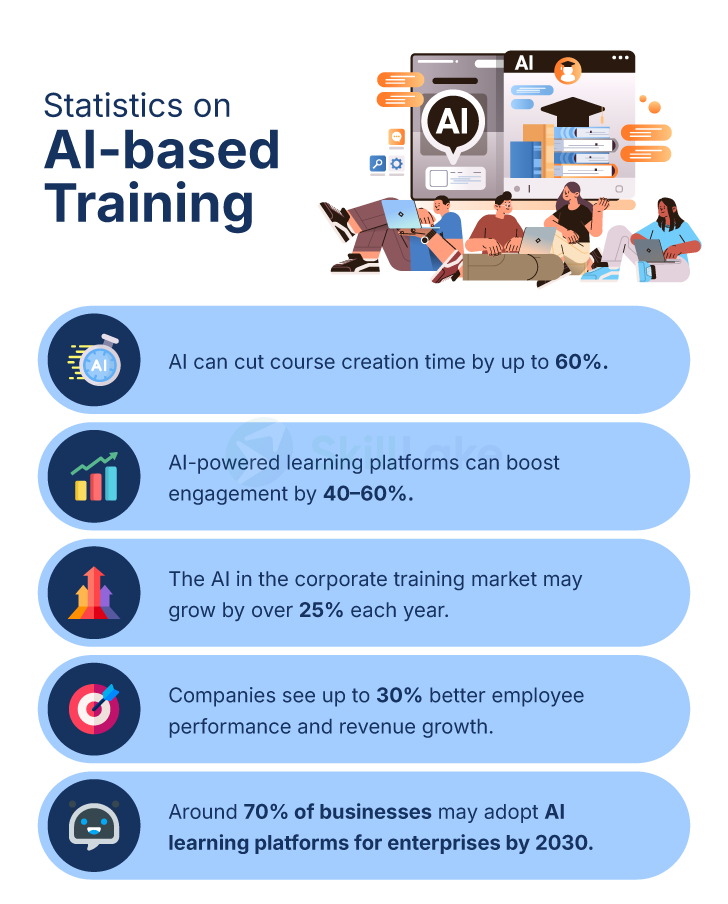
Admins can generate complete, targeted training courses using AI. Set the skill level, define the learning objective, choose the tone, pick the category and the AI builds a course. Complementing this, the AI Question Generator instantly creates assessments, quizzes, and questionnaires based on the course content, ensuring accurate knowledge checks without manual effort. Together, these AI-powered features streamline course creation, maintain consistency, and help organizations deliver high-quality, personalized learning experiences at scale.
AI/ML-Powered Course Recommendations
Skill Lake’s recommendation engine doesn’t just surface random courses. It analyzes each learner’s role, progress, completed courses, and skill gaps, then pushes the most relevant content to them automatically.
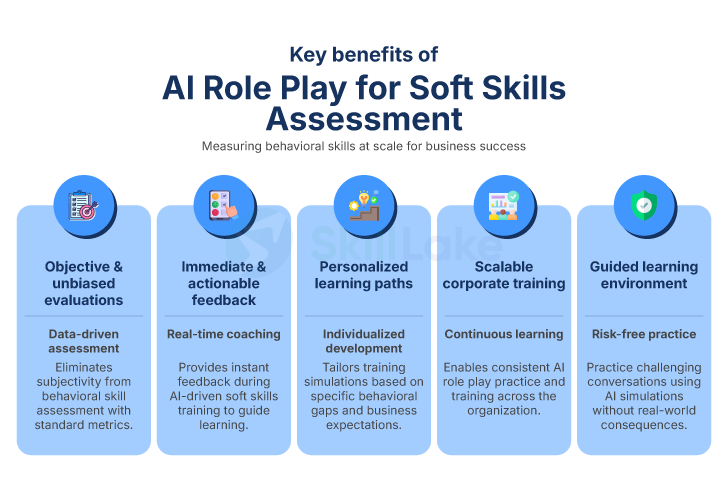
AI Role-Play
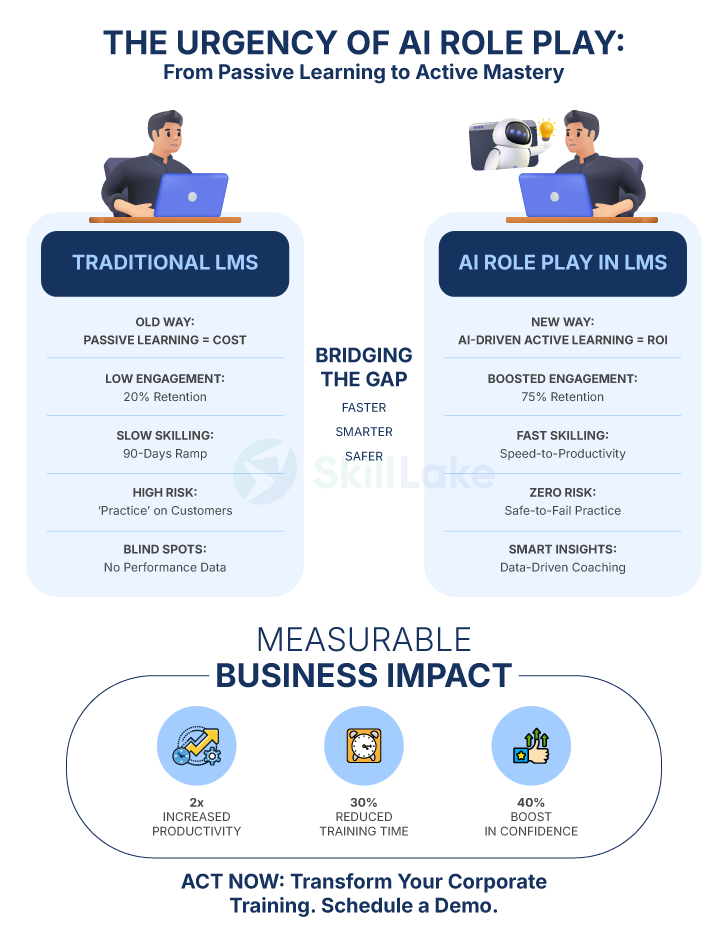
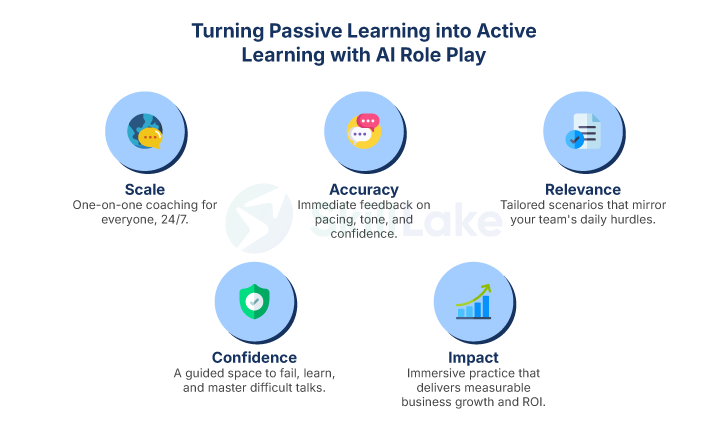
This is where Skill Lake genuinely pulls ahead of the competition. The AI role play simulation feature puts learners in realistic, scenario-based simulations where they have to respond, make decisions, and handle situations as they would on the job.
AI Copilot
Easily create, refine, and simplify course content using Skill Lake’s AI Copilot, aligning it closely with your learning goals. It helps learners get instant answers and stay on track without confusion. Admins can quickly update and improve courses without extra effort. This makes training faster, smarter, and more effective across your organization.
Skill Lake LMS is built as a comprehensive, enterprise-ready learning platform that goes far beyond just AI. It combines powerful course management with seamless integrations, allowing organizations to connect tools like Zoom for live training, Vimeo for video hosting, Microsoft Azure AD for user management, and Single Sign-On (SSO) for secure access—all within one unified system .
Alongside this, it offers robust features such as structured course creation, assessments, certifications, and detailed tracking and reporting dashboards to measure learner progress and business impact . The platform supports multiple learning modes – including self-paced, instructor-led, and blended learning, while enabling mobile access for distributed teams.
Features like gamification, competency mapping, mentoring, social learning feeds, and customizable learning paths ensure high engagement and personalization at scale.
With SCORM compliance, multi-language support, flexible cloud hosting, and the ability to integrate external content platforms or business tools like CRM and HR systems, Skill Lake becomes a centralized learning ecosystem designed to scale with enterprise and franchise training needs.
Best Use Case
Skill Lake is designed for organizations of all sizes and industries looking to streamline training, upskill teams, and scale learning efficiently. Whether you’re a growing business or a large enterprise, it supports diverse use cases – from employee onboarding and compliance training to continuous skill development and partner enablement – through flexible, mobile-first learning experiences that adapt to different roles, teams, and operational needs.
Why It Stands Out: Skill Lake is one of the few platforms that combines AI course generator, AR/VR immersive learning, built-in mentoring, competency mapping, and manufacturing-specific features. Skill Lake enables organizations to design personalized learning paths, track skill development, and align training with real business outcomes. With industry-specific capabilities, including features tailored for manufacturing and enterprise training, Skill Lake supports scalable workforce development while integrating seamlessly with existing business tools and content platforms. This makes it an ideal choice for companies looking for a modern, flexible, and intelligent LMS solution.
Pricing: User-based pricing that scales by number of users. Available on request.
2. Docebo
Docebo is a heavyweight. If you’re running a large-scale manufacturing operation with complex training needs spread across multiple locations and audiences, it’s hard to find a more capable platform.
What makes Docebo stand out is its genuinely mature AI layer. It doesn’t just recommend courses it personalizes entire learning journeys based on role, skill gaps, and performance data. For manufacturers dealing with diverse job functions (engineers, line workers, safety officers, managers), that level of personalization makes a real difference.
Key Features:
- AI-driven personalized learning paths
- Multi-portal architecture for multi-site manufacturers
- Advanced reporting and analytics suite
- 20,000+ course catalog available
- Strong integrations with SAP, Salesforce, and HR systems
- Content generation with AI authoring tools
Best Use Case: Large manufacturing enterprises with multi-site operations, high compliance requirements, and dedicated L&D teams.
Why It Stands Out: Docebo centralizes everything. One manufacturer noted that before Docebo, they were juggling up to six different platforms. After implementation, everything lived in one place from compliance to new product rollouts.
Pricing: Two plans available Elevate (for growing organizations) and Enterprise (for global operations). Pricing available on request.
3. TalentLMS
TalentLMS has built its reputation on one thing: simplicity. And in manufacturing, where L&D teams are often lean and administrators don’t have time to babysit complex software, that matters enormously.
You can literally have training running within a day of signing up. The interface is clean, the setup is fast, and it doesn’t demand a technical background to manage.
Key Features:
- Intuitive course builder with SCORM/xAPI support
- Built-in gamification and certification management
- Multi-tenant branching for separate departments or facilities
- Real-time reporting dashboards
- Mobile access for frontline workers
- AI-assisted tools for faster course creation
Best Use Case: Small to mid-sized manufacturers who need to deploy training quickly without a large implementation project.
Why It Stands Out: Competitive pricing and a shallow learning curve make it the go-to for manufacturers that want results without a six-month rollout.
Pricing: Free plan available for up to 5 users. Paid plans start at around $69/month. Enterprise pricing available on request.
4. Moodle
Moodle is the world’s most widely deployed open-source LMS, and for manufacturers with strong IT teams and a need for deep customization, it’s genuinely powerful. You get full control over how the platform looks, behaves, and integrates with your existing tech stack.
The trade-off? You need technical resources to set it up and maintain it. Out of the box, Moodle requires configuration. But once it’s tailored to your environment, it becomes a highly capable industrial training LMS.
Key Features:
- Fully open-source and self-hosted option
- Thousands of plugins for extended functionality
- Strong assessment, quiz, and competency tracking tools
- Supports blended and instructor-led training
- Active global community for ongoing development
- Mobile app included
Best Use Case: Mid-to-large manufacturers with internal IT resources who want maximum control and low per-user cost.
Why It Stands Out: No licensing fees. Total customization. For organizations willing to invest in configuration, the long-term cost-efficiency is unmatched.
Pricing: Open-source version is free. MoodleCloud plans start at around $110/month. Managed hosting costs vary by provider.
5. Adobe Learning Manager
Adobe Learning Manager (formerly Adobe Captivate Prime) brings enterprise-grade learning infrastructure to organizations that need scale, sophistication, and seamless integration with creative content workflows.
It’s particularly strong for manufacturers who produce a lot of their own training content using Adobe’s broader creative suite. The AI-driven personalization engine adapts learning experiences across employee, customer, and partner audiences.
Key Features:
- AI-powered personalized learning recommendations
- Fluidic player supporting multiple content formats
- Role-based dashboards for learners, managers, and admins
- Robust compliance tracking with audit trails
- Integration with Adobe Creative Cloud tools
- Mobile and offline learning support
Best Use Case: Large manufacturing enterprises with high-quality content production needs and existing Adobe ecosystem investments.
Why It Stands Out: Few platforms match Adobe Learning Manager for visual richness and content format flexibility especially useful when training involves complex equipment or safety procedures that benefit from multimedia.
Pricing: Starts at around $4/user/month for up to 100 users. Enterprise pricing available on request.
6. 360Learning
360Learning takes a fundamentally different approach to training. Instead of top-down content delivery, it puts subject matter experts your experienced floor managers, safety leads, and technical specialists at the center of content creation.
For manufacturing, this is a big deal. Your best trainers often aren’t L&D professionals. They’re the people who’ve run the machine for 15 years. 360Learning makes it easy for them to contribute their knowledge without needing instructional design skills.
Key Features:
- Collaborative course authoring by internal experts
- AI-assisted content creation and learning path design
- Automated compliance workflow management
- Peer learning and discussion features built in
- Advanced certification and analytics engine
- Integrations with HRIS and productivity tools
Best Use Case: Manufacturing companies that want to capture institutional knowledge and build peer-driven training cultures.
Why It Stands Out: The platform shortens content creation cycles dramatically. Experienced workers can share expertise directly, reducing the bottleneck on L&D teams.
Pricing: Starts at approximately $8/registered user/month. Enterprise pricing available on request.
7. Absorb LMS
Absorb LMS consistently earns top marks for its clean interface and automation capabilities. If you want to reduce administrative overhead the kind that comes with tracking hundreds of workers across multiple compliance deadlines Absorb does it well.
Its Intelligent Assist feature uses AI to surface relevant content at the right time, reducing the need for manual assignment and making the learner experience feel less like a chore.
Key Features:
- AI-powered content recommendations (Intelligent Assist)
- Highly customizable learner portal branding
- Automated enrollment rules and compliance tracking
- E-commerce capability for external training monetization
- Robust integrations with HR and business systems
- Mobile learning with offline access
Best Use Case: Mid-to-large manufacturing companies that want to minimize admin workload while delivering a polished learner experience.
Why It Stands Out: Absorb balances administrative power with genuine ease of use something a lot of enterprise platforms get wrong.
Pricing: Available on request. Generally positioned in the mid-to-upper market tier.
8. LearnUpon
LearnUpon is built for organizations managing multiple training audiences simultaneously employees, contractors, partners, and sometimes customers. For a manufacturing company with a complex supply chain and partner network, that multi-audience capability is genuinely valuable.
The platform focuses on simplicity without sacrificing power. Admins get strong reporting and automation tools. Learners get a clean, frictionless experience.
Key Features:
- Multi-portal architecture for different audiences
- AI-assisted automation for enrollments and reminders
- SCORM, xAPI, and AICC compliance
- Salesforce and HRIS integrations
- Strong reporting dashboards and learner analytics
- Enterprise-grade security and data compliance
Best Use Case: Growing manufacturing companies that need to train employees, contractors, and partners from a single platform.
Why It Stands Out: LearnUpon is stable, scalable, and genuinely easy to manage a combination that’s harder to find than it sounds.
Pricing: Custom pricing via demo. Positioned in the mid-to-upper enterprise range.
9. Litmos
Compliance is non-negotiable in manufacturing. Safety regulations, environmental standards, quality certifications the list never really ends. Litmos is built with that reality in mind.
Its ready-made content library includes hundreds of compliance-focused courses that manufacturers can deploy immediately without building from scratch. Combined with strong mobile access and ERP integrations, it’s a solid choice for organizations where compliance is the primary driver.
Key Features:
- Extensive pre-built compliance course library
- AI-enabled course content tools
- ERP integration (SAP and others)
- Offline and mobile learning for frontline workers
- Global scalability across multiple regions
- Automated certification renewal tracking
Best Use Case: Manufacturing organizations with heavy regulatory compliance requirements across multiple regions or facilities.
Why It Stands Out: The pre-built content library dramatically reduces time-to-deployment for compliance programs no waiting months to build courses from scratch.
Pricing: Foundation and Platinum AI plans available. Pricing available on request.
10. Canvas LMS
Canvas is primarily known as an education platform universities and schools love it. But it’s increasingly finding a home in manufacturing organizations that run apprenticeship programs, technical certification tracks, or partner closely with educational institutions.
It’s a structured, content-rich environment with strong assessment capabilities and a familiar interface for learners who’ve used it in academic settings.
Key Features:
- Rich course authoring and multimedia support
- Strong assessment, quiz, and rubric tools
- Learning outcomes and competency tracking
- Integration with student information systems
- Mobile app with offline access
- Open API for custom integrations
Best Use Case: Manufacturers running formal apprenticeship programs, workforce development initiatives, or technical training with academic rigor.
Why It Stands Out: If your training needs look more like a structured curriculum than a compliance checklist, Canvas delivers a level of academic structure most corporate LMS platforms don’t.
Pricing: Free for basic use (Canvas Free for Teachers). Canvas LMS for businesses pricing available on request.
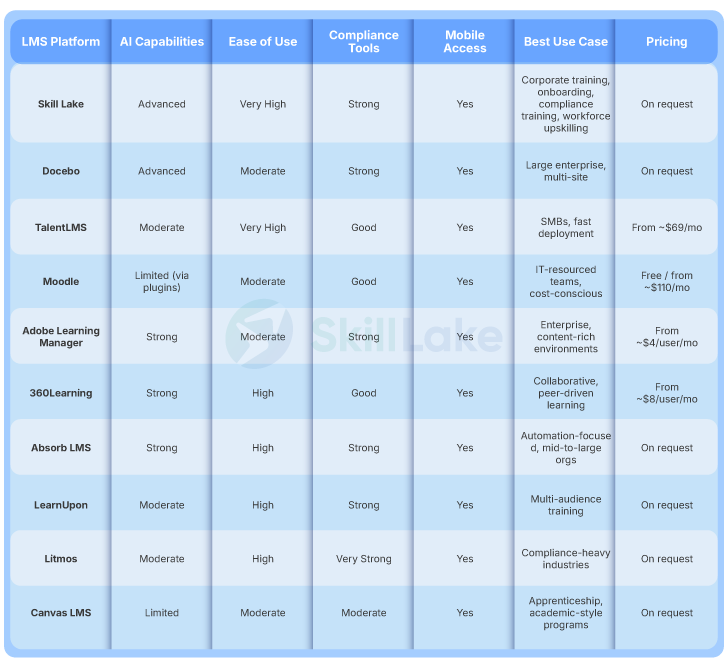
Comparison Table of Top LMS Platforms for Manufacturing
Why Manufacturing Industry Needs an LMS
Let’s be honest. Manufacturing training has a reputation problem. It’s often seen as a checkbox exercise. Fill out the form, pass the quiz, and forget everything by Monday. The industry deserves better than that.
Modern manufacturing facilities deal with a staggering training load. You have ISO compliance. Machine-specific SOPs. Hazardous materials handling. Multilingual workforces across multiple shifts. High employee turnover in frontline roles. It’s a lot to manage manually, and spreadsheets simply don’t cut it anymore.
An LMS for manufacturing industry centralizes all of this. It automates compliance tracking so nothing slips through the cracks. It delivers training to workers whether they’re on the floor, in the break room, or at a remote facility. It gives managers real-time visibility into who’s completed what and who hasn’t.
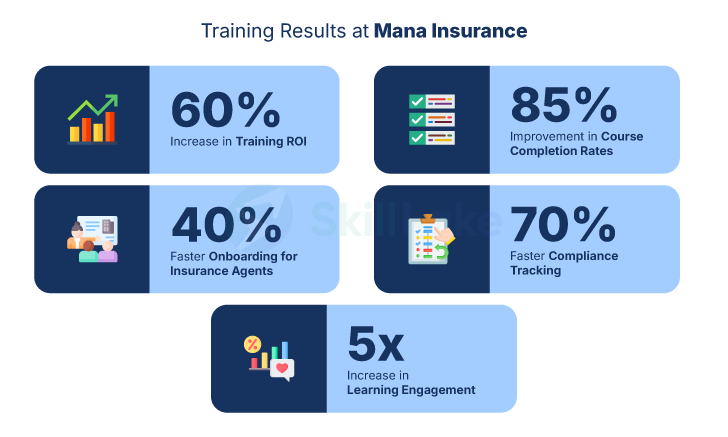
The numbers back this up too. Companies that invest in structured digital training see faster onboarding, lower error rates, better safety outcomes, and higher retention. In an industry where skilled labor shortages are already a major headache, that’s not a small thing.
Key Features of the Best LMS for Manufacturing Industry
Not every LMS is built for the realities of a factory floor. Here’s what to look for when you’re evaluating a manufacturing training platform:
Compliance and certification management
The platform should automate re-certification reminders, track expiry dates, and generate audit-ready reports on demand. No manual chasing.
Mobile-first access
Many manufacturing workers don’t sit at desks. The LMS needs to work on phones and tablets, even in areas with limited connectivity.
SCORM and xAPI support
Ensures your existing content library plugs in without a rebuild.
Multi-location support
If you run plants across different cities or countries, the platform needs to handle separate portals, localized content, and role-based access.
ERP and HRIS integration
Manufacturing operations run on systems like SAP and Oracle. Your LMS should connect with them.
AI and personalization
Adaptive learning paths that respond to individual skill gaps are becoming table stakes, not luxury features.
Robust analytics
Not just completion rates. You want data on knowledge retention, performance trends, and training impact on production outcomes.
Benefits of Using LMS in Manufacturing
The case for adopting an LMS for manufacturing companies isn’t complicated the benefits show up across multiple areas of the business.
Reduced training costs: Digital training eliminates the need for repeated in-person sessions, instructor travel, printed materials, and facility costs. Once a course is built, it scales to thousands of learners at no additional cost.
Consistent training delivery: Every worker across every shift and every location gets the same training. No variation based on which trainer is available that day.
Real-time compliance visibility: Managers can see exactly who holds current certifications and who’s overdue without chasing spreadsheets or emailing supervisors. Automated reminders handle the follow-up.
Faster onboarding: Structured digital onboarding paths get new hires productive faster. Role-specific learning sequences ensure workers learn what’s relevant to their job, not a one-size-fits-all generic orientation.
Better safety outcomes: Regular safety training delivered through an industrial training LMS correlates directly with lower incident rates. Consistent reinforcement builds habits that stick.
Data-driven L&D decisions: Analytics show which training programs are working, which learners are struggling, and where knowledge gaps exist so L&D teams can act on real data instead of gut feel.
How to Choose the Best LMS for Manufacturing Industry
There’s no single right answer here. The best LMS for one manufacturer might be completely wrong for another. Here’s a practical framework for narrowing it down:
Start with your primary training challenge: Is it compliance? Onboarding? Skills development? Safety? The platform you choose should excel at your number-one priority, not just be adequate across the board.
Consider your workforce size and structure: Small teams have different needs than 10,000-person operations. Platforms like TalentLMS excel at fast, lean deployments. Docebo and LearnUpon scale comfortably to enterprise complexity.
Assess your IT capacity: Open-source platforms like Moodle offer maximum flexibility but require internal technical resources. Cloud-based SaaS platforms reduce IT burden significantly.
Check integration requirements: If your HR, ERP, or payroll systems are non-negotiable, verify that the LMS connects with them before you commit to anything.
Think about content creation capacity: If you have an L&D team that creates custom content, you need strong authoring support. If you need ready-made courses, look for platforms with content libraries.
Pilot before you sign: Most platforms offer free trials or demos. Run a real training scenario don’t just click through the admin panel. Involve actual learners in the pilot and listen to their feedback.
Challenges in Manufacturing Training (and How LMS Solves Them)
Manufacturing training isn’t easy. Here are the most common pain points and how a good manufacturing LMS addresses them.
Challenge: High employee turnover means constant retraining. The frontline manufacturing workforce experiences some of the highest turnover rates in any industry. Onboarding new workers repeatedly eats up supervisor time and slows production.
LMS solution: Self-paced digital onboarding paths let new hires complete foundational training independently. Supervisors guide, but don’t babysit. Courses are reusable indefinitely.
Challenge: Compliance deadlines are easy to miss. With dozens of certifications expiring on different dates across a large workforce, manual tracking is practically impossible without errors.
LMS solution: Automated alerts and re-enrollment triggers mean the system handles the reminders. Managers get dashboards. Audit reports generate in minutes.
Challenge: Deskless workers are hard to train. Factory floor workers don’t have desks or computers. Traditional eLearning was built for office environments.
LMS solution: Mobile-first platforms deliver training on smartphones and tablets. Workers complete modules between shifts, during breaks, or at home. Offline access handles low-connectivity environments.
Challenge: Capturing institutional knowledge before experienced workers retire. Baby Boomer retirements continue to drain decades of expertise from manufacturing floors.
LMS solution: Platforms that support collaborative content creation (like 360Learning) let experienced workers record and share knowledge in structured formats before they leave.
Challenge: Multilingual workforces need localized content. Many manufacturing facilities employ workers who speak different languages, creating consistency challenges for training delivery.
LMS solution: Enterprise manufacturing LMS platforms support multilingual interfaces and content localization, ensuring every worker gets training in a language they understand.
Conclusion
The best LMS for manufacturing industry in 2026 isn’t just a course delivery tool it’s a strategic asset that keeps your workforce safe, compliant, skilled, and productive.
Whether you’re a small manufacturer looking for fast deployment with TalentLMS, a large multi-site enterprise exploring Docebo’s AI capabilities, or a compliance-focused operation considering Litmos, there’s a manufacturing LMS on this list that fits your reality.
The key is to match the platform to your actual challenges, not just your wishlist features. Think about what’s costing you the most time, money, or risk right now and choose the LMS that solves that problem first.
Ready to See What a Modern Manufacturing LMS Can Do?
If you’re looking for a manufacturing training platform that combines AI-powered course creation, real-time compliance tracking, and an experience your workers will actually use Skill Lake is worth a serious look.
Skill Lake brings together intelligent learning paths, automated compliance workflows, mobile-first delivery, and analytics that connect training to real performance outcomes. It’s built to scale from mid-sized manufacturers to complex multi-site enterprises without the enterprise price tag.
Frequently Asked Questions (FAQs)
Q: What is an LMS for manufacturing?
A: An LMS for manufacturing is a software platform designed to manage, deliver, and track employee training across manufacturing operations including safety compliance, machine operation training, onboarding, skills development, and certification management.
Q: Why do manufacturing companies need an LMS?
A: Manufacturing involves high compliance demands, complex safety requirements, and large frontline workforces that are difficult to train at scale manually. An LMS automates training delivery, tracks compliance, and ensures consistent learning outcomes across all locations and shifts.
Q: What features matter most in a manufacturing LMS?
A: Compliance and certification management, mobile access for frontline workers, SCORM/xAPI support, multi-location capabilities, ERP integration, and robust analytics are the most critical features for manufacturing use cases.
Q: What’s the difference between an LMS and a manufacturing training platform?
A: The terms are often used interchangeably. A manufacturing training platform typically refers to an LMS that’s configured or designed specifically for industrial workforce needs emphasizing compliance, safety, and skills tracking over general corporate learning.
Q: How much does an LMS for manufacturing cost?
A: Pricing varies widely. Entry-level platforms like iSpring Learn start at around $2.82/user/month. Mid-market platforms like TalentLMS start around $69/month flat. Enterprise platforms like Docebo, Absorb, and LearnUpon offer custom pricing based on organization size and features required.
Q: Can an LMS handle safety compliance training?
A: Yes. Most enterprise-grade LMS platforms include automated certification tracking, expiry reminders, audit-ready reports, and pre-built or customizable compliance content making them well-suited for OSHA, ISO, and other regulatory requirements.
Q: How long does it take to implement an LMS for manufacturing?
A: Implementation timelines range from a few days (for simpler platforms like TalentLMS) to several months (for large enterprise deployments like Docebo). The complexity of your content library, integrations, and workforce size all affect the timeline.

Other Reads from Skill Lake
-

Skill Lake LMS Partners With Udemy Business to Elevate Learning Experiences
Read MoreLearning is evolving, and so are learner expectations. Today’s workforce is moving beyond rigid, traditional training models to adopt more flexible, accessible, and personalized learning experiences. To meet this shift, Skill Lake LMS has partnered with Udemy Business to create a more unified and impactful learning journey. For modern businesses, this collaboration promises more efficiency
-

Learning and Development Management Software: Key Features to Look for in 2026
Read MoreToday’s businesses need a capable L&D platform that acts beyond delivering courses or tracking completions. Choosing a modern learning and development software allows organizations to speed up content creation, simplify training management, facilitate skill development, and measure the true impact of training. If you are evaluating new L&D management software this year, here are the









Anoop Kumar MS
Anoop Kumar MS, Product Manager of Fingent Global Solutions Pvt. Ltd., is an experienced product specialist with expertise in identifying customer needs and delivering innovative, data-driven solutions. Skilled in wireframing, UX, requirements analysis, risk assessment, team management, and root cause analysis, he excels in managing product lifecycles and fostering seamless collaboration to address real-world challenges.