Skip to content
Logo
search
  • Features
    • Overview
    • AI Role Play
    • Content Authoring Tools
    • AI Course Generator
    • SCORM Compliant LMS
    • Integrations
    • Pre-Loaded Courses
  • Solutions
    • Learning Management System
    • LMS Mobile App
    • Learning And Development Platform
    • Learning Experience Platform
    • People Development Platform
    • Corporate Training Platform
    • Training Management System
    • Content Creation Services
    • Performance Review System
  • Resources
    • Case Studies
    • Blogs
    • Help
    • Use Cases
    • videos
    • Downloads
    • Release Notes
  • Industries
    • Info Tech
    • Construction
    • Manufacturing
    • Non-Profit
    • Hospitality
    • Energy
    • Insurance
    • Retail
    • Automotive
    • Franchise
    • Telecom
    • Healthcare
    • Restaurant
  • Pricing
  • Company
    • Partners
    • About Us
  • Contact Us
  • search
  • Request A Demo
×
  • Features
    • Overview
    • AI Role Play
    • Content Authoring Tools
    • AI Course Generator
    • SCORM Compliant LMS
    • Integrations
    • Pre-Loaded Courses
  • Solutions
    • Learning Management System
    • LMS Mobile App
    • Learning And Development Platform
    • Learning Experience Platform
    • People Development Platform
    • Corporate Training Platform
    • Training Management System
    • Content Creation Services
    • Performance Review System
  • Resources
    • Case Studies
    • Blogs
    • Help
    • Use Cases
    • videos
    • Downloads
    • Release Notes
  • Industries
    • Info Tech
    • Construction
    • Manufacturing
    • Non-Profit
    • Hospitality
    • Energy
    • Insurance
    • Retail
    • Automotive
    • Franchise
    • Telecom
    • Healthcare
    • Restaurant
  • Pricing
  • Company
    • Partners
    • About Us
  • Contact Us
  • search
  • Request A Demo

Category: Blogs

Corporate Training Growth

Business expansion is inevitable for any company. Companies that started as small company expands to medium and then to large by beating the odds in the highly competitive market. 

When your business expands, opens franchises, and opts for mergers and acquisitions, you ensure your company’s brand value, culture, and objectives are never compromised. 

Your employee count goes way too high amidst such juggling, and you will have too much to handle, like employee onboarding, performance analysis, employee training, and much more! 

While you cannot automate mergers and acquisitions or other business processes, you can automate employee training and management.

Many companies fail to notice this, but your employee training directly impacts the company’s outcomes and success. As companies expand, scaling up employee programs to match your company’s needs become complex. 

To avoid such complexities related to scaling up training, let us dive into some details, like why your companies need to scale up, the advantages of scaling up your organizational training, and a few tips to achieve those.

Read more: Why Consider LXP over LMS for Employee Training and Development

Why Does Your Company Need To Scale Up Training?

While scaling your business, investing in your workforce is highly underrated. Investing in your employees is as important as bringing new leads- both fuel your business growth quickly. Your company is good, only as good as those working within it. Therefore, training your workforce and expanding their skillset will help your business scale from excellence to excellence.

Provide your employee with structured learning and development opportunities. This way, you can ensure that your employees have the skills to power your business growth at any time. This will also lead to nurturing a positive work environment where employees are supported, valued, and appreciated. 

Apart from business growth, solving various business challenges, and shifts in job roles necessitating the need for a scale-up in training, here are a few more reasons to scale up training in your company, whether it is a startup, small, medium, or large enterprise:

  1. Makes your company a more tempting option for people to join your organization in a highly competitive market.
  2. Make employees feel valued; therefore, you will see employee retention improve.
  3. Helps with talent mapping and identifying the individuals capable of driving your business growth further- this will save a fortune for your company trying to hire managers amidst your employees making progress.
  4. Supports your employees becoming multi-skilled, thus opening doors towards new opportunities, reducing recruitment costs, and making your employees future-ready through various skill sets they acquire.
  5. Make your employees stay with you for a long haul, and they will become the face of your organization, thus strengthening your employee brand.

Benefits Of Scaling Up Training In Organizations

Scaling up training has numerous benefits, such as improved employee productivity, engagement, and enhanced value and morale. 

When employees are offered constant training to upskill and reskill to build their skills, they feel supported and valued, and there will be genuine interest from their side to contribute more to your organization. 

Various on-the-job training like job role-specific training, company culture training, customer service training, and safety guidelines training are great advantages of scaling up your training programs. 

Mentorship provided through learning programs can strengthen areas such as customer engagement, overall profitability, and reduced absenteeism.

A company fostering a learning culture is helping its workforce build a career based on values, morale, a positive growth mindset, and becoming more innovative, helping in better problem-solving skills and quick decision-making abilities. 

When your company has a future-ready robust workforce, it makes your company’s backbone stronger.

You now know the need for a scale-up in your training and the advantages it puts forth. Now let us have a walkthrough of how to achieve it.

Read more: Powering Corporate Training with SCORM Compliant Learning Management System

Tips and Ways To Scale Up Training

Creating a corporate training program that aligns with your company is challenging. Still, you can achieve it with constant practice and small steps taken on:

1. Outline Your Training Program’s Scope 

When the market is highly competitive, your employees must stay on top of the new skills. Shred off the outdated chunks of your training programs and bring in the updated ones to overcome your employees’ challenges. When your organizational needs are on par with the performance targets, it will take care of your employee engagement built on values aligned with your company. 

2. Go for E-learning Solutions

Your company might have a scattered, distributed, or remote workforce. You may be following a hybrid work model. Irrespective of the workforce models, you can make training accessible, easier, and equal for all your employees. Through e-learning solutions like LMS, LXP, etc., you can provide the learning content and conduct assessments to your employees anytime, anywhere, and from any device.

3. Take Small Steps in Training Paths

Before you roll out a training program company-wide, ensure its practicality by trying it on a small sample size like a team, department, or even for employees in a specific location. Before you put in all your efforts, time, and money, such test trials will ensure whether a training program is feasible for your company. Start with small ideas, ascertain the results it produces, and then take the big leap!

4. Underline Your Brand Name

Customize your training program, and ensure it underlines your brand. This will imprint your brand identity among your employees and other stakeholders. Emphasizing your brand will give your employees a sense of belonging by bringing the scattered teams together under one roof. Training employees can nurture your employees as a family where everyone supports and grows together.

5. Choose Blended Learning Programs

Training can be offered in various modes like graphical representations, videos, webinars, and other appealing content. Such ways of blended learning will help your employees retain information more effectively. Sounds like blended learning should be on top of your list to scale training programs in a way that is effective and reaches wider trainees. 

6. Provide Microlearning 

When the training content gets complex for your employees, simplify it through micro lessons. When training is provided in small bite-sized chunks instead of lengthy seminars and classroom training, it imprints in employees’ minds. Furthermore, when these micro learners can access content 24X7 from anywhere and any device, they can devote their time to other priority tasks. Rest assured, you will witness improved learner attention and engagement with microlearning!

Read more: Boosting Business Value with Streamlined Learning and Development in the Workplace

How LMS Platforms Like Skill Lake Can Help

We know how to scale your training program to the next level, but what is the right platform to achieve it?

Skill Lake can help you get there. With unique features like customization, availability on any device, multitudes of online learning libraries to choose from, and fitting your employees’ busy schedules in a hassle-free manner, you can ensure your training standards scale up from time to time. 

Skill Lake is the perfect online training solution for an organization of any size that needs to automate training. While companies focus on their mainstream business activities, Skill Lake will handle employee training well. 

To experience the perfection of content consumption, ensure learning accountability of all employees, organize learning materials, improve social and collaborative learning, personalized learning paths, make use of multiple learning delivery options, promote comprehensive learning, and above all, accelerate business growth, all you need is the support of an efficient learning platform like Skill Lake!

Request a free demo now!

Aarathy Jayakrishnan

Aarathy is an e-learning professional and enthusiast with a keen understanding of learning and development concepts. She writes insightful content, unraveling the possibilities that e-learning holds, and strives to make education open for all.

Other Reads from Skill Lake

  • The Business Impact of AI in Corporate Training: Benefits, ROI & Future Trends

    The Business Impact of AI in Corporate Training: Benefits, ROI & Future Trends

    Corporate training has always played an essential role in helping organizations build skilled, productive, and future-ready workforces. However, the way employees learn has changed significantly over the past few years. Businesses are adopting new technologies faster than ever, job roles are evolving continuously, and employees are expected to learn new skills while balancing their daily

    Read More
  • Best Learning Management Systems for Healthcare in 2026

    Best Learning Management Systems for Healthcare in 2026

    Aligning healthcare workforce training with evolving compliance standards and medical advancements requires a modern, agile approach. With patient care and regulatory compliance on the line, healthcare organizations cannot stick to fragmented training. Medical groups are actively searching for tools that streamline training while keeping up with changing standards: Which are the best learning management systems

    Read More

    Stay up to date on the latest in HR and L&D


    Highlights of Skill Lake

    • AI/ML Powered Course Recommendations
    • Courses with AR/VR Experiences
    • Competency & Course Management
    • Multiple Learning Modes
    • Mentoring & Feedback
    • Gamification
    • Learning Bytes
    • Mobile App
    • SCORM Compliance
    REQUEST A DEMO

    Highlights of Skill Lake

    • Sell-Paced & Instructor-Led Learning
    • Tracking & Reporting
    • Mentoring
    • Gamification
    • Learner Dashboard
    • Course Library
    • Enterprise IT Ready

      [recaptcha]

      Highlights of Skill Lake

      • AI/ML Powered Course Recommendations
      • Courses with AR/VR Experiences
      • Competency & Course Management
      • Multiple Learning Modes
      • Mentoring & Feedback
      • Gamification
      • Learning Bytes
      • Mobile App
      • SCORM Compliance
      • Multi-Cloud Hosting

        Watch Skill Lake in Action!

        REQUEST A DEMO

        AR VR in eLearning

        Augmented Reality (AR) and Virtuality Reality (VR)- the clever technologies that connect our physical and digital worlds, we know!

        But what are the definitions of AR and VR? Let us get a load of those…

        Creating AR content basically is about a real-time view of the actual world where the elements are blanketed by computer-generated visuals and sounds thus adding more layers of information, activity, and entertainment. It incorporates digital information through visual and audio aids, or through the real-time user environment itself.

        VR is all about recreating our real world or creating an entirely new reality for the users. To translate various motions into simulations, the user will need devices like headsets with screens, sensors, and handsets into simulations. Basically, it creates a virtual environment and puts users inside that experience. 

        One main difference between AR and VR, if you ask us, is that the former works with the real world as its basic foundation and the latter takes you away from the distractions of the real world.

        Twin Sweeney, the CEO of Epic Games once said, “I believe that augmented reality will be the biggest technological revolution that happens in our lifetime”. And time proved he was true. Statista reports that users in the AR & VR market are expected to amount to 2,593.00m by 2027. User penetration will be 28.8% in 2023 and is expected to hit 32.6% by 2027. The average revenue per user (ARPU) is expected to be US$14.08.

        AR and VR have created a space in corporate learning where learners can have a hands-on experience in various subject matters. It advocates “learning by doing” and is beneficial for corporate training in giving training in a safe and cost-effective manner, a better way to practice and develop your employees’ soft or technical skills, making employees ready for any emergency situations, and making learning more interesting through gamification. 

        A corporate LMS that integrates AR and VR can enjoy the benefits of simulated learning like

        1. Training made interesting and cost-saving in a secure environment.
        2. Practicing new skills or polishing existing skills made it easy
        3. Employee readiness for any emergencies ensured
        4. The effectiveness of learning materials is enhanced and a lot more!

        Why Implement AR and VR in Your Corporate LMS?

        An enhanced learning experience and improved learner engagement are one of the primary goals of implementing AR and VR in the corporate space. The Augmented and Virtual Reality Survey Report says that 86% of respondents believe that XR technologies―Virtual Reality (VR) as an entirely digital world, Augmented Reality (AR) as an overlay on the digital world and existing surroundings, and Mixed Reality (MR) as a combination of VR and AR―will be requested as hand-held devices and mobile-first solutions by 2025.

        Redesigning your LMS or LXP by adopting VR and AR content brings the following values:

        1. Enhanced user engagement
        2. Personalized learning
        3. Immersive user experience
        4. Interactive and engaging course content
        5. Tracking and estimating course effectiveness
        6. Life-like learning scenarios in low-risk environments
        7. Cost savings due to less expensive tooling changes
        8. Faster time to market and improved scalability of your workforce

        Why Do Organizations Hesitate to Implement AR and VR Despite the Benefits?

        AR and VR content creation enabled through your LMS provides virtual walkthroughs of your employees’ work environments, interactive product demos, and problem-centric scenario-focused learning. However, it too has a flip side of challenges like any other technology, and those are…

        1. Heavy Cost Incurred During the Initial Stages

        AR and VR need software and devices like headsets and AR glasses. Additionally, you might also need a strong PC and MAC for creating AR VR content. Hence the course turnaround time and expenses will be more than regular eLearning courses. Experts say that the prices associated with these technologies will reduce soon. Considering the value it adds to your workforce and the ROI it can offer, this is a one-time investment that is safe to embark on.

        2. Technical Limitations

        Trainers if not familiar with the latest technologies like AR and VR technology can find its implementation quite challenging. They will have to invest their time, resources, and effort into learning how to use and troubleshoot AR and VR equipment. The same goes for trainees. If they are not familiar with such technologies and the associated devices, the learning curve for educators and trainers can make only slow progress at the beginning.

        3. Potential for Distraction and Disengagement

        It is a possibility that your learners get addicted to the virtual world. Visual treats are fun and trainees can get carried away by the AR and VR technologies. If the learners experience the virtual reality lessons better than their conventional ways of learning experiences, then they will lose their focus and drift away from their main areas of attention.

        4. Malfunctioning Can Waste Time

        AR and VR are used along with a specific set of devices like headphones. If any or few of the devices malfunction, then that will lead to the wastage of your resources and time while facing inconveniences and rectification efforts and alternatives.

        How Skill Lake Can Help?

        The integration of AR and VR into LMS is in a way providing an additional option for you to measure your employees’ success rate. Besides a direct impact on your business results, it eliminates the weak points of your trainers through training efforts that provide real-life lessons!

        The efforts involved in ramping up the learning experience are one of the main reasons for interest in VR and AR content creation for companies. AR and VR technologies are increasingly used in business activities and the learning sphere. Integrating AR and VR into an e-learning product like Skill Lake can help you gain numerous benefits through features like:

        1. Streamlined and regularized corporate training
        2. Easy uploading of learning content in any format like videos, graphics, simulations, etc.
        3. Enhanced personalized learning and user engagement
        4. We have a dedicated content creation team to convert basic training materials to interesting ones: 
        5. AI/ML-powered platform to boost organization-wide employee growth
        6. Competency management and mapping
        7. Accountability for people’s development
        8. Learning delivery and content authoring
        9. Smart library, learner dashboard, and user management
        10. Enterprise IT ready and adheres to enterprise security standards

        The training in today’s modern companies can be revolutionized with AR and VR technologies. But we suggest scrutiny of ethical, equity, and privacy issues are conducted for the effective implementation of this. Skill Lake can address all these challenges and help your companies reach their maximum potential and carve a future-ready workforce! Connect with us today!

        Aarathy Jayakrishnan

        Aarathy is an e-learning professional and enthusiast with a keen understanding of learning and development concepts. She writes insightful content, unraveling the possibilities that e-learning holds, and strives to make education open for all.

        Other Reads from Skill Lake

        • The Business Impact of AI in Corporate Training: Benefits, ROI & Future Trends

          The Business Impact of AI in Corporate Training: Benefits, ROI & Future Trends

          Corporate training has always played an essential role in helping organizations build skilled, productive, and future-ready workforces. However, the way employees learn has changed significantly over the past few years. Businesses are adopting new technologies faster than ever, job roles are evolving continuously, and employees are expected to learn new skills while balancing their daily

          Read More
        • Best Learning Management Systems for Healthcare in 2026

          Best Learning Management Systems for Healthcare in 2026

          Aligning healthcare workforce training with evolving compliance standards and medical advancements requires a modern, agile approach. With patient care and regulatory compliance on the line, healthcare organizations cannot stick to fragmented training. Medical groups are actively searching for tools that streamline training while keeping up with changing standards: Which are the best learning management systems

          Read More
        Learning and Development in Workplace

        Employers are trying to attract and retain employees by focusing on new-age technology. Many industries today are facing skill gaps and labor shortages, making retaining and strengthening the workforce cumbersome.

        The general lack of digital maturity is one essential reason companies are critically looking to improve their workplace learning and development processes. Formstack and Mantis Research revealed that only 4% of today’s organizations have achieved a fully digitized and automated workplace. Today, companies need to grow digitally to avoid inefficient, redundant processes impacting their productivity. Effective L&D processes are also inevitable to ensure employees combat the rising organizational changes. 

        This blog will discuss the corporate Learning and Development paradigm shifts and how Learning and Development in workplace impact business value!

        Transforming Learning and Development in Workplace

        The paradigm shift has hit rock bottom in the way people work, the way customers prefer things, and, on a larger scale, the world as a whole. When your organization fails to be digitally ahead, employee productivity, employee retention, customer satisfaction, and, henceforth, business value suffer.

        Post-COVID, companies in all spectrums are trying to stay afloat and make spontaneous decisions. However, it is time for companies to address their gaps and reach digital maturity through proactive strategic decisions. 

        How?

        Culture, workflow digitization, futuristic technologies, and team collaboration are pivotal in your organization’s automation efforts. Planning is important to determine where your organization lands on a digital maturity model. Then, identify changes you can make to achieve workflow automation, employee empowerment, improved customer experience, and other goals that build your business value.

        When an employee learns a new skill, its period of effectiveness is limited, say five years or so. Moreover, there is no assurance that your employees will stick with you for that long. In this digital age, companies must break their function silos, and employees must quit efforts to build linear career paths.

        How can a modern workplace like yours pace up with such paradigm shifts?

        An always-on, collaborative learning and development experience is the answer! Don’t give your employees a long ladder; ask them to climb to the top immediately. Make them take small progressive steps, give them time to pause and evolve, and guide them in collecting a large cluster of capabilities and experiences on their way up. 

        The question is: Can you provide a hassle-free, iterative learning experience to support a rapidly evolving workforce? In doing so, can you ensure your organization’s agility and digital maturity?

        You can if you have an innovative corporate learning platform to assure the delivery of actual employee and business value.

        The Strategic Role of Learning and Development in Workplace

        Providing your employees the chance to learn and grow makes them feel invested in your organization. In a rapidly evolving skill market, your employees should be given new challenges to push beyond expectations. This will help your employees remain content and interested in their work.

        Employees are trying to keep pace with the rapidly shifting modern workplace through agile and ‘responsive to change’ learning. Therefore, focusing on your organization’s learning and development strategy makes a strong case for its wide-ranging impacts on business values.

        Now, let us look through a few business areas that can be impacted by effective learning and development!

        1. Talent Attraction and Retention

        While it is important to follow the traditional learning approach of improving productivity at both the individual and organizational levels, it has now had a wider impact on employability. The work landscape has taken a dramatic twist regarding employees staying long-term in one company.

        Employees will stay only until they feel valued in the company, feel valued for the role, and positively contribute to their career development. In such a situation, you might find employee attraction and retention complex. One of the main reasons employees joined your organization is the tremendous opportunities you offer. When the opportunities are exhausted, employees do, too!

        2. Grow Your People and Their Abilities

        The skill market quickly evolves, necessitating employee skill polishing now more than ever. But when you have training and development opportunities, your employees will stay on top of the changes as it happens. When you invest in developing leaders in the workplace through learning, you will see increased ROIs. This will make your organization more likely to achieve performance targets.

        3. Build A Value-based Culture

        Your organization’s values and morals have been built upon the need to be understood by the employees you recruit. Only a learning and development program can help better communicate and practice company values. Even when your employees are scattered or remotely working or distributed, value-based culture training can help build a sense of community or connection among your employees. 

        4. Build Your Brand

        As already said, fostering a company value-based training is your organization’s ‘mantra’ to build a brand among Gen Y professionals. When it comes to other prospective employees, your brand identity is the first thing they care about, and they will also look into the position you hold in the business landscape. Communicating your company as a brand through L&D training programs can help you improve your organization’s status.

        5. Employee Engagement and Motivation 

        Again, employees need opportunities to stay happy and connected with your organization. For this, make sure you have a proper L&D training strategy. When employees are engaged and motivated, they will give their 100% effort, have more creativity, and focus on innovative approaches. 

        How Learning and Development Platforms Can Transform Your Workplace

        Investing in Learning and Development training can harvest great rewards for your company. Just needing one in place is not enough. You also need to understand the measures by which these changes are impacting your employees and the company as a whole. Measuring just employee satisfaction and completion rates like conventional methods won’t do. 

        A result-based matrix is also needed to assess the impacts of these changes on employees and their learning engagement, as well as on teams and the whole business process. To ensure your organization adopts these business values properly, ensure you have a review framework that checks for strategic alignment, people’s capabilities, organizational health, individual peak performance, etc. What’s better than L&D software to help streamline the entire learning and development process?

        How Skill Lake Transforms Workplace Learning

        Skill Lake is a unified platform for all your learning and development programs in the workplace. When your business expands, training many employees can be painstaking. But with Skill Lake, you can easily achieve this task, maximizing your chances of building a dedicated workforce and unique business value.

        Skill Lake offers several benefits that can help your company easily tackle the quickly evolving L&D training programs. Some of them are:

        1. Driving business growth
        2. Promoting learning and accountability
        3. Organizing course materials
        4. Boosting learner engagement
        5. Offering continuous learning and growth

        The features and benefits of Skill Lake catalyze your business value, improve your ROI, and make your company go places through one simple step—continuously making your employees future-ready! Connect with us now!

        Sachin Krishna

        Sachin is a passionate advocate of e-learning with a profound knowledge of the field. He regularly writes compelling content that captivates readers and works to spread awareness of learning solutions.

        Other Reads from Skill Lake

        • The Business Impact of AI in Corporate Training: Benefits, ROI & Future Trends

          The Business Impact of AI in Corporate Training: Benefits, ROI & Future Trends

          Corporate training has always played an essential role in helping organizations build skilled, productive, and future-ready workforces. However, the way employees learn has changed significantly over the past few years. Businesses are adopting new technologies faster than ever, job roles are evolving continuously, and employees are expected to learn new skills while balancing their daily

          Read More
        • Best Learning Management Systems for Healthcare in 2026

          Best Learning Management Systems for Healthcare in 2026

          Aligning healthcare workforce training with evolving compliance standards and medical advancements requires a modern, agile approach. With patient care and regulatory compliance on the line, healthcare organizations cannot stick to fragmented training. Medical groups are actively searching for tools that streamline training while keeping up with changing standards: Which are the best learning management systems

          Read More
        Workforce Quality in Remote Work Settings

        Organizations are trying to preserve an innovative hybrid work model. Collaborating with futuristic tech tools like Learning Management Systems [LMS] is the first step to creating a creative and engaging work environment. However, research suggests a ‘large gap’ in the execution of hybrid work technologies in companies. So let’s discuss on the topic Workforce Quality In Remote Work Settings.

        How can companies overcome this gap? How can LMS solutions help your company get there? Here is what we think…

        The basic purpose of an LMS is to assist your employees in acquiring new skills at any time, anywhere and from any device.

        An LMS facilitates the creation and remote distribution of your company-specific course content. LMS also simplifies employee onboarding and helps analyze learner data while building a strong employee-employer relationship. What you get in return will be a workforce constantly acquiring new skills additionally boosting employee engagement and retention.

        Read more: Powering Corporate Training with SCORM Compliant Learning Management System

        Importance of Ensuring Workforce Engagement in Remote Work Environment

        Are the remote and hybrid work models changing how your workforce collaborates and engages? 

        Your workforce efficiency largely depends on the ease of collaboration and engagement. When employees engage better, they are well-equipped with knowledge, skills, and resources to perform their jobs effectively. Although remote and hybrid models have jilted traditional desk-to-desk conversations, technology is helping maintain effective engagement systems. Here’s why ensuring workforce engagement and motivating them in a remote work environment is essential!

        1. Promotes Employee Efficiency and Accountability

        Tracking employee capabilities and skill gaps can help better utilize talents for organizational growth. Optimizing the workforce structure will help motivate your employees, encouraging them to acquire more skills. Regular training and ensuring those skills are put to use will make your staff feel valued and in turn strengthen your workforce. 

        2. Boosts Learning as a Team

        Like working should be collaborative, learning should also be collaborative. We say so because your employees are inherently social, and learning as a team can bring them closer and nurture the spirit of collaboration. Learning as a team through team activities can get your employees to experience beyond meetings and lectures. Make your employees solve quizzes and problem-solving questionnaires together. 

        3. Improves Problem-solving and Spurs Innovation

        With a collaborative approach, employees with diverse knowledge and skill sets will be in the mix, which improves competence and experience. When your employees with different skill sets come together, a more creative and efficient way to solve problems will exist. It is not just that! When in a team, there will always be a handful of employees updated with new technologies, which helps maintain the team’s momentum. This will spur innovation, creating a continuous loop of ideation and innovative solutions.

        4. Increases Employee Satisfaction

        Employee collaboration creates an open work setting where people feel valued and heard. When employees are happy and satisfied, it reflects their contribution to the company’s culture and outcomes. Employee satisfaction is, in fact, one of the driving forces for employees happily going to work, tending to be more accountable and less likely to leave the company.

        5. Aligns Remote Teams

        We are in the remote and hybrid working era. Your company might even have distributed teams. How can such teams be aligned? Even if yours is a global company with multiple offices spread across the globe a simple learning tool or Employee GPS tracking apps can ensure that all your employees are up-to-date, aligned, and connected through collaboration. We are pointing to your workplace turning into an environment where no employees feel siloed, adversely impacting their productivity and employee retention.. 

        Ways to Engage Employee Engagement and Collaboration

        First, evaluate your tech stack and see what is missing in assisting your employees in achieving tasks that promote company culture. Your company’s tech stack indicates whether your workplace has a good communication and collaboration setting at your workplace. Irrespective of whether your company has a good tech stack or a remote, hybrid, or distributed team, we share a few ways to facilitate a collaborative work environment. 

        1. Streamlined Virtual Onboarding

        Onboarding solutions develop the framework for enhanced employee experience right from the beginning. Onboarding backs combining training resources from different departments into a unified platform, thus making it easy for new hires and considerably reducing costs. Onboarding can reduce the redundancy in training materials.

        A 2021 Toggl survey revealed that 60% cited onboarding employees remotely as the biggest adjustment to the pandemic. A streamlined virtual onboarding implies that your employees have a grasp of their responsibilities, their colleagues, and the company culture. 

        Onboarding should give the new hires a good idea of their team members, training agenda, and, most importantly, how much your company values collaboration.

        2. Focus on efficiency and accountability

        As everyone who’s ever spent three hours spinning their wheels in a meeting room can tell you, spending more time together on a task doesn’t equate to collaborating better.

        One way to improve employee collaboration is to stay on top of how much time is spent on each task and how efficiently people work together. Project management software that includes time-tracking capabilities like Hubstaff and Toggl can help.

        What can help even more is setting up a time limit for meetings and brainstorming sessions and setting clear deadlines for tasks—and a script about the next steps when an employee struggles with all or parts of the process.

        3. Encourage Hybrid and Asynchronous Brainstorming Sessions

        Employee collaboration and brainstorming collectively matter a lot for a company’s progress. Such collaborative approaches ensure that all your employees have opportunities to share ideas and raise questions irrespective of where they connect from. Employee collaboration can be further encouraged through asynchronous brainstorming sessions, particularly when you have distributed teams. For instance, your company should have a common platform in place where employees express their ideas and suggestions and where your employees can build on an employee’s input. 

        4. Train Together, Learn Together

        Employee collaboration should be a primary focus whether your team is distributed or remotely working. Team synergy among your workforce can be enhanced when employees train and learn together. It will bring them closer when employees learn together rather than attending scheduled conventional Zoom meetings. Including group activities like quizzes and other gamified learning, approaches can create a positive environment for your team’s problem-solving. Team training is the optimal option if you aim to build a strong team and improve employee collaboration.

        Read more: Why Consider LXP over LMS for Employee Training and Development

        How a Platform Like Skill Lake Can Help

        When you have remote working employees, it is essential that they carry out their routine tasks hassle-free. Employee collaboration is one aspect that your company cannot compromise in such a setting. This is where Skill Lake can help. The key features of Skill Lake are eliminating time and distance barriers and promoting employee collaboration through a unified platform. 

        Skill Lake LMS can take the wheel in the hybrid work revolution by:

        1. Boosting learner engagement
        2. Creating a positive onboarding experience
        3. Facilitating real-time visibility
        4. Considerably reducing training time
        5. Offering flexibility to employees
        6. Providing easy access to learning content
        7. Improving employee retention
        8. Encouraging discussion and debate 
        9. Simplifying assessment process
        10. Backing competency mapping
        11. Creating transparent feedback loops

        The hybrid work revolution results in a diversified, engaged, and, most importantly, satisfied workforce. Even so, it necessitates refreshed skills and the implementation of digital technologies like Skill Lake. This would make your company pivotal in this brand-new hybrid-first work environment.

        Skill Lake aims to increase flexibility and autonomy and make your employees choose positive outcomes over presenteeism. This is one of the reasons why you need to refurbish your tech stack with Skill Lake. While you sit back and focus on your other primary business operations, Skill Lake will support employee collaboration which is primed for these new kinds of operations. Connect with us now!

        Aarathy Jayakrishnan

        Aarathy is an e-learning professional and enthusiast with a keen understanding of learning and development concepts. She writes insightful content, unraveling the possibilities that e-learning holds, and strives to make education open for all.

        Other Reads from Skill Lake

        • The Business Impact of AI in Corporate Training: Benefits, ROI & Future Trends

          The Business Impact of AI in Corporate Training: Benefits, ROI & Future Trends

          Corporate training has always played an essential role in helping organizations build skilled, productive, and future-ready workforces. However, the way employees learn has changed significantly over the past few years. Businesses are adopting new technologies faster than ever, job roles are evolving continuously, and employees are expected to learn new skills while balancing their daily

          Read More
        • Best Learning Management Systems for Healthcare in 2026

          Best Learning Management Systems for Healthcare in 2026

          Aligning healthcare workforce training with evolving compliance standards and medical advancements requires a modern, agile approach. With patient care and regulatory compliance on the line, healthcare organizations cannot stick to fragmented training. Medical groups are actively searching for tools that streamline training while keeping up with changing standards: Which are the best learning management systems

          Read More
        SCORM Compliant Learning Management System

        Employee training is an essential part of any corporate. With the rise of digital technology, offering employees access to training through online learning management systems, or LMS has become easier and more convenient. These systems give corporate organizations the power to quickly deploy high-quality training, ensure data security, and provide an intuitive user experience. SCORM software is a powerful tool to help you with that. 

        Did you know: Corporate e-learning is expected to rise by 250% by 2026 – Industry Analysis, Market Trends, Market Growth, Opportunities and Forecast 2024

        With the right system, businesses can easily create, publish, and assign eLearning courses. This can help ensure that each employee is receiving the same level of training and that everyone is up to date with the most current information. The right online training management system can help corporate organizations increase efficiency and effectiveness. 

        Did you know: Compared to traditional learning, corporate e-Learning takes 40% to 60% less time to complete. – Brandon Hall Group’s HCM Outlook 2017 Survey

        But to identifying the right training management tool or LMS is undeniably tricky and strenuous. That’s where SCORM comes into play. A SCORM-compliant learning management system has been known as the de facto standard of eLearning. However, SCORM LMS can be confusing because of its technical nature. To ensure they recognize its value and use it to its fullest potential, trainers and developers must understand what SCORM LMS is and how it can enhance their learning programs. 

        This blog will help you understand everything you need about SCORM-compliant LMS and how to leverage it to power your corporate training process. 

        Key Highlights

        1. Corporate training is important for employee and organizational success.
        2. Learning Management Systems (LMS) help manage and deliver training content.
        3. SCORM standards ensure e-learning content works across different LMS platforms.
        4. SCORM-compliant LMS enables engaging and interactive e-learning courses across multiple platforms.
        5. SCORM-compliant LMS provides analytics to track employee progress and make data-driven decisions.
        6. SCORM-compliant LMS saves time and money by streamlining the training process and enabling access anytime, anywhere.
        7. When choosing an LMS platform, consider ease of use, customization, security, and customer support.
        8. SCORM-compliant LMS is crucial for powering corporate training and achieving training goals.

        What You Need To Know To Get Started With SCORM-Compliant Software?

        To use SCORM, you must first locate a learning management system (LMS) compatible with SCORM. After this is done, you can begin to build SCORM e-learning courses. Here are the basics you need to know: 

        •      What is SCORM LMS, and why is it important for corporate companies?
        •      How you can combat the challenges related to issues and limitations subjected to SCORM software?

        What is SCORM LMS?

        SCORM, or Shareable Content Object Reference Model, is the most commonly used eLearning standard. It is a content-agnostic technical framework for eLearning and is designed to help people create, share, and manage digital learning content and learning experiences. 

        It is designed to help eLearning software work together by creating a common language that allows them to communicate. It also provides a way to track data, like when a student has completed a course or is struggling with a particular concept. With SCORM development tools, developers can write code to ensure their software elements work harmoniously.

        Did you know: The corporate e-Learning market could increase by $38.09 billion by 2024. – Industry Analysis, Market Trends, Market Growth, Opportunities and Forecast 2024

        Why is SCORM Absolutely Essential?

        Corporate training is a rapidly growing industry, worth $44.6 billion and growing each year. As businesses invest more in content creation and course design tools, the complexity of their Learning Management Systems (LMS), knowledge bases, and local storage increases. 

        This is why SCORM-compliant LMS is essential for managing this complexity. By adhering to SCORM standards, businesses can ensure their corporate training solutions are consistent and reliable across different platforms. SCORM also ensures that all content is secure and user data is tracked and stored accurately. Through SCORM training, businesses can be confident that their corporate training solutions are efficient and effective.

        What SCORM Gives You?

        1. Compatibility: SCORM training courses offer students various compatibility options, enabling them to learn through almost any Learning Management System (LMS). 
        2. Save and track: SCORM training courses also provide a convenient way to save and track student progress. This means that students do not have to finish an entire course at once and can work in short bursts, taking a break and resuming their work from the same point at their convenience. This is especially useful in cases where the system fails or the course is temporarily shut down. As a result, the SCORM 1.2 compliant learning management system is an ideal choice for tracking student progress.
        3. Feedback Content: When students complete an e-course, feedback is invaluable for assessing progress. A student, for instance, will be able to see how many points they scored. This type of feedback allows educators to judge student performance and adjust their teaching methods accordingly quickly. 
        4. Structured course: Creating a course using a SCORM 1.2 compliant learning management system can benefit trainers and their learners. A SCORM elearning course allows trainers to structure the course clearly and set rules for moving between its sections. For instance, learners may have to study for a lecture, watch a video, and take the final test. 
        5. Independent modules: SCORM courses are independent modules that can be used in any other LMS course. This means that course content can be quickly and easily reused. In conclusion, SCORM solutions offer trainers many advantages, including creating a clear structure and the convenience of modularity. By using LMS SCORM software, trainers can create effective and efficient courses.

        What Are the Usability Concerns with LMSs That Comply With SCORM?

        Here is a checklist of questions that you need to ask that can help you mitigate usability issues:

        1. Despite the fact that all versions of SCORM are supported, which LMS supports which SCORM version better?
        2. Which level of SCORM RTE (Runtime Environment) does LMS support?
        3. How long was SCORM software integrated with the LMS?
        4. What kind of reports are available for SCORM courses?
        5. Do you have a tool for content updates that allows you to preserve previous statistics?
        6. How is the content of SCORM-compliant LMS imported? 
        7. Do you have a content version control system?
        8. How are the reports presented in a SCORM training course?
        9. How is the user data submitted to the LMS?
        10. Does the SCORM LMS need the installation of plugins or extensions to function?
        11. What debugging mechanism do you have in place?

        Bottomline: Simplify Your LMS With Skill Lake’s SCORM-Compliant Standards

        Making an informed choice can be tricky, but it does not have to be intimidating. Asking yourself three simple questions can help you keep track of details and make the right choice:

        1. Which SCORM version do I plan to use that is relevant to my content?
        2. Does my authoring tool create SCORM-compliant courses?
        3. What level of SCORM support will I need from a platform?

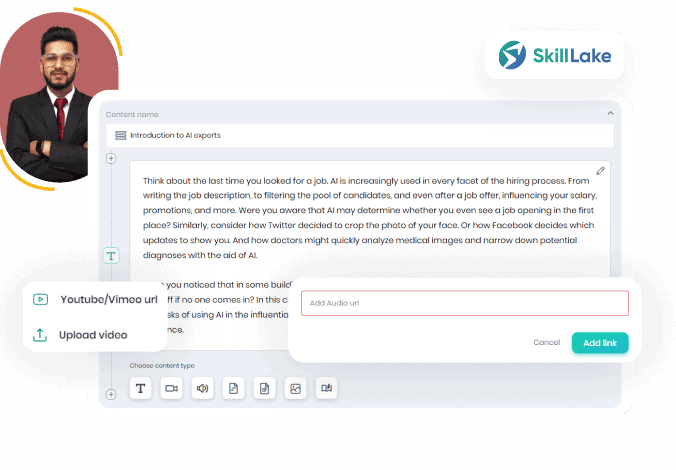
        Skill Lake provides the perfect solution with support for SCORM versions- SCORM 1.2 and SCORM 2004. One of its key benefits is an integrated authoring tool, making creating SCORM content easy and uploading it directly to an LMS in just a few clicks. 

        SCORM 1
        Skill Lake’s Inbuilt Authoring Tool

        Skill Lake integrations will help you maximize your productivity and reduce complexity when introducing new initiatives. With Skill Lake, you can ensure a smooth transition and an effective learning process. Seeing is believing so why don’t you request a demo and see how it works for you? 

        Sachin Krishna

        Sachin is a passionate advocate of e-learning with a profound knowledge of the field. He regularly writes compelling content that captivates readers and works to spread awareness of learning solutions.

        Other Reads from Skill Lake

        • The Business Impact of AI in Corporate Training: Benefits, ROI & Future Trends

          The Business Impact of AI in Corporate Training: Benefits, ROI & Future Trends

          Corporate training has always played an essential role in helping organizations build skilled, productive, and future-ready workforces. However, the way employees learn has changed significantly over the past few years. Businesses are adopting new technologies faster than ever, job roles are evolving continuously, and employees are expected to learn new skills while balancing their daily

          Read More
        • Best Learning Management Systems for Healthcare in 2026

          Best Learning Management Systems for Healthcare in 2026

          Aligning healthcare workforce training with evolving compliance standards and medical advancements requires a modern, agile approach. With patient care and regulatory compliance on the line, healthcare organizations cannot stick to fragmented training. Medical groups are actively searching for tools that streamline training while keeping up with changing standards: Which are the best learning management systems

          Read More
        LXP vs LMS

        Employee training and development solutions like Learning Management Systems (LMS) and Learning Experience Platforms (LXP) represent the new world of corporate training. Both learning platforms have engaging and impactful features to exploit digital content with no access barriers. So let’s delve into LXP vs LMS in a Comprehensive Comparison.

        But there are a few factors that differentiate both!

        This blog will explain the major differences between LMS and LXP and why LXP is better at enabling effective employee learning and development. But first, let’s look at the top challenges faced by L&D teams.


        Learning & Development: A Look at the Top Challenges

        The pandemic and the switch to remote work environments have increased the need for employee development programs and platforms that suffice it.

        Companies are pushed to frame L&D strategies that reskill and upskill their workforce for whatever may lie ahead.

        With organizations heavily invested in the latest L&D trends, the following are some of the main challenges the L&D teams face: 

        1. Quick Digital Transformation

        Rapid adoption of new technologies and processes puts your L&D teams under great pressure. Reskilling an entire workforce on how to best utilize newly framed organization-wide practices, alongside keeping their productivity high, is a real challenge. New practice can make certain job functions outdated, and therefore your L&D team has to face these challenges around changing job responsibilities. 

        Understand your workforce well. Learn their behavior individually, team-wise, and department-wise. This will help you support them in falling at the ideal stages of the technology adoption curve. The success rate of this quick digital transformation heavily falls on your L&D team’s migration strategies.

        2. Change Management

        Modern companies must constantly change to stay ahead in the ‘survival of the fittest’ race. Managing these migration phases is what is referred to as change management.

        Organizations often feel challenged as they must create cross-functional teams for frequent communication of such changes. Change management is usually employee-centric and must be backed with sufficient employee onboarding and employee development programs. 

        Organizations must pull an effective strategy backed by a powerful learning management system to drive a company-wide change and successfully manage their business.

        3. Data-centric L&D Decisions

        Assessing employee performance and productivity nowadays is not as easy as it was during the traditional workways. The lack of one-on-one interactions with L&D leaders implies the need for new tools to assess levels of employee development, performance, and productivity. On the plus side, with assessment turning more data-centric, organizations are finding opportunities to set benchmarks, enabling personalized training and development programs for employees, and monitoring and even onboarding the right talents much more effectively.

        4. Imparting Company Culture for Virtual Workforces

        Companies put in a lot of effort to create a vibrant work atmosphere valuing the employees’ satisfaction, fostering better communication, and encouraging team collaboration. However, it is difficult to extend such environments to those working remotely. Effective collaboration and staff management takes a toll on companies with a globally scattered workforce. However, an L&D tool makes imparting work culture and company values to the virtual workforce easier.

        5. Hybrid Workforce

        Hybrid work culture is here to stay. With organizations shifting to hybrid and remote working models, the need for L&D teams to incorporate digital learning solutions has become more crucial. E-learning solutions like LMS and LXP cater to virtual and distributed teams’ specific employee training and development needs. 


        What is LXP and What are Its Advantages?

        LMS are administrative tools that help your L&D teams manage employee development programs, choose and assign content to learners, and assess their progress. On the contrary, LXP is a user-friendly tool that provides a more personalized learning experience.

        LXP allows users to consume content in multiple formats, which comes with flexibility and other benefits like

        1. Mobile-first experience
        2. Unique learner experience
        3. Scalability as per users 
        4. Monetization of training 
        5. Secured cloud hosting
        6. Favor various content formats
        7. Usable anytime, anywhere, and from any device
        learning path
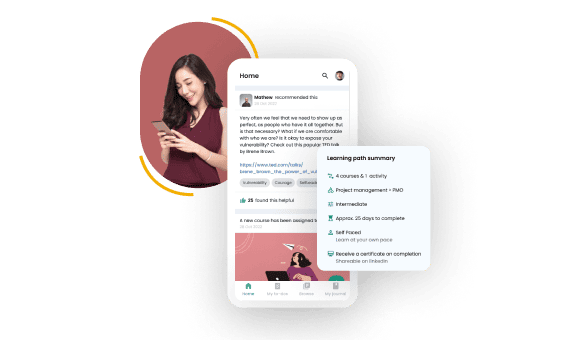
        Skill Lake Mobile LMS App

        Even though LMS and LXP are robust tools for training for employees, the above benefits of LXP prove that it can fill more organizational requirements gaps in companies as compared to LMS.

        Let us now look into why switching from LMS to LXP can benefit companies in terms of employee development.


        How Switching from LMS to LXP for Employee Development can Help in Overcoming All Barriers?

        LXP supports learning content in multiple formats. The cloud hosting capabilities help to save your organization’s overhead expenses. 

        Do you have a system to track informal learning? Well, LXP does!

        LXP can track informal learning and harness learning analytics data for quick decision-making of organizational procedures. Not just that, it offers flexibility in terms of design, personalization, and integration with existing ERP and CRM tools.

        Company revenue channels are not impacted if the ‘customer first’ approach dictated by modern business is addressed promptly and righteously. Professional development goals for managers are critical as they have to train their workforce to perform their tasks effortlessly.

        Smartphones have become the new work devices for employees. LXP understands these new preferences and hence is accessible from any device. This eliminates the need for classroom training and other traditional training approaches. This mobile-first outlook of LXP thus values the time, effort, and cost of employees and employers.  

        Additionally, it breaks the barriers to employee development by

        1. Allowing employees to learn to form their colleagues, managers, and even other parties
        2. Curating content based on the pages from which people often visited
        3. Meeting them from where they work without interrupting their daily routines
        4. Putting the potentiality of self-paced learning in learners’ hands and not the admins’
        5. Typically powering managers in personalizing learning more efficiently and effectively

        You now know the tremendous advantages of switching from LMS to LXP. However, choosing the right LXP platform also matters in executing effective employee training and development programs. Here’s how Skill Lake makes an apt choice!


        How Skill Lake Makes a Perfect LXP? 

        Choosing an LXP that stands by the learning requirements and company culture is important.

        Organization-wide change is challenging, and in such cases, it is better to start with a pilot group work with a new platform and then expand to adjust to the change gradually. Skill Lake is a resilient tool for tackling management changes irrespective of the size of your organization. Regardless of the training and development needs, Skill Lake can help initiate a learning culture throughout the organization with various engaging content delivery channels and data-tracking abilities.

        That is not all! Skill Lake features like gamification, different learning modes, course libraries, easy setup, progress tracking, competency tracking, mobile accessibility, microlearning options, and virtual mentoring, among others; rest assured that your employee development programs are right on track!

        Skill Lake has more to offer, and that includes:

        1. Competency management and tracking
        2. Quick deployment and easy usability
        3. Diverse workforce management
        4. Product and process training
        5. Maximum learner engagement
        6. Adherence to industry changes, trends, and compliances 

        Skill Lake: A Modern AI LMS

        Is your organization ready to democratize e-learning by freeing learners from the clenches of LMS? Then why not switch to LXP with Skill Lake?  Connect with our experts today, or request a Free Demo now!

        Aarathy Jayakrishnan

        Aarathy is an e-learning professional and enthusiast with a keen understanding of learning and development concepts. She writes insightful content, unraveling the possibilities that e-learning holds, and strives to make education open for all.

        Other Reads from Skill Lake

        • The Business Impact of AI in Corporate Training: Benefits, ROI & Future Trends

          The Business Impact of AI in Corporate Training: Benefits, ROI & Future Trends

          Corporate training has always played an essential role in helping organizations build skilled, productive, and future-ready workforces. However, the way employees learn has changed significantly over the past few years. Businesses are adopting new technologies faster than ever, job roles are evolving continuously, and employees are expected to learn new skills while balancing their daily

          Read More
        • Best Learning Management Systems for Healthcare in 2026

          Best Learning Management Systems for Healthcare in 2026

          Aligning healthcare workforce training with evolving compliance standards and medical advancements requires a modern, agile approach. With patient care and regulatory compliance on the line, healthcare organizations cannot stick to fragmented training. Medical groups are actively searching for tools that streamline training while keeping up with changing standards: Which are the best learning management systems

          Read More
        Training Management System

        Ensuring a skilled workforce through regular and effective training management has always been a cumbersome task for companies, no doubt! But corporate learning and development innovations are on a roll now, post-pandemic! As an aftermath, it is pleasant to watch today’s companies moving forward with the idea of corporate training programs for employees through Training Management Systems. 

        As far as IT firms are concerned, Training Management Systems has undoubtedly helped them to manage and track training in spectrums like project management, scrum and agile, DevOps, software product development, and testing, among others, ensuring a future-ready workforce!

        Read more: L&D Trends Corporates Need To Lookout For In 2023!

        Key Highlights

        1. IT firms face challenges in managing employee training due to rapid changes in technology and skills.
        2. A robust learning environment is essential for IT firms to keep employees up-to-date with the latest skills and technologies.
        3. A Training Management System (TMS) can help IT firms manage employee training efficiently and effectively.
        4. A good TMS should have features such as automation, personalized learning, and analytics to provide employees with the best learning experience.
        5. Using a TMS can result in improved employee performance and retention in IT firms.

        Introduction of TMS in IT Firms and Why They Need It

        Introducing TMS to your IT firm would make it the central focus of your training. It will help your company manage various aspects of training seamlessly without switching between multiple tools.

        That’s a ‘hello’ to an innovative corporate training approach!

        Introducing a TMS means eliminating the coordination efforts for scheduling and running several courses for your workforce. But before we dive deeper into knowing the benefits of TMS, let’s see why your company needs it. How about we stroll through a few questions to help determine if your company needs a TMS? Here we go:

        1. Are the training sessions happening as expected?
        2. Do you have the physical space, instructors, or enough trainees to attend a session?
        3. Do your trainees receive proper communication regarding the session beforehand?
        4. Are all your training-related courses up to date?

        The list can go on, but let’s stop right there.

        Getting the facts straight for corporate learning and development using spreadsheets and other systems has become obsolete. There could be high risks of human error and chances that your teams’ efforts and time go in vain. 

        Introducing a Training Management System shifts all your course management administration into a single space. This makes it easier to access and manage, not only for the employer but also for the employee. You will not have to go astray for the information you need across multiple sources. You have your training content right where and when you need it from any device you sign in to!

        Read more: Is Synchronous Training Appropriate for Today’s Workplace?

        Ways In Which a TMS Can Automate Your Manual Processes

        Having TMS software to aid your firm in training employees and reducing manual effort is a 100% YES!

        Your admins can skip the busy hours of planning, assigning, analyzing, and repetitive tasks through automation. That extra time can be utilized for other valid efforts like developing proper training materials or framing learning objectives.

        Is automating your manual process using a TMS worth the shot? Let’s have a look into it in detail.

        1. Effortless Management

        Managing courses and tracking each learner’s progress might be the most cumbersome task in training management. And that’s what TMS is built to streamline. An effective and robust Training Management System can help you automate back-end course management processes like scheduling courses and allocating trainers, and can also help quickly access real-time insights on course attendance, progress, and completion, including learners’ complete information, pointing skill gaps, and task achievements. 

        2. Boosts Employee Engagement 

        Keeping your employees engaged and motivated in training can be challenging. Acknowledging their training efforts and progressions or a simple pat on the back can do the trick, though that’s quite time-consuming. With a TMS, tracking each learner’s progress and automating appreciation with appropriate badges and recognitions is simpler. Also, advanced training management systems incorporate gamification to make learning fun and exciting!

        3. Personalized Learning

        It’s difficult to get all your employees into one room for training when they have separate goals to achieve for the company. That’s why companies with the best training programs automate employee training and allow employees to follow their personalized learning paths. A training managing system with mobility, synchronous-asynchronous learning, and instructor-led and self-paced learning options makes learning personalized for all. Meeting the unique learning needs of your employees enables keeping them engaged while simultaneously allowing you to maintain a skilled workforce.

        4. Immediate Feedback Mechanism

        In training, providing instantaneous feedback helps progress better. This will give employees a hint that they are on the right track. It can be a little discouraging when your employees know from their final assessment that they haven’t understood the shared training content. TMS ensures your IT firm’s corporate training programs for employees have been effective by motivating and engaging them by keeping open a transparent feedback loop. 

        What Skill Lake Offers as a TMS!

        You might have run trial-and-error approaches with many tools and techniques for corporate governance training. But when it comes to the best training for IT managers for your firm, Skill Lake is one of the best. 

        Skill Lake is

        1. A platform that automates repetitive course management processes like scheduling, assigning, and analyzing training programs.
        2. An online corporate training solution that supports user management through digitized contact info of trainer and trainee, course enrolments, and user activity.
        3. A Learning Experience Platform (LXP) that offers custom learning paths to get trained anytime, anywhere, and from any device.
        4. An online corporate training platform capable of generating insightful reports on training attendance, progress, and completion that quickens management decision-making.
        5. A corporate training and development solution that facilitates secure payment gateways for transferring and refunding course payments.
        6. A platform for the best training for IT managers to study any course through easy integration with external systems or tools, assuring top-notch training experience.

        Investing in a cost-effective TMS solution like Skill Lake is the finest option if you are looking for a solution to reduce administrative and learner efforts.

        Skill Lake saves time by automating repetitive tasks and makes you carefree about the daily routines regarding training. So we say automate training and benefit your business with Skill Lake!

        Request a Free Demo now!

        Ashmitha Chatterjee

        Ashmitha is a learning and development enthusiast who shares her insights on e-learning. She loves to create engaging and informative content and is dedicated to helping people learn and grow through her deep expertise in the field.

        Other Reads from Skill Lake

        • The Business Impact of AI in Corporate Training: Benefits, ROI & Future Trends

          The Business Impact of AI in Corporate Training: Benefits, ROI & Future Trends

          Corporate training has always played an essential role in helping organizations build skilled, productive, and future-ready workforces. However, the way employees learn has changed significantly over the past few years. Businesses are adopting new technologies faster than ever, job roles are evolving continuously, and employees are expected to learn new skills while balancing their daily

          Read More
        • Best Learning Management Systems for Healthcare in 2026

          Best Learning Management Systems for Healthcare in 2026

          Aligning healthcare workforce training with evolving compliance standards and medical advancements requires a modern, agile approach. With patient care and regulatory compliance on the line, healthcare organizations cannot stick to fragmented training. Medical groups are actively searching for tools that streamline training while keeping up with changing standards: Which are the best learning management systems

          Read More
        L&D Trends

        The year 2023 will be pivotal for companies that want to capitalize on the post-pandemic digital explosion. They now face a huge problem – the innovation rate that is outpacing their employees’ skills. 

        There is a reason why companies need to know about the upcoming L&D trends in 2023. We now have AI-powered chatbots and many such advanced technologies that are changing the game for industries. Although revolutionary, such advances are creating an acute skill gap amongst the workforce, which, if not addressed critically, can challenge companies in the long run. The goal is simple but critical – tailor your organizational learning and development goals to address the company’s objectives. Build a workforce that can drive your ROI and business goals!

        This blog will walk you through the top 7 Learning and Development trends you must watch out for in 2023!

        Key Highlights

        1. The importance of keeping up with learning and development (L&D) trends in the corporate world
        2. The impact of COVID-19 on L&D and how it has accelerated digital transformation
        3. The rise of microlearning and its benefits for employee training
        4. The emergence of personalized learning paths for employees
        5. The integration of artificial intelligence (AI) and machine learning (ML) in L&D for better data analysis and customized training programs
        6. The significance of employee well-being and mental health in L&D
        7. The growing demand for skills-based training rather than traditional degree-based training
        8. The importance of a culture of continuous learning and development in organizations.

        1. Reskilling to meet the technology explosion  

        According to Deloitte’s latest survey, attracting and retaining a quality workforce seems to be a top focus for 83% of manufacturers, with almost 45% of manufacturing executives being forced to turn down business opportunities purely due to a lack of skilled workers. 

        Reskilling, which means learning new skills to adapt to new roles, has always been a buzzword, but it will acquire new significance in 2023. With new workplace technologies entering the market, companies must find new ways to build workplace capability. Business leaders constantly need to get employees to learn and adapt to new technologies and software with steep learning curves. Many traditional roles and jobs can now be automated, which means that with outdated jobs come new opportunities. 2023 will be all about adaptive and intelligent L&D platforms that personalize training. 

        2. The growth of video-based microlearning  

        Employees need to learn in such a way that it helps them apply their knowledge at the right moment, which drives performance. Nano or microlearning is a great way to deliver short, engaging, and condensed learning in snappy formats.  

        With microlearning, you can learn quickly and absorb material within ten to fifteen minutes, making learning more accessible and relevant. You can focus on specific concepts or skills. Video-based microlearning is the next big trend to watch out for in 2023 and is increasingly popular in the corporate sector because of its format and accessibility. Video-based microlearning also encourages continuous and accelerated learning and suits the modern-day learning habits of employees accustomed to accessing the content in different formats. 

        3. Behavioral data and learning analytics 

        Data and learning analytics will reach dizzying heights in 2023. With data-centric learning, you can collect performance data, assess the quality of training material, and help trainers design specialized and personalized lessons for this generation of talented and contemporary learners. Measuring success more broadly can improve your skills agenda and evaluate your learning environment. 

        In 2023, organizations will focus on metrics to improve the effectiveness of L&D programs like never before. They will gather data about performances, promotion rates, sales figures, employee learning styles, and attrition scores. Learning analytics also measures the ROI of the learning programs and whether they align with the company’s business goals. Opt for L&D platforms that offer real-time visibility and insights on employees and their learning trajectories.

        4. Personalized learning 

        Personalization is the future of L&D. Organizations have different kinds of employees and building differentiated learning pathways is gaining enormous importance in the L&D space. Personalized and adaptive learning refers to creating programs specifically for different learners and their skill gaps, also delivered in a format that resonates well with the individual. 

        In 2023, L&D departments need to leverage content services and instructional and L&D platforms altogether to enable personalized pathways for learners. AI and ML will play a role in recommendations that increase the chance of relevant content and increase learner engagement. Personalization in the content will be a game changer in 2023 because it can provide learning experiences for employees based on the specific challenges and skill gaps they face and also according to their age and learning profile. Companies can use technology to scale personalized learning solutions and reap the benefits.  

        5. Immersive learning and gamification 

        With learners opting for multiple devices and immersive learning, the use of Augmented Reality (AR), Virtual Reality (VR), Mixed Reality (MR), and Extended Reality technologies in organizational training will gain huge popularity in 2023. From AR training that teaches employees about new machinery to walkthroughs and soft skills training, AR and VR technologies enhance learning and have built-in tracking, analytics, and real-time data that measure learning progress and ROI. 

        Gamification is another exciting trend for 2023 in the learning and development space. L&D solutions have exciting frameworks and gaming ecosystems where employees can learn, level up, play off each other, and win virtual rewards. 

        6. Opportunity marketplace

        An area of great promise is the opportunity marketplace. Consider this. Contract work has increased tremendously over the last few years. In 2023, companies must leverage L&D solutions that turn their contract workforces into assets that drive their business. 

        L&D trends are now moving towards meaningful learning and career development. Companies that encourage internal talent mobility will thrive. Learning and development platforms offering easy and intelligent competency mapping and dashboards and giving recommendations for courses, mentorship, and development opportunities will retain the best talent.

        7. Mobile learning 

        With the rise in on-demand training, learning professionals prefer mobile devices to engage with learning material. Mobile technologies and devices enable mobile learning or m-learning. Learning in the workflow or on the job is now an important transition point in the L&D industry. It focuses on continuous skill building and development. Plus, it makes it easier to access course materials from anywhere, learn at one’s own pace and comfort, and accelerate skill development seamlessly.

        Read more: How Significant is L&D for the Future of Work?

        How Can An L&D Platform Help Embrace The Upcoming Trends?

        The trends and developments that shape L&D in 2023 will solve the shortfall of skilled workers and the problem of skills mismatch. But how can companies embrace these trends to future-proof their workforce?

        L&D Platforms!

        L&D platforms can help companies leverage upcoming learning trends by facilitating personalized learning paths, using effective feedback mechanisms, and measuring performance proactively to check how employees engage with their content. 

        What is an L&D platform, and why is it a key competitive differentiator? Learning and Development (L&D) platforms use technologies like AI and ML to deliver personalized training experiences to learners. They help companies create, implement, and run exciting and impactful learning and development programs from a single, centralized interface. An L&D platform leverages all the above game-changing trends to do something critical – it does not simply offer learning provisions but also drives performance and profits.

        Read more: Learning Experience Platform Features That You Should Know About

        How Skill Lake Makes An Apt L&D Platform For Your Company!

        With employees moving from static to dynamic and high-performing roles in the coming years, the quality of an L&D platform determines a company’s success in the future. We are moving into an era of unprecedented digital transformation, which requires a continuous training culture to help companies evolve their business functions and power their way ahead. If you want your company to keep up with the ongoing technological disruption and the ever-changing nature of work, you need an enterprise-wide L&D platform to address the skills gap and use learning analytics to drive performance. 

        Skill Lake’s powerful L&D software can help companies make the most of L&D trends for the future and implement these trends seamlessly in their business processes. With unique features, Skill Lake can help your company manage the A to Z of employee learning and development in one place!

        1. Personalized Learning Paths
        2. Dual Learning Modes
        3. Mentoring
        4. LMS Mobile App
        5. Competency Mapping
        6. Course Library
        7. Gamified Learning
        8. Competency Mapping
        9. Multi-Cloud Hosting

        Employees who learn through alignment with business goals increase productivity multifold. Skill Lake facilitates top strategies with its power-packed analytics and multiple learning modes. It helps companies tailor their training to resolve business challenges, achieve ROI, drive profit, and elevate the employee experience. 

        The growing skill gap in companies is a serious challenge in the coming years. Skill Lake’s adaptive and budget-friendly corporate training platform can meet your company’s growing talent and development needs, helping you elbow your way past competitors. 

        Connect with our experts today or request a free demo now!

        Sachin Krishna

        Sachin is a passionate advocate of e-learning with a profound knowledge of the field. He regularly writes compelling content that captivates readers and works to spread awareness of learning solutions.

        Other Reads from Skill Lake

        • The Business Impact of AI in Corporate Training: Benefits, ROI & Future Trends

          The Business Impact of AI in Corporate Training: Benefits, ROI & Future Trends

          Corporate training has always played an essential role in helping organizations build skilled, productive, and future-ready workforces. However, the way employees learn has changed significantly over the past few years. Businesses are adopting new technologies faster than ever, job roles are evolving continuously, and employees are expected to learn new skills while balancing their daily

          Read More
        • Best Learning Management Systems for Healthcare in 2026

          Best Learning Management Systems for Healthcare in 2026

          Aligning healthcare workforce training with evolving compliance standards and medical advancements requires a modern, agile approach. With patient care and regulatory compliance on the line, healthcare organizations cannot stick to fragmented training. Medical groups are actively searching for tools that streamline training while keeping up with changing standards: Which are the best learning management systems

          Read More
        skill lake prestige conclave 1 banner

        WHITE PLAINS, NEW YORK, Nov. 30, 2022 — Skill Lake Training Management System (TMS), developed by Fingent, has announced that it will participate in the Prestige Conclave 2022 in Saudi Arabia on Dec. 5, 2022. The event will take place from 9 am to 5 pm at the Holiday Inn Meydan in Riyadh.

        Prestige Conclave 2022 is an annual convention held by Prestige Saudi Co. Ltd – a leading software and system integration company based in Saudi Arabia. The event brings innovators, thought leaders, and solutions providers to convene, have engaging discussions, and analyze the future progress of their businesses. 

        During the conclave, Fingent will demonstrate how Skill Lake Training Management System helps manage your training businesses. 

        • CRM to store and track every trainer’s and learner’s information, including contact details, course enrolments, and user activity.
        • Integration with payment gateways to support the secure transfer and refund of course payments.
        • Customizable reports and dashboards with real-time insights on every aspect of learning- course attendance, progress, completion, and learners’ performance.
        • Integration with LMS includes course management, competency management, gamification, dual learning mode, mobile app, and more.

        If you are attending the event, please contact our representative Kurian Jacob (kurian.jacob@fingent.com), to better understand Skill Lake TMS and how it can help your organization. You can also book a personalized demo by filling out the form here.  

          Book a Personalized Demo

          About Prestige Saudi Co. Ltd. 

          Prestige Saudi Co. Ltd., a unit of the DLI-IT Group, offers specialized, comprehensive, and customizable business solutions to Fortune 500 and SMEs in the MENA zone. Their top-notch software development and technical support team goes above and beyond the requirement to ensure that every customer is satisfied.

          About Skill Lake TMS

          Skill Lake TMS simplifies and eases the administration of programs for training institutes. The platform automates end-to-end training processes and provides an improved learning experience for learners, resulting in added enrolments and revenue generation. The key features include CRM, Payment Integration, Tracking and Reporting, and more. Skill Lake is the flagship product of Fingent.

          Aarathy Jayakrishnan

          Aarathy is an e-learning professional and enthusiast with a keen understanding of learning and development concepts. She writes insightful content, unraveling the possibilities that e-learning holds, and strives to make education open for all.

          Other Reads from Skill Lake

          • The Business Impact of AI in Corporate Training: Benefits, ROI & Future Trends

            The Business Impact of AI in Corporate Training: Benefits, ROI & Future Trends

            Corporate training has always played an essential role in helping organizations build skilled, productive, and future-ready workforces. However, the way employees learn has changed significantly over the past few years. Businesses are adopting new technologies faster than ever, job roles are evolving continuously, and employees are expected to learn new skills while balancing their daily

            Read More
          • Best Learning Management Systems for Healthcare in 2026

            Best Learning Management Systems for Healthcare in 2026

            Aligning healthcare workforce training with evolving compliance standards and medical advancements requires a modern, agile approach. With patient care and regulatory compliance on the line, healthcare organizations cannot stick to fragmented training. Medical groups are actively searching for tools that streamline training while keeping up with changing standards: Which are the best learning management systems

            Read More
          skill lake prestige conclave 1 lms banner

          WHITE PLAINS, NEW YORK, Nov. 28, 2022 — Skill Lake, a Learning Management System (LMS) developed by Fingent, has announced that it will participate in the Prestige Conclave 2022 in Saudi Arabia on Dec. 5, 2022. The event will take place from 9 am to 5 pm at the Holiday Inn Meydan in Riyadh.

          Prestige Conclave 2022 is an annual convention held by Prestige Saudi Co. Ltd – a leading software and system integration company based in Saudi Arabia. The event brings innovators, thought leaders, and solutions providers to convene, have engaging discussions, and analyze the future progress of their businesses. 

          During the conclave, Fingent will demonstrate how Skill Lake empowers firms to establish a learning culture and develop a highly skilled workforce.

          • Set and track time-sensitive competence development goals to enable individual accountability.
          • Measure competence levels with custom-graded assessments built around a core competency framework of your organization.
          • Create high-impact course content customized to your learners’ training requirements or modernize your existing training content into deeply-engaging formats.
          • It provides a setting where learners may pursue their learning objectives on their own time while communicating with instructors or other mentors within the company.

          If you are attending the event, please contact our representative Kurian Jacob (kurian.jacob@fingent.com), to get a better understanding of Skill Lake and how it can help your organization. You can also book a personalized demo by filling out the form here.  

            Book a Personalized Demo

            About Prestige Saudi Co. Ltd. 

            Prestige Saudi Co. Ltd., a unit of the DLI-IT Group, offers specialized, comprehensive, and customizable business solutions to Fortune 500 and SMEs in the MENA zone. Their top-notch software development and technical support team goes above and beyond the requirement to ensure that every customer is satisfied.

            About Skill Lake

            Skill Lake is a  Learning platform that helps organizations across industries establish a continuous learning and growth culture. Its advanced features, including a learner dashboard, content library, user management, self-paced and instructor-led courses, intuitive mobile app, and more, make it a sought-after software in the LMS space. Skill Lake is powered by Fingent.

            Aarathy Jayakrishnan

            Aarathy is an e-learning professional and enthusiast with a keen understanding of learning and development concepts. She writes insightful content, unraveling the possibilities that e-learning holds, and strives to make education open for all.

            Other Reads from Skill Lake

            • The Business Impact of AI in Corporate Training: Benefits, ROI & Future Trends

              The Business Impact of AI in Corporate Training: Benefits, ROI & Future Trends

              Corporate training has always played an essential role in helping organizations build skilled, productive, and future-ready workforces. However, the way employees learn has changed significantly over the past few years. Businesses are adopting new technologies faster than ever, job roles are evolving continuously, and employees are expected to learn new skills while balancing their daily

              Read More
            • Best Learning Management Systems for Healthcare in 2026

              Best Learning Management Systems for Healthcare in 2026

              Aligning healthcare workforce training with evolving compliance standards and medical advancements requires a modern, agile approach. With patient care and regulatory compliance on the line, healthcare organizations cannot stick to fragmented training. Medical groups are actively searching for tools that streamline training while keeping up with changing standards: Which are the best learning management systems

              Read More

            Posts navigation

            Older posts
            Newer posts

            Solutions

            • Learning Management System
            • LMS Mobile App
            • Learning & Development Platform
            • People Development Platform
            • Corporate Training Platform
            • Training Management System
            • Content Creation
            • Learning Experience Platform
            • Performance Review System

            Industries

            • Info Tech
            • Manufacturing
            • Hospitality
            • Insurance
            • Automotive
            • Telecom
            • Restaurant


            • Construction
            • Non-Profit
            • Energy
            • Retail
            • Franchise
            • Healthcare

            Resources

            • What is an LMS?
            • Case Studies
            • Blogs
            • Help
            • Use Cases
            • Videos
            • Downloads
            • Release Notes

            Company

            • About Us
            • Partners
            • Contact Us
            • Terms of Use
            • Privacy Policy
            alternet text alternet text alternet text alternet text

            © 2026 Skill Lake | All rights reserved. Skill Lake is developed and supported by Fingent.