Mandatory Courses for a Corporate Company LMS: The Ultimate Compliance & Workforce Training Guide
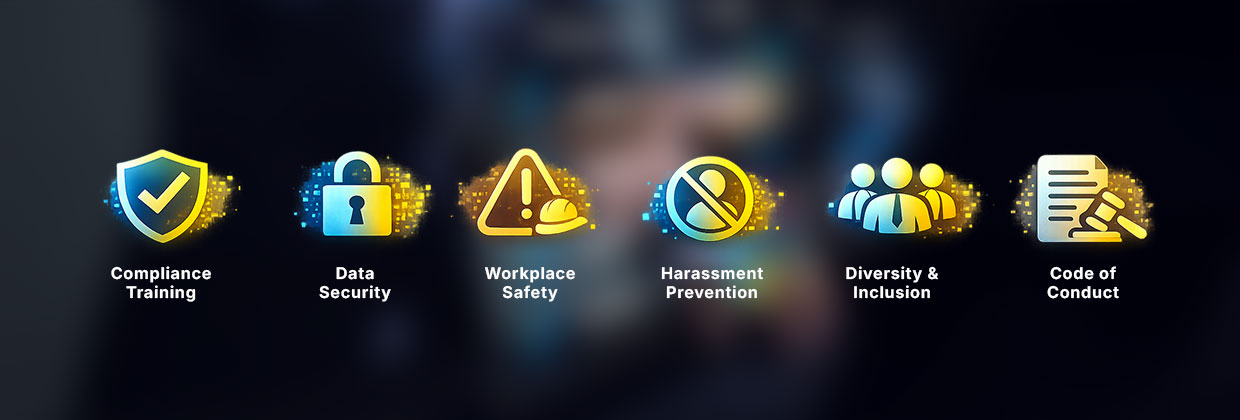
Corporate training has evolved from a basic HR function into a strategic compliance and risk management framework. Organizations operate in a highly regulated environment where employee misconduct, data breaches, workplace incidents, and non-compliance can lead to multi-million-dollar penalties and lasting reputational damage.
Mandatory training is no longer optional or “good practice.” It is a legal and operational requirement.
A modern Learning Management System (LMS) serves as the central infrastructure that ensures every employee completes required training, certifications are tracked, renewals are automated, and audit documentation is always accessible.
This comprehensive guide explains:
- What mandatory corporate training means
- Why it is legally critical
- The complete list of essential LMS courses
- Industry-specific requirements
- Global regulatory considerations
- LMS features required for compliance
- Implementation best practices
- Renewal cycles and reporting strategies
By the end of this guide, you will have a complete framework for designing a legally sound, scalable corporate training program.
What Is Mandatory Corporate Training?
Mandatory corporate training refers to legally required or risk-mitigating courses that employees must complete as a condition of employment. These courses ensure compliance with labor laws, workplace regulations, industry standards, and international governance frameworks.
Mandatory training generally falls into three core categories:
First, legal compliance training required by government authorities. Second, safety and risk prevention training that protects employees and infrastructure. Third, corporate governance and ethical conduct training that ensures responsible business operations.
Unlike optional professional development programs, mandatory courses are enforceable. Organizations must track completion and maintain documentation in case of audits, legal disputes, or regulatory inspections.
Why Mandatory Training Is Critical in 2026
Corporate compliance risks have increased significantly due to:
- Globalized operations
- Remote and hybrid work environments
- Expanding data privacy regulations
- Rising cybersecurity threats
- Stronger employee protection laws
- Increased whistleblower protections
Regulatory bodies worldwide now impose severe penalties for non-compliance. Fines under the General Data Protection Regulation (GDPR) can reach millions of euros. Violations of workplace safety standards regulated by the Occupational Safety and Health Administration (OSHA) can result in heavy penalties and legal consequences.
Beyond fines, organizations face:
- Lawsuits
- Operational shutdowns
- Brand damage
- Loss of investor confidence
Mandatory LMS training reduces these risks by creating documented evidence that employees were informed, trained, and certified.
Core Mandatory Courses Every Corporate LMS Must Include
While requirements differ by geography and industry, the following courses form the foundational compliance framework for most corporate organizations.
Workplace Health and Safety Training
Workplace safety training ensures employees understand how to identify hazards, prevent accidents, and follow emergency procedures.
In the United States, OSHA regulations require employers to provide safe working conditions. In the UK, oversight is provided by the Health and Safety Executive (HSE).
Health and safety training typically includes:
- Fire safety awareness
- Emergency evacuation procedures
- First aid basics
- Ergonomic safety
- Hazard identification
- Incident reporting processes
In industrial sectors, it may extend to machine operation safety, chemical handling, confined space protocols, and personal protective equipment (PPE) usage.
Annual refresher training is commonly required.
Anti-Harassment and Workplace Conduct Training
Anti-harassment training protects employees from discrimination and inappropriate conduct while protecting organizations from lawsuits.
In the United States, guidance comes from the Equal Employment Opportunity Commission (EEOC). In India, organizations comply with regulations guided by the Ministry of Women and Child Development under POSH legislation.
Training covers:
- Sexual harassment prevention
- Anti-discrimination policies
- Respectful workplace behavior
- Reporting procedures
- Investigation protocols
- Whistleblower protection
Many jurisdictions require periodic recertification.
Data Protection and Privacy Compliance Training
Data privacy has become one of the most significant corporate compliance concerns.
Organizations operating in the EU must comply with GDPR. Businesses operating in California follow the California Consumer Privacy Act (CCPA).
Privacy training teaches employees:
- Lawful data collection practices
- Data minimization principles
- Secure data storage
- Breach reporting procedures
- Consumer rights handling
Failure to train employees in privacy compliance can lead to regulatory investigations and substantial fines.
Cybersecurity Awareness Training
Cyberattacks increasingly target human vulnerabilities rather than technical systems.
Cybersecurity awareness courses typically cover:
- Phishing detection
- Social engineering tactics
- Secure password practices
- Multi-factor authentication
- Remote work security
- Safe use of public Wi-Fi
- Ransomware response procedures
Organizations with international operations often align cybersecurity policies with standards like ISO/IEC 27001.
Annual cybersecurity refresher training is strongly recommended.
Code of Conduct and Business Ethics Training
A corporate code of conduct outlines acceptable behavior and ethical decision-making standards.
This course usually includes:
- Conflict of interest policies
- Anti-bribery regulations
- Vendor relationship ethics
- Confidential information handling
- Insider trading awareness
Multinational corporations frequently align ethics training with the Foreign Corrupt Practices Act (FCPA).
Ethics training protects organizations from corruption scandals and compliance violations.
Diversity, Equity, and Inclusion (DEI) Training
DEI training promotes inclusive workplace environments and reduces discrimination risks.
This course covers:
- Cultural competency
- Unconscious bias
- Inclusive leadership practices
- Equal opportunity policies
Although not universally mandated by law, many organizations make DEI training compulsory to strengthen corporate culture and reduce legal exposure.
IT Acceptable Use and Information Security Policy Training
This training ensures employees understand acceptable usage of corporate technology resources.
It includes:
- Acceptable device usage
- Cloud storage policies
- Confidential document handling
- Remote work security compliance
- Email and communication protocols
For technology-driven companies, this training is essential to maintain system integrity.
Anti-Money Laundering (AML) Training (Industry-Specific)
Financial institutions must implement AML programs aligned with global standards from the Financial Action Task Force (FATF).
AML training covers:
- Suspicious activity identification
- Know Your Customer (KYC) requirements
- Transaction monitoring basics
- Regulatory reporting obligations
This training is mandatory for banks, fintech firms, insurance providers, and investment companies.
Environmental Compliance Training
Companies in manufacturing, logistics, construction, and energy sectors must comply with environmental standards.
Environmental compliance training may align with ISO 14001.
Topics include:
- Waste management procedures
- Hazardous material handling
- Environmental reporting standards
- Sustainability compliance
Workplace Violence Prevention Training
This course educates employees on identifying warning signs, reporting threats, and responding during emergency situations.
It strengthens employee safety and reduces liability risks.
Industry-Specific Mandatory LMS Training
Different sectors require specialized compliance programs.
- Healthcare organizations must comply with the Health Insurance Portability and Accountability Act (HIPAA), which mandates patient data privacy training.
- Construction companies require OSHA-certified site safety training.
- Manufacturing organizations require equipment operation certification.
- IT companies require secure coding and advanced cybersecurity compliance training.
- Financial services firms require AML, fraud prevention, and regulatory compliance certifications.
Global Regulatory Considerations
Multinational companies must consider regional compliance variations.
- The European Union enforces GDPR.
- The United States has federal and state-level regulations.
- India enforces POSH compliance through national frameworks.
- The UK follows regulations guided by the Health and Safety Executive.
Organizations operating internationally must localize mandatory training content to align with regional laws.
Key LMS Features Required for Mandatory Training
An LMS must provide robust compliance tracking capabilities.
Essential features include:
- Automated course assignment based on role or department.
- Deadline tracking with automated reminders.
- Digital certification issuance.
- Centralized audit reporting dashboards.
- Version control for policy updates.
- Multi-language support for global teams.
- Mobile accessibility for remote employees.
- Integration with HR systems for onboarding workflows.
Without automated tracking, compliance programs become fragmented and unreliable.
Check out our guide to the 10 Best Learning Management Systems (LMS) for 2026 and find a platform that truly supports compliance, automation, and scalable workforce training.
Implementation Best Practices
To build an effective mandatory training framework:
- Assign mandatory courses during employee onboarding.
- Require annual recertification for high-risk compliance topics.
- Use role-based learning paths to customize training requirements.
- Incorporate scenario-based simulations for higher engagement.
- Track completion rates and generate compliance dashboards.
- Maintain digital records for at least five years (or per local regulations).
- Update training content immediately after regulatory changes.
- Engage legal advisors to validate compliance alignment.
How Often Should Mandatory Courses Be Renewed?
Common renewal cycles include:
- Annual renewal for harassment, safety, and ethics training.
- Bi-annual cybersecurity awareness updates.
- Role-based recertification for safety-sensitive positions.
- Immediate retraining after policy updates or regulatory changes.
- Always verify renewal requirements with legal counsel.
Benefits of Centralizing Mandatory Training in an LMS
Centralizing mandatory training provides measurable advantages:
- Reduced legal risk
- Standardized compliance documentation
- Improved audit readiness
- Increased employee awareness
- Enhanced corporate governance
- Improved workplace culture
- Lower incident rates
- Better regulatory transparency
An LMS transforms compliance from reactive to proactive.
The Future of Mandatory Corporate Training
Compliance training is evolving through:
- AI-driven adaptive learning
- Microlearning modules
- Gamified compliance education
- Real-time regulatory updates
- Advanced analytics dashboards
- Predictive compliance risk monitoring
Organizations investing in scalable LMS infrastructure will be better prepared for regulatory expansion.
Conclusion
Mandatory corporate training is the backbone of compliance, risk mitigation, and responsible business operations.
By implementing structured courses covering workplace safety, anti-harassment, data privacy, cybersecurity, ethics, environmental standards, AML compliance, and industry-specific certifications, organizations protect both employees and the business itself.
A robust LMS ensures consistent training delivery, automated tracking, certification management, and audit-ready reporting.
In an increasingly regulated global economy, companies that invest in structured, centralized mandatory training programs gain more than compliance — they gain operational stability, employee trust, and long-term resilience.
Build a culture of continuous learning with Skill Lake’s state-of-the-art people development platform. Give your employees professional training to help them excel in their job roles and propel your business to greater efficiency and success.
Start Today

Other Reads from Skill Lake
-

Top 10 Best LMS for Insurance Industry in 2026
Read MoreTraditional insurance training methods can no longer keep up with complex policies and strict state regulations. Relying on static training manuals leaves agents unequipped for real-world client interactions, leading to compliance bottlenecks. Modern insurance learning management systems solve these challenges through automated certification tracking and scenario-based practice. This guide explores the 10 best LMS for
-
The Business Impact of AI in Corporate Training: Benefits, ROI & Future Trends
Read MoreCorporate training has always played an essential role in helping organizations build skilled, productive, and future-ready workforces. However, the way employees learn has changed significantly over the past few years. Businesses are adopting new technologies faster than ever, job roles are evolving continuously, and employees are expected to learn new skills while balancing their daily


Anoop Kumar MS
Anoop Kumar MS, Product Manager of Fingent Global Solutions Pvt. Ltd., is an experienced product specialist with expertise in identifying customer needs and delivering innovative, data-driven solutions. Skilled in wireframing, UX, requirements analysis, risk assessment, team management, and root cause analysis, he excels in managing product lifecycles and fostering seamless collaboration to address real-world challenges.