How Microlearning & Mobile LMS Transform Employee Learning in 2026
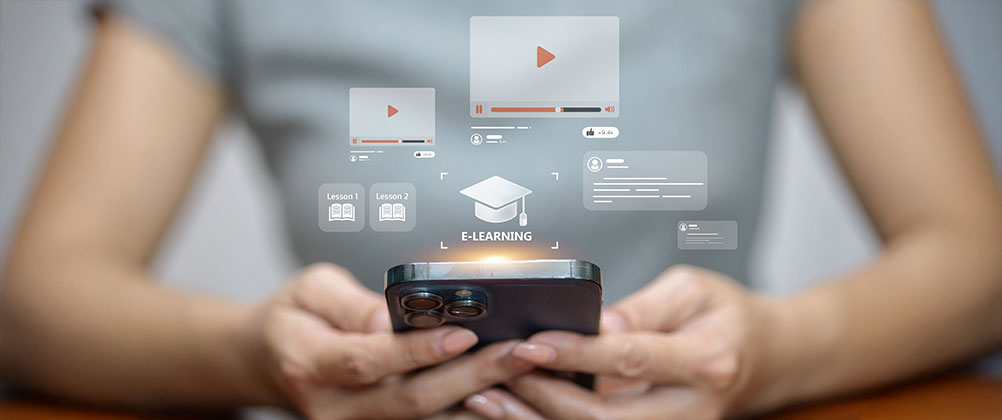
Why is microlearning essential in 2026? Let’s start with a real scenario most businesses face today. Due to fast-changing roles, people don’t find a lot of time for long-form training or learning anymore. Learning often happens in small amounts of time, like between meetings, while traveling, or during work. But many corporate training programs are still long and hard to complete. Also, it makes learning feel like a burden.
This shift has led to the rapid adoption of AI-driven microlearning & mobile LMS platforms across industries. Microlearning provides short and focused training programs that are easy to understand and quick to complete.
At the same time, AI-based mobile LMS helps personalize learning by suggesting the right content based on an employee’s role, skills, and learning progress. Also, a mobile LMS allows employees to access content anytime, anywhere.
It helps employees learn and apply their learning immediately to their work. Also, it makes learning more practical and productive.
Indeed when microlearning is provided through a mobile LMS, learning literally transforms. Together, microlearning, mobile LMS, and AI create a modern learning system that fits easily into daily jobs.
The Evolution of Employee Learning in the AI Era
Employee learning is evolving as artificial intelligence reshapes how organizations develop skills and share knowledge. Rapidly changing roles and new technologies require learning systems that align with modern business needs. Long training sessions are no longer effective for today’s teams; instead, they require focused and flexible learning that supports continuous growth and productivity.
In the AI era, learning teams can respond faster to changing skill demands. By analyzing performance data, job roles, and learning behavior, AI helps organizations identify skill gaps and recommend relevant learning content. This enables companies to deliver personalized, targeted learning experiences instead of generic training programs.
Why Traditional LMS Fails in 2026?
It’s 2026, and many teams still lean on traditional Learning Management Systems (LMS) that are not sufficient for today’s training needs. These traditional LMS tools were built mainly for uploading long courses and tracking completions — not for today’s busy, mobile learners.
Also, people don’t learn like they used to, and long slideshows or desktop-only lessons don’t fit today’s busy, on-the-go schedules. Statistics show that about half of users are unhappy when an LMS lacks mobile capability, and many dislike bulky dashboards that don’t connect with their learning needs.
That’s where microlearning and mobile-first LMS shine. Microlearning breaks training courses into small, easy-to-learn pieces that learners can access anytime.
Also, learners today expect training on their phones. They want quick access, flexibility, and the ability to learn as per their convenience. Traditional LMSs fail because they’re not flexible and not suited for on-the-go learning.
Traditional LMS and Microlearning + Mobile LMS
| Feature | Traditional LMS | Microlearning + Mobile LMS |
|---|---|---|
| Learning format | Structured, course-based, comprehensive | Short, bit-sized lessons |
| Learning Flow | Scheduled sessions | On-demand, anytime |
| Engagement | Often low | Higher and consistent |
| Content Delivery | Web-based, desktop-heavy | Mobile-first, designed for quick use |
| Best For | Long-term training programs, certifications | On-the-go training, upskilling, reskilling |
| Flexibility | Limited | Highly flexible |
What Is Microlearning? Why It Works Today
Microlearning is a method of learning where the content is delivered in small and short close-focus modules that target a single goal or skill. Rather than spending hours and hours in training, employees can access bite-sized learning modules which can easily fit in their day-to-day work processes. Microlearning is effective in the current fast-paced workplace setting as it avoids cognitive overload and takes into consideration the small attention spans.
Employees have the ability to acquire what they need to know, when they need to know, increasing retention and expediting knowledge use. Microlearning is needed as part of an ongoing process of upskilling so organizations can manage dynamic shifts in technology and processes.
The Rise of Mobile-First LMS Platforms
Mobile-first Learning Management Systems Software are designed to offer the entire learning process through mobile phones or tablets. Mobile accessibility has become a significant concern in the provision of training in areas where the remote, hybrid, and frontline workforce is increasing.
Mobile-first LMS systems allow employees to learn at any location or time, it can be during a break, traveling to work or task switching. Mobile-first LMS systems allow employees to learn at any location or time, it can be during a break, traveling to work or task switching. The platforms are not limited to the current content delivery, push notification and real-time tracking of progress.
Mobile LMS also improves learners’ engagement and ensures the sustainability of the training program. It also allows businesses to scale learning efficiently across diverse and geographically dispersed employees. When organizations apply microlearning & mobile LMS solutions together, they remove barriers to employee learning and increase participation across teams.
How AI Enhances Microlearning?
Artificial Intelligence can play an important role in improving microlearning by customizing the content depending on specific behavior of learning, performance, and skill gaps. Artificial intelligence-powered systems interpret the interaction of employees with learning modules and suggest appropriate content in real time. It helps learners receive the most effective and unique content, not repetitive ones.
Gartner report shows that by 2026, 70% of enterprise learning platforms will include AI-driven personalization. This trend strengthens the impact of Microlearning & Mobile LMS systems by ensuring that employees receive relevant content at the right time.
AI will also provide adaptive learning courses, smart assessments, and predictions to learning leaders in 2026. By facilitating the correspondence between microlearning and AI, organizations can receive more engagement, retention, and measurable learning results, and employee training will become a non-randomized and data-driven experience.
Why AI + Microlearning + Mobile LMS Boost Employee Performance
AI with microlearning and mobile LMS creates a powerful combination that improves employee performance through relevance, speed, and accessibility. We know that employees now want to learn what they need and when they need it.
Here, AI-powered mobile LMS helps them by creating personalized learning paths. Microlearning keeps lessons focused. Mobile LMS platforms deliver content anywhere. Together, they support performance-driven employee learning.
As per some studies, organizations that apply continuous learning models see 37% higher productivity and 34% better employee engagement. These outcomes link directly to modern learning platforms.
Microlearning & Mobile LMS platforms also support managers by providing real-time insights into learning progress and skill upgrades.
Real-World Use Case of Microlearning & Mobile LMS
Sales Enablement at Fingent
Use case: Faster product knowledge and deal readiness
Challenge
Fingent’s global sales force needed to stay current with complex product lines, pricing systems, and customer applications. Traditional classroom training slowed sales readiness and delayed the impact on deals, leaving representatives less confident and underprepared.
Solution
Fingent implemented a microlearning-based mobile LMS. Short, scenario-based lessons were delivered directly to sales representatives’ mobile devices, allowing pre-meeting preparation in minutes. AI-driven recommendations tailor learning based on region, product line, and deal stage, ensuring relevance and timely application.
Result
Sales professionals could quickly update their knowledge and immediately apply it during customer interactions. Fingent reported higher sales confidence, faster onboarding of new employees, and improved deal readiness across its global sales team.
Why it worked: Microlearning delivered targeted knowledge. Mobile LMS ensured access anywhere. AI aligned learning with sales context.
Business Benefits of Implementing AI-Powered Microlearning
AI-powered microlearning delivers focused training that matches each employee’s role and skills. Short, personalized modules help employees learn faster, retain knowledge, and stay engaged. This approach allows organizations to scale training across remote and global teams. Tracking performance and updating content keeps learning aligned with business goals.
Benefits of AI-based microlearning
- Personalized learning paths
- Relevant course recommendations
- Active learner engagement
- Faster skill acquisition and knowledge retention
- Increased employees’ motivation
- Easily accessible content for remote and global teams
Conclusion
The future of employee learning depends on speed, intelligence, and accessibility. And AI, microlearning, and mobile LMS platforms like Skill Lake deliver these elements together.
Organizations that adopt microlearning and mobile LMS solutions create learning cultures that adapt to change. They help their employees to learn regularly and perform better.
Platforms like Skill Lake boost this shift, providing a framework designed for flexible, bite-sized learning that meets with the growing needs of the modern workforce. By delivering targeted knowledge, such solutions help employees apply learning immediately, stay relevant, and respond effectively to business challenges.
Undoubtedly, short-form, intelligent learning systems have become an essential tool today. They define a competitive necessity in 2026.
Transform learning with AI-powered LMS—start now!
FAQs
Q: What is micro learning and how does it assist in training employees?
A: One of the approaches is micro learning that provides brief and concise lessons with the perspective of simplifying and accelerating the learning process. Training to employees comes in bite-sized amounts which can be accomplished within a short period as compared to bulky courses. This helps them grab information positively, retains the interest, and fits into busy workdays without heavy schedules.
Q: What is the effect of mobile LMS in transforming employee learning in the workplace?
A: Mobile LMS helps employees to receive training programs at any place and hour on a smartphone or a tablet. The training process can be adaptable and can be easily completed at the comfort of the learners like during breaks and commuting to work thus maximizing the chances of successful completion. With quick accessibility to the platform, learning becomes easier and adaptable.
Q: Is it possible to enhance knowledge retention with the use of microlearning?
A: Yes. Microlearning breaks information into concepts that are full of knowledge. This will help the learners to focus on one particular idea at a particular time and limit overloading of information. The lessons are simplified and thus, the workers are bound to remember some of the information and use it in their work.
Q: Can mobile microlearning be applied to other employees?
A: Absolutely. Mobile microlearning can be used for desk based employees, remote workers, and frontline workers as it can be integrated in various work flows and schedules. Training is brought closer to different learning styles and positions with the employees determining when and how to learn.
Q: What are the advantages of integrating microlearning and mobile LMS to companies?
A: This combination facilitates quicker and less complicated training, as well as increases the engagement. Microlearning delivers quick lessons while the mobile LMS helps employees to access them instantly, even on the go. That improves everyday learning habits of learners and creates a more skilled workforce in the organization.
Build a culture of continuous learning with Skill Lake’s state-of-the-art people development platform. Give your employees professional training to help them excel in their job roles and propel your business to greater efficiency and success.
Start Today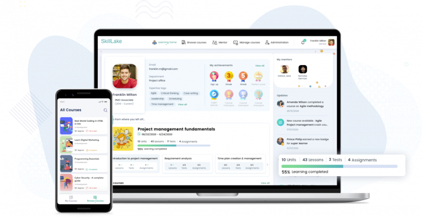

Other Reads from Skill Lake
-

Best AI-Powered LMS Platforms in 2026: A Complete Guide
Read MoreTraditional training is rigid and slow, leaving teams unprepared for new operational demands. When building a single course takes months, training becomes obsolete by the time it launches. Forward-thinking organizations are solving this speed-to-market issue by adopting an AI-powered learning management system that automates content creation and builds true skills mastery. But which are the
-
Why Enterprises Are Moving to AI-Based Learning Platforms in 2026
Read MoreMany companies still use old training methods that do not fit today’s work needs. Employees get bored with long training sessions, and companies find it hard to check if people are learning anything useful. This leads to skill gaps, low interest, and poor work performance. To fix this, businesses now focus more on better and

Anoop Kumar MS
Anoop Kumar MS, Product Manager of Fingent Global Solutions Pvt. Ltd., is an experienced product specialist with expertise in identifying customer needs and delivering innovative, data-driven solutions. Skilled in wireframing, UX, requirements analysis, risk assessment, team management, and root cause analysis, he excels in managing product lifecycles and fostering seamless collaboration to address real-world challenges.