10 Best LMS Platforms in the USA for Businesses in 2027

A modern Learning Management System (LMS) is an essential prerequisite for delivering effective workforce training today. The best LMS software does far more than hosting courses and videos—it supports personalized learning paths, automates re-certification reminders, tracks compliance, and enables realistic, hands-on practice. It also integrates with your existing enterprise systems to simplify learning management. Choosing the right LMS platform is crucial as it directly impacts your team’s performance, productivity, and bottom-line business outcomes.
To help you navigate the crowded L&D marketplace, we picked the 10 best LMS platforms in the USA based on their standout capabilities, core features, and primary use cases.
10 Best LMS Platforms in the USA
1. Skill Lake LMS
Skill Lake is an AI-powered corporate training platform built to transform passive workplace training into continuous, measurable skill development.
Key Features: AI role play training, AI course generation, AI document-to-video conversion, personalized learning paths, multilingual training support, compliance and certification management, mobile learning with offline access, microlearning, immersive AR/VR learning, gamification, and custom-branding features.
Best Use Case: Ideal for enterprise L&D teams, mid-market companies, and multi-unit organizations looking to speed up content creation and improve active skill mastery through realistic, hands-on practice.
Why It Stands Out: Skill Lake’s AI role-playing takes workplace learning beyond passive reading. Interactive simulations with immediate feedback allow teams to safely practice real-world scenarios within a guided training environment.
2. Docebo
Docebo is an AI-powered enterprise learning platform designed to manage training for internal employees, external customers, and business partners.
Key Features: Docebo offers learner engagement features like gamification, social learning, learner communities, AI course building, online quizzes, multi-tenancy architecture, software integrations, and automated compliance tracking.
Best Use Case: Large-scale enterprises managing multiple audiences, including employees, external partners, and customers.
Why It Stands Out: Docebo’s essential integrations and automations streamline organizational workflows. Its data tools and dashboards help measure the effectiveness of learning programs.
3. TalentLMS
TalentLMS is a learning management system in the US built for organizations to create, manage, deliver, and track training programs for employees, customers, and partners.
Key Features: AI content and test creator, AI coach, smart AI suggestions, pre-built course library, course store, gamification, custom reporting, and native mobile apps.
Best Use Case: Best for small to mid-sized businesses seeking an easy-to-launch LMS platform for structured employee onboarding and compliance. The platform helps centralize entire training in one place.
Why It Stands Out: TalentLMS offers a simple interface and lean setup process, making L&D management accessible without extensive technical support.
4. 360Learning
360Learning is an AI-powered collaborative learning platform that enables internal teams and subject matter experts to create and share operational knowledge.
Key Features: Collaborative course authoring, AI authoring assistance, peer feedback loops, instant learner feedback mechanisms, and mobile microlearning.
Best Use Case: Fast-growing teams can use the platform to capture institutional (internal) knowledge and upskill employees through peer interactions and feedback.
Why It Stands Out: The LMS allows subject matter experts across any department to collaborate, build, and refine training content rapidly.
5. Bridge LMS
Bridge is an integrated LMS platform that combines learning, skill building, and performance management to drive employee engagement and business growth.
Key Features: Learning and performance tracking features, skill profiling, career clarity mapping, microlearning, mobile LMS app with offline access, analytics dashboards, and custom reports.
Best Use Case: Built for mid-market and growing companies, HR and L&D teams that need a single solution to align and review employee learning and compliance, skill development, and performance.
Why It Stands Out: The LMS bridges the gap between learning and performance management in a single interface to facilitate corporate talent development.
6. Absorb LMS
Absorb is an AI-powered LMS built for employee onboarding and upskilling, compliance training, customer education, partner enablement, and course selling.
Key Features: AI course authoring, personalized upskilling, mentoring and coaching, integrations and API, compliance and ROI reporting, learning-in-the-flow-of-work, gamification, and social learning.
Best Use Case: Ideal for mid-market to large organizations looking to automate training workflows, manage employee, partner, and customer training, and sell courses externally.
Why It Stands Out: Absorb’s administrative automation, UI customization options, and native e-commerce features help companies with learning monetization (course sales) and multi-audience training.
7. iSpring LMS
iSpring is an enterprise learning platform designed for managing employee onboarding, compliance, performance assessment, talent growth, and engagement.
Key Features: AI course creation and assignments, personalized learning paths, knowledge base, social learning and gamification, event calendars, 360-degree employee review, and native mobile app with offline capabilities.
Best Use Case: Best for SMBs and enterprise businesses looking for an easy-to-deploy solution that helps centralize learning content and automate and track employee training.
Why It Stands Out: The platform’s in-built authoring features allow content creators to turn existing documents and raw PowerPoints into structured courses instantly.
8. LearnUpon
LearnUpon is an AI LMS for businesses to centralize and manage corporate training across multiple distinct audiences such as employees, customers, and partners.
Key Features: AI course creation, AI assessment generation, skill gap detection, personalized learning journeys, custom training portals for diverse audiences, and reporting and analytics suite.
Best Use Case: Best suited for midsized enterprises needing a single platform to manage employee training, association learning and certification, and customer education.
Why It Stands Out: LearnUpon’s Agentic AI features help centralize and automate learning for multiple audiences under one roof. This streamlines organization-wide training delivery.
9. D2L Brightspace
D2L Brightspace is a learning management software designed for corporate organizations to manage, deliver, and track employee learning and development.
Key Features: Custom role-based learning paths, credentialing, certifications, immersive learning experiences, analytics, course design, mobile learning, and real-time reports.
Best Use Case: Perfect for corporate firms, academies, and training institutions that need to create and manage structured, skill-based career development paths.
Why It Stands Out: Brightspace offers organizations the flexibility to provide in-person, hybrid or fully online training for distributed teams.
10. Tovuti LMS
Tovuti is an AI-driven LMS platform built for organizations to create, deliver, track, and manage training across employees, customers, partners, and compliance audiences.
Key Features: AI-powered course builder, personalized learning paths, gamification, customizable dashboards, one-click reporting, integrations, and mobile learning.
Best Use Case: Best for growing, mid-market and public-sector organizations with scalable, multi-audience training needs and in-depth reporting requirements.
Why It Stands Out: Tovuti’s structured onboarding workflows and ready-to-use content allow beginners to launch and scale employee training programs quickly.
Comparison of the Best LMS Platforms in the USA
How We Selected the Best LMS Platforms in the USA
To identify the best LMS platforms in the US, we evaluated solutions based on their ability to solve real-world corporate L&D challenges, drive employee adoption, and deliver measurable business value. Our selection process focused on:
- Key LMS Features: We assessed standard LMS capabilities for managing users, assigning courses, tracking completions, and automating certification renewals.
- Corporate L&D Support: End-to-end workflows to support new hire onboarding, mandatory compliance tracking, and continuous employee upskilling.
- AI Learning Capabilities: AI features like rapid course authoring and quiz creation, interactive role-play simulations, and tailored course recommendations.
- Flexible Learning Delivery: Support for different learning modes, such as self-paced and instructor-led sessions, blended lessons, microlearning, and offline mobile accessibility.
- Content Interoperability: The platform’s compatibility with diverse file formats and technical standards, including SCORM, xAPI, video lessons, PDFs, and slide decks.
- Reporting & ROI Analytics: Custom reporting dashboards for reviewing learner progress, assessment scores, certification status, and training impact.
- System Integrations: Pre-built connectors and open APIs for syncing with HRIS and CRM platforms, SSO security providers, and daily workplace communication tools.
- Enterprise Scalability: The capacity to effortlessly expand across global locations, catering to the training needs of remote teams and growing workforces.
- Intuitive User Experience: Clean, easy-to-navigate interfaces that promote high daily adoption for learners while simplifying backend workflows for admins.
- Pricing Transparency & Value: Overall licensing flexibility and cost structures to ensure long-term value for varying corporate budgets and requirements.
Key Factors Driving the Growth of the LMS Market
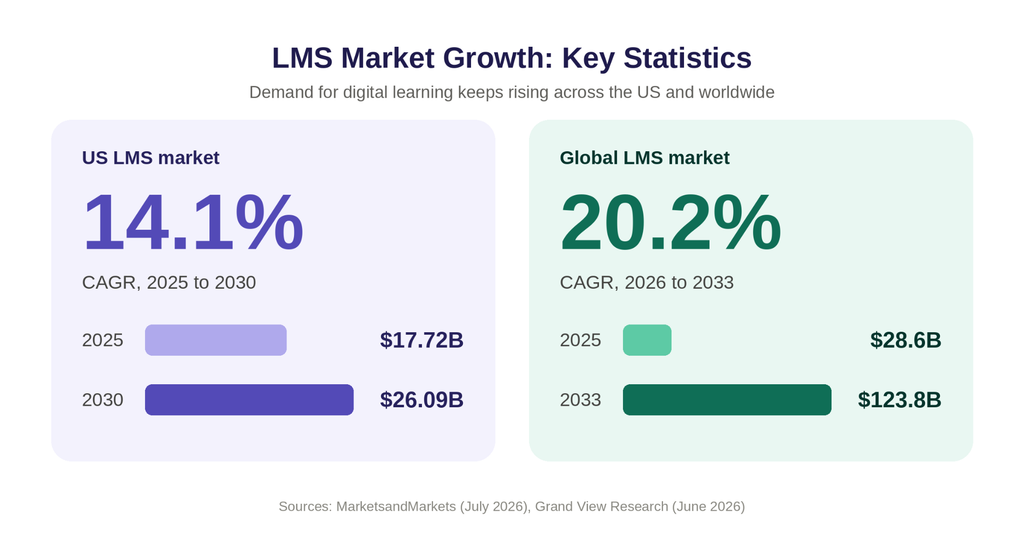
The Learning Management System (LMS) market continues to grow as organizations invest more in digital learning, employee development, and workforce training. According to a July 2026 report by MarketsandMarkets, the US LMS market was valued at approximately USD 17.72 billion in 2025 and is projected to reach USD 26.09 billion by 2030, growing at a compound annual growth rate (CAGR) of 14.1%.
The trend is also visible globally. Grand View Research, in its June 2026 report, estimates that the global LMS market was valued at USD 28.6 billion in 2025 and is expected to reach USD 123.8 billion by 2033, with a CAGR of 20.2% from 2026 to 2033.
These estimates reflect the growing role of digital learning across businesses and educational institutions. Several factors are contributing to this expansion:
Growing Demand for Employee Upskilling and Reskilling
As job roles and technology continue to change, organizations need to help employees develop new skills and strengthen existing ones. LMS platforms make it easier to organize learning activities, assign training based on job roles, and monitor employee progress.
Rise of Remote and Hybrid Work
With employees working across different locations, organizations need flexible ways to manage training. Cloud-based LMS platforms allow employees to access learning activities from different devices and locations, making it easier to maintain consistent training experiences.
Increased Focus on Compliance Training
Many industries require employees to complete regular compliance and safety training. LMS platforms help organizations assign mandatory learning activities, track completion, manage certifications, and maintain training records.
Growing Adoption of AI in Corporate Training
AI is becoming an important part of modern learning platforms. Features such as AI-powered learning recommendations, automated quiz generation, document-to-course conversion, and AI role-play simulations can help organizations make learning activities more relevant and simplify training management.
Need for Measurable Learning Outcomes
Organizations increasingly want to understand whether training is helping employees improve their knowledge and skills. LMS reporting and analytics help L&D teams monitor course completion, assessment results, learner participation, and overall training progress.
Increasing Demand for Mobile Learning
Employees often need access to learning activities while working remotely, travelling, or managing different work schedules. Mobile-friendly LMS platforms make learning more accessible through smartphones and tablets.
Need for Scalable Training Management
As organizations grow, managing employee training through spreadsheets and manual processes can become difficult. An LMS provides a centralized way to create, manage, assign, and track learning programs across teams, departments, and locations.
Together, these factors are increasing the demand for flexible and scalable LMS platforms. As organizations continue to invest in workforce development and digital learning, LMS solutions are likely to remain an important part of corporate training strategies.
Best LMS by Use Case: Features to Look For
Selecting the right LMS software requires matching your organizational goals with the specific capabilities that drive workforce performance, bridge skill gaps, and improve your training ROI and outcomes. Here’s how LMS platforms in the US support common corporate training use cases.
- Employee Onboarding and Upskilling: Rapid AI course generation and personalized learning paths accelerate onboarding, allowing new hires to become productive faster. Structured onboarding workflows with step-by-step training modules improve initial retention.
- Skill Gap Identification: Performance tracking and employee skill assessment allow L&D managers to pinpoint exact knowledge gaps across teams. By identifying where skills fall short, organizations can deliver personalized learning recommendations and reskill their workforce to match evolving market demands.
- Scenario-Based Training for Effective Workplace Communication: AI-powered conversational role-play simulations provide a risk-free and fully guided training environment for team members to practice critical workplace communication, negotiation, and decision-making while receiving instant behavioral feedback.
- Compliance and Certification Tracking: Automated certification renewal alerts and regular compliance monitoring protect organizations from legal and financial liabilities. The LMS tracks whether all employees complete mandatory safety and policy training on time while maintaining clear compliance records.
- Mobile Access for Anytime, Anywhere Learning: Native LMS mobile app with offline access and bite-sized microlearning give remote employees immediate access to critical SOPs and training modules wherever they operate.
Essential AI Features Driving the Best Corporate LMS Platforms in the USA
Popular learning management systems in the US use artificial intelligence to build courses, personalize learning recommendations, and provide realistic scenario practice. Here are the top AI features to look for:
- AI Course Generator: Turns basic training ideas into fully structured courses in minutes by automatically generating comprehensive outlines, lessons, and titles based on your specified topic and target audience. You can then review, refine, and launch the course instantly.
- AI Role-Play Simulation: Employees practice critical workplace conversations like sales calls or customer service in supervised, risk-free virtual environments, receiving immediate performance feedback to build confidence and practical communication skills.
- AI Assessment Generation: Instantly builds context-relevant multiple-choice questions and true/false quizzes from course content, saving hours of manual evaluation setup time. This allows L&D leaders to measure employee comprehension accurately.
- Document to Course Conversion: Automatically converts existing PDFs, SOPs, onboarding manuals, and policy documents into structured, ready-to-assign courses without requiring any manual reformatting.
- Document to Video Conversion: Transforms static text files into engaging training videos featuring AI voiceovers, lifelike presenters, dynamic visual backgrounds, and accurate subtitles. This makes training videos more engaging and easy-to-comprehend.
- Tailored Course Recommendations: Analyzes employee job roles, skill gaps, and learning preferences to deliver personalized course suggestions, boosting platform adoption and continuous engagement.
Key LMS Features to Consider Alongside AI
In addition to the AI capabilities listed above, here are the core LMS features that ensure your day-to-day training operations run smoothly.
- Mobile Learning with Offline Access: An LMS should offer native mobile apps for deskless workers and distributed teams to access courses and complete training anywhere, even when they are offline.
- Microlearning & Bite-Sized Content: Short and focused learning units, designed and delivered through the LMS, promote learning-in-the-flow-of-work. It allows busy employees to learn as they work, without interrupting their shifts.
- Multilingual Training Support: Multi-language interfaces and localized content delivery features ensure consistent training quality across globally distributed and culturally diverse teams.
- Competency Mapping: By aligning training directly to defined job roles and proficiency levels, managers can easily detect their team’s skill gaps, personalize learning paths, and offer mentoring and feedback to build employee skills and confidence.
- Compliance & Certification Tracking: Automatically tracks mandatory policy training and certification expirations, sending automated reminders to ensure employees remain fully compliant and audit-ready.
- Immersive AR/VR Training Support: Augmented and virtual reality integration makes learning more immersive and engaging for employees. It lets teams practice high-risk operational procedures, field operations, or complex equipment maintenance without any real-world risks.
- Gamification & Engagement: Gamified learning techniques such as points, badges, leaderboards, and progress bars motivate learners, encourage friendly competition, and increase course completion rates.
- Custom Branding & White labeling: Companies can customize their learning platform with their own logos, brand colors, themes, and domain names for a cohesive employee experience. It also helps external training audiences feel connected to the brand.
How AI is Transforming Corporate Learning
From instant content generation to hands-on practice, AI-powered learning platforms offer numerous ways to enhance employee development and training.
- Faster Content Development: AI-assisted course generation as well as conversion of existing documents (SOPs, policy PDFs, and text guides) into structured courses can significantly reduce course creation timelines.
- Scenario-Based Training Simulations: Realistic role-playing, powered by conversational AI, allows employees to practice high-stakes workplace interactions in fully guided virtual settings while receiving immediate performance feedback.
- Accurate Knowledge Evaluation: AI assists L&D leaders to instantly generate context-specific quizzes from course content, simplifying employee comprehension and knowledge retention checks.
- Tailored Content Recommendations: By analyzing individual job roles, proficiency levels, and skill gaps, AI helps deliver targeted course recommendations for every learner. This allows employees to focus on their exact learning needs rather than generic content.
Real-World Applications of AI in Corporate Training
AI is being used in different ways to support everyday corporate training activities. Organizations can apply AI to simplify onboarding, prepare employees for customer interactions, manage compliance learning, and support continuous employee development.
Here are some practical examples of how AI can be used across different training scenarios:
Scenario
Onboarding
Training
Training
Development
These applications show how AI can support different stages of corporate training. From helping new employees understand their roles to giving experienced employees opportunities to practice and develop new skills, AI offers organizations additional ways to manage learning and employee development.
LMS Pricing in the US: Pricing Models and Underlying Factors
Understanding LMS pricing structures helps organizations establish realistic L&D budgets and assess overall platform value. Vendors in the US market typically offer four main pricing models:
Common Pricing Structures:
- Pay-Per-Learner (Registered Users): You pay a fixed fee for every employee account created in the system. This model is ideal for consistent, mandatory workforce compliance training.
- Pay Per Active User: You are billed only for learners who log in during a given billing cycle. This structure is cost-effective for fluctuating, partner, or seasonal workforces.
- Flat-Rate Tiered Pricing: The vendor charges a fixed fee up to a specified user cap. This provides predictable monthly billing for growing, mid-sized companies.
- Enterprise Custom Quotes: Tailored pricing plans built for large organizations requiring complex system integrations, custom security, and multi-tenancy configurations.
Total Cost of Ownership: Hidden Costs to Consider
When calculating the actual total cost of ownership, L&D leaders should evaluate these common additional expenses:
- Initial setup, data migration, and technical configuration fees
- Custom HRIS/CRM integration costs
- Advanced modules and premium AI feature add-ons
- Dedicated customer support tiers
How to Choose an LMS: A Step-by-Step Guide
Selecting the right LMS requires aligning your organization’s training goals with a platform’s technical capabilities, usability, and long-term support. If you are already using a learning platform, take time to evaluate whether it still aligns with your workforce demands or if you are noticing key signs it may be time to replace your LMS.
Follow these steps to make an informed choice:
- Define Clear Training Objectives: Identify primary goals upfront—such as accelerating onboarding or tracking compliance—to ensure the platform directly supports your core business objectives.
- Evaluate Integration Capabilities: The LMS should connect seamlessly with your existing HRIS, CRM, and communication tools to prevent data silos and automate administrative workflows.
- Look for Ease of Use: The LMS must offer an intuitive, easy-to-navigate interface for both learners and administrators to maximize daily platform adoption with minimal required training.
- Ensure Mobile Learning Access: Verify the LMS offers a native mobile app or responsive design with offline capabilities for training distributed workforces.
- Request Demos and Free Trials: Utilize hands-on platform trials to test real-world usability, administrative workflows, and overall user navigation before committing.
- Verify Dedicated Vendor Support: Ensure the vendor provides responsive technical assistance, clear service level agreements, and ongoing onboarding support for your team.
- Assess Future Scalability: Select a cloud-based LMS platform that easily accommodates user growth, multi-tenant setups, and expanding feature requirements as your organization scales.
Questions to Ask Before Buying an LMS
Before investing in a learning management system software, evaluate vendors across cost, system integration, daily usability, enterprise security, and long-term scalability. Here are a few questions to ask:
- Total Cost: What are the full costs beyond subscription fees, including setup, custom integrations, or add-on features?
- Integrations: Does the LMS connect natively with our existing HRIS, CRM, and communication tools?
- Usability: How easy is navigation for non-technical users, and how quickly can admins build and launch courses?
- Security: What security and compliance certifications (e.g., SOC 2) does the platform hold, and how are permissions managed?
- Scalability & Support: Can the platform scale as our headcount grows, and what technical support guarantees are included?
Elevate Team Performance and Scale Your Business with the Best LMS Platform
A modern learning management system transforms passive training into a scalable growth engine. By replacing manual L&D workflows with rapid AI course generation, interactive role-play simulations, and automated compliance tracking, businesses can increase speed-to-productivity, bridge skill gaps, and boost knowledge retention across every department. Skill Lake provides the flexible LMS features and advanced AI capabilities required to keep your organization agile and competitive.
Ready to eliminate training bottlenecks, elevate team performance, and scale your business? Book a demo today to see how Skill Lake can optimize your corporate training and unlock your workforce’s full potential.
Frequently Asked Questions
Q: What are the top 5 LMS platforms in the USA?
A: The top five LMS platforms in the USA are Skill Lake LMS, Docebo, TalentLMS, 360Learning, and Bridge LMS. These platforms provide AI capabilities, multi-audience portals, rapid deployment, mobile learning access, and performance management.
Q: What core features should US businesses look for in an LMS?
A: Essential features include AI-assisted course and quiz generation, AI role-play simulations, compliance and certification management, HRIS/CRM system integrations, native mobile learning with offline access, gamification, and custom dashboards.
Q: How much does a corporate LMS cost in the USA?
A: LMS pricing varies based on the licensing model—such as pay-per-registered user, pay-per-active user, or flat-rate monthly tiers. Organizations should also factor in potential setup fees, custom integration charges, and premium support costs when budgeting.
Q: Why is AI important in modern learning management systems?
A: AI accelerates course creation and also converts raw documents to structured courses in minutes. It also generates assessment quizzes from existing materials. AI-driven role-playing allows employees to practice realistic workplace conversations through interactive simulations.
Q: Can an LMS integrate with existing enterprise tools?
A: Yes. Most modern LMS platforms support integration with core business applications, including HR systems, CRM platforms, single sign-on (SSO) providers, and communication tools like Microsoft Teams and Slack. Since integration capabilities differ by vendor, verify that your required tools are supported.
Build a culture of continuous learning with Skill Lake’s state-of-the-art people development platform. Give your employees professional training to help them excel in their job roles and propel your business to greater efficiency and success.
Start Today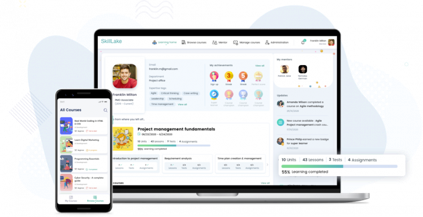

Other Reads from Skill Lake
-

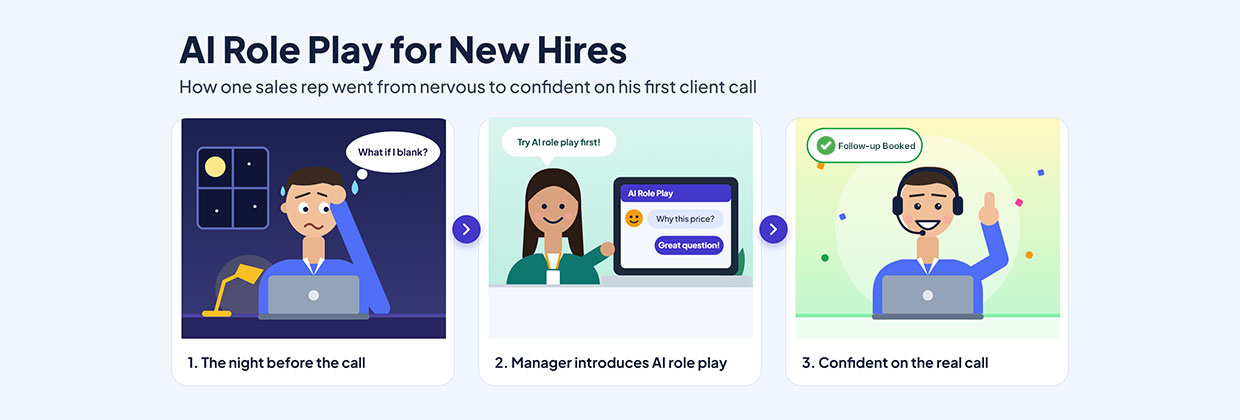
AI Role Play for New Hires: How One Sales Rep Went From Nervous to Confident on His First Client Call
Read MoreEvery new sales hire remembers the first client call. The product knowledge is there, the onboarding is done, and the calendar invite is sitting in the inbox. What is missing is the confidence that only comes from having done it before. Every new sales hire remembers the first client call. The product knowledge is there,
-
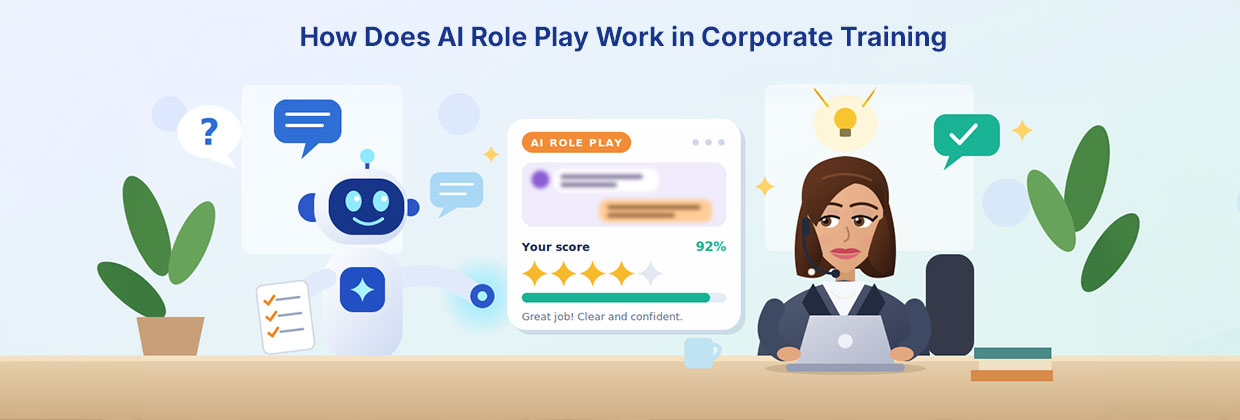
How Does AI Role Play Work in Corporate Training?
Read MoreAnyone can look up how to calm an angry customer. Ask a chatbot, skim a checklist, and you’ll have a decent answer in seconds. But the first time a real customer raises their voice, that checklist has a way of vanishing from your head. That gap between knowing and doing is where a lot of
Anoop Kumar MS
Anoop Kumar MS, Product Manager of Fingent Global Solutions Pvt. Ltd., is an experienced product specialist with expertise in identifying customer needs and delivering innovative, data-driven solutions. Skilled in wireframing, UX, requirements analysis, risk assessment, team management, and root cause analysis, he excels in managing product lifecycles and fostering seamless collaboration to address real-world challenges.