Best AI-Powered LMS Platforms in 2026: A Complete Guide

Traditional training is rigid and slow, leaving teams unprepared for new operational demands. When building a single course takes months, training becomes obsolete by the time it launches. Forward-thinking organizations are solving this speed-to-market issue by adopting an AI-powered learning management system that automates content creation and builds true skills mastery. But which are the best AI-powered LMS platforms in 2026?
This guide answers that question by reviewing 2026’s leading AI learning platforms, listing their core capabilities and benefits to help you select the ideal solution for your workforce development goals.
What Are the Best AI-Powered LMS Platforms in 2026?
The best AI LMS platforms in 2026 use advanced machine learning and smart automation to solve critical corporate training challenges like content creation bottlenecks, disengaged learners, and inefficient performance tracking. Modern corporate learning platforms stand out by shifting the training focus from basic compliance completion to verified, active workforce performance.
The best AI-powered LMS platforms for corporate and enterprise workforce training include:
- Skill Lake LMS
- Docebo
- Absorb LMS
- 360Learning
- Cornerstone OnDemand
- CYPHER Learning
- Disprz
- Sana Learn
- D2L Brightspace
- iSpring LMS
10 Best AI-Powered LMS Platforms in 2026 Compared
1. Skill Lake LMS
Skill Lake is a modern AI-powered learning management system software built for standardizing training and accelerating workforce productivity in corporate environments. Using AI-driven personalization and automation of crucial L&D activities, Skill Lake closes critical enterprise skill gaps and actively transforms baseline knowledge into verified on-the-job mastery.
Key Features:
- Interactive AI role play simulations for realistic practice and mastery
- AI copilot for instant text editing, summarization, question-answering
- Automated AI course generator and smart quiz/ question creator tools
- Instant document (PDF) to structured course conversion using AI
- Document-to-video conversion with AI-generated voiceovers and subtitles
- Personalized learning paths and gamification techniques to engage learners
- Native iOS and Android LMS apps, microlearning, AR/VR immersive training
- Integrations with workplace tools like Slack, MS Teams, Leadde and Google Chat
Best Use Case: Corporate L&D leaders, SMBs, startups, and large enterprise teams looking to accelerate speed-to-market for training programs and establish a continuous, guided role mastery and talent growth culture.
Why It Stands Out: Skill Lake transforms employee training with AI course generation, automated questions, AI copilot assistance, workplace role play simulations, and instant conversion of documents into engaging courses or videos.
Pricing: Offers scalable pay-per-user subscription tiers alongside customized, white-labeled corporate packages optimized for deployment across preferred private or public cloud architecture.
2. Docebo
Docebo is an AI-first, scalable enterprise LMS platform designed to unify internal employee upskilling, external customer education, and partner training. It leverages deep skills intelligence to automate global workflows and transform organizational learning into measurable business revenue.
Key Features:
- AI Copilot for real-time user assistance and admin tasks automation
- AI-powered content creation to automate training lessons
- Automated skills intelligence to infer skill gaps across workforces
- Multiple customized portals for training external audiences
- Pre-built and custom integrations for common business tools
- Gamification, social learning, learner communities to drive engagement
- Data tools and dashboards to measure and improve learning programs
Best Use Case: Large scale organizations and rapidly growing global enterprises looking for an automated, highly customizable AI LMS to train internal employees alongside external clients and commercial partners.
Why It Stands Out: Docebo’s modular architecture allows enterprises to seamlessly expand training programs to external networks using multiple, fully white-labeled portals managed from a single central hub.
Pricing: Provides custom, quote-based pricing packages stratified by active user volume across distinct functional tiers like Elevate and Enterprise.
3. Absorb LMS
Absorb is a premium, AI-powered corporate training platform designed for organizations and enterprises to close their workforce’s knowledge gaps faster. From employee onboarding and upskilling to partner enablement and course monetization, Absorb supports a vast array of enterprise learning and development use cases.
Key Features:
- Automated AI tools for instant course authoring and quiz creation
- AI-driven, actionable LMS reporting for data-driven insights and next steps
- AI-powered content recommendations for personalized learning
- Agentic AI to deliver micro-learning and on-the-spot clarifications
- Gamification and social learning to increase voluntary learning
- Multi-tenant architecture for extended enterprise training
- AI-generated observational checklists to verify on-the-job mastery
Best Use Case: Enterprise executives and global firms that need a highly scalable AI training platform to educate internal employees, global distributors, commercial partners, and paying customers alike.
Why It Stands Out: Absorb’s deep multi-portal architecture coupled with native eCommerce tools makes it the best LMS for organizations looking to monetize external product and partner training programs seamlessly.
Pricing: Offers tailored corporate subscription plans based on a standard pay-per-user or flexible pay-per-active-user model, accessible by requesting a custom product consultation.
4. 360Learning
360Learning is an AI-driven, collaborative learning management system that enables enterprise L&D teams to crowdsource internal expertise. It transforms traditional, top-down training into an active, bottom-up upskilling ecosystem by automating manual administration and content creation workflows.
Key Features:
- AI-powered course builder and multimodal activity generator
- Agentic automation to cut repetitive admin tasks & L&D workflows
- Adaptive, real-time, conversational AI-based coaching
- Personalized employee training to boost real-world upskilling
- AI-driven talent gap detection and skills-based learning
- Strict compliance standards and monitored data access controls
- Deep integrations with enterprise HCM/HRIS and workplace tools
Best Use Case: Enterprise corporate organizations, fast-scaling companies, and mid-market business leaders who want to utilize internal, decentralized expertise to upskill their workforce in real time.
Why It Stands Out: Its unique combination of collaborative learning and agentic AI enables internal subject matter experts to easily co-create, translate, and update courses without prior instructional design experience.
Pricing: Offers a tiered subscription model with scalable, user-based packages designed for growing teams. Also provides custom, feature-rich corporate pricing tiers for large enterprise requirements.
5. Cornerstone OnDemand
Cornerstone OnDemand is an enterprise-grade workforce agility and intelligence platform designed for large organizations. It leverages advanced machine learning to unite skills tracking, compliance, performance management, and personalized learning experiences into a scalable workforce readiness ecosystem.
Key Features:
- Personalized learning paths matching individual skill goals
- Dynamic AI skills mapping engine to boost internal career mobility
- AI agents and virtual reality for immersive, hands-on practice
- Automated compliance tracking with streamlined workflows and chatbots
- Access learning bytes directly inside MS Teams and Slack.
- Predictive workforce analytics and real-time dashboards for improved visibility
- Extended enterprise training for staff, external partners, and customers
Best Use Case: Large-scale global enterprises, government entities, and highly regulated industries that need to manage complex talent mobility, tracking, and continuous compliance for thousands of distributed workers.
Why It Stands Out: Its comprehensive, open architecture pairs deep labor market intelligence with agentic AI workflows, allowing enterprises to easily automate, map, and predict long-term operational readiness.
Pricing: Provides customizable enterprise licensing agreements that are tailored based on total corporate user volume, deployment scale, and chosen functional module bundles.
6. CYPHER Learning
CYPHER Learning is an AI-native learning platform designed for enterprises to turn training into measurable business performance. It helps organizations create, deliver, personalize, and scale training for employees, partners, customers, agents, franchises, and more.
Key Features:
- Interactive, context-aware AI assistant to support learners in real-time
- AI-native course authoring with quizzes and multimedia formats
- AI agents for rapid course creation and streamlined training operations
- Immersive conversational role-play simulations with real-time feedback
- Platform-wide, multi-level gamification with points and badges
- Dynamic competency mapping and personalized learning goals
- Automated, localized multi-language course translation capabilities
Best Use Case: Perfect for modern enterprises, training organizations, and franchised businesses looking for an easy-to-use, rapid-scaling platform to onboard and upskill distributed global workforces.
Why It Stands Out: Its generative AI Agent allows educators and L&D managers to turn raw documents into complete, gamified, and localized courses in minutes with minimal prompting.
Pricing: Provides scalable monthly or annual subscription plans categorized by user tiers. Custom pricing packages are available for larger training institutions and complex enterprise deployments.
7. Disprz
Disprz is an AI-powered learning and skills development platform that helps enterprises close capability gaps by aligning workforce training with business outcomes. It integrates LMS and LXP capabilities to autonomously diagnose skill deficiencies, deliver targeted lessons, and measure performance impact.
Key Features:
- Autonomous Agentic AI content generator
- AI-powered conversational skills assessment and coaching
- Dynamic predictive workforce readiness analytics
- Adaptive real-time personalized learning pathways
- Contextual microlearning in workflow applications
- Automated certification expiry tracking triggers
- Multi-language automated translation support
Best Use Case: Mid-sized to large enterprises, particularly in sectors like banking, retail, healthcare, and manufacturing, that need to rapidly upskill distributed, frontline, and desk-based employees.
Why It Stands Out: Its proprietary agentic AI serves as an autonomous L&D worker, generating production-ready training content and conversational assessments directly from raw internal documentation.
Pricing: Features custom enterprise-tier subscriptions based on a per-user, active-user, or annual SaaS framework. Packages may scale with required analytics, integrations, and advanced AI platform features.
8. Sana Learn
Sana Learn is an AI-native learning platform that consolidates an LMS, LXP, authoring tool, and virtual classroom into a unified interface. It focuses on transforming enterprise training by automating content creation and delivering highly adaptive and personalized workforce learning experiences.
Key Features:
- Conversational AI Tutor for 24/7 personalized coaching
- Source-to-course dynamic interactive content generation
- Natural language analytics for on-demand performance reporting
- Automated administrative compliance and enrollment management
- Native virtual classroom with automatic searchable transcriptions
- Real-time collaborative course authoring workspace
- Instant multi-language course translation capabilities
Best Use Case: Designed for global enterprises that need an agile, all-in-one AI learning platform to rapidly build, scale, and manage personalized employee onboarding, compliance, and skills training programs.
Why It Stands Out: Sana’s deeply integrated AI-native architecture enables instant, source-based course creation. Its predictive analytics capabilities can forecast learner struggles before they happen.
Pricing: Offers structured enterprise subscriptions based on active user counts. Features standard packages for mid-sized teams alongside tailored corporate tiers for large enterprises.
9. D2L Brightspace
D2L Brightspace is a highly flexible, enterprise-grade learning management platform designed to scale workplace upskilling. Its advanced AI capabilities allow organizations to streamline corporate onboarding, leadership development, compliance automation, and external partner training programs.
Key Features:
- AI assistant for automated course and quiz creation, and 24/7 tutoring
- Learning path personalization based on employee roles and skills
- A no-code toolkit for building interactive content instantly
- Triggers automated workflows and notifications from learner actions
- Allows configuring role-based and rule-based training access
- Predictive data dashboards and audit-ready data tracking
- Ensures seamless training accessibility via WCAG standards
Best Use Case: Large global enterprises, training organizations, associations, and government entities that require a deeply customizable, fully accessible platform to manage structured talent development at scale.
Why It Stands Out: Its native AI architecture prioritizes safety by keeping L&D professionals in full control of all AI-generated suggestions, questions, and learning insights.
Pricing: Offers tailored enterprise software-as-a-service licensing options based on active user volume, technical implementation scope, and selected add-on modules.
10. iSpring LMS
iSpring LMS is an intuitive, corporate learning management system built for rapid deployment. It combines automated administrative management with an advanced, built-in AI authoring toolkit, allowing businesses to easily launch, track, and scale employee onboarding and compliance training programs.
Key Features:
- Automated, AI-powered course structure generation
- AI-driven quiz generation for quick knowledge checks
- AI image generation for converting text-to-image prompts
- Automated multi-language course translation capabilities
- Interactive scenario branching role-play simulators
- Dynamic user group enrollment automation
- Mobile learning application with offline access syncing
Best Use Case: Mid-sized corporate businesses, training departments, and L&D managers needing a fast-to-deploy, easy-to-use platform to streamline employee onboarding, sales enablement, and regular compliance tracking.
Why It Stands Out: The platform’s strong integration with the iSpring authoring ecosystem enables rapid content creation, allowing teams to turn raw PowerPoints and documents into structured courses instantly.
Pricing: Offers transparent, tier-based subscription plans based exclusively on active user volume. Also provides comprehensive custom quotes tailored for high-volume enterprise operations.
Related Reading: Top 10 LMS with AI Role Play for Corporate Training
What is an AI-Powered LMS?
An AI-powered LMS is an intelligent learning management system that uses machine learning and automation to actively optimize corporate training. While traditional platforms act as passive databases that simply track course completion, an AI learning platform actively drives workforce development by:
- Boosting knowledge retention and building true mastery through interactive, supervised role-play simulations.
- Personalizing learning paths by matching individual learning goals and aspirations to modern operational demands.
- Detecting and bridging hidden skill gaps by using predictive data and intelligent competency mapping.
- Speeding up time-to-market by automating course development and administrative workflows.
Related Reading: The Complete Guide to AI Course Generators in Learning Platforms
How is AI Transforming Learning Management Systems
Recent data shows that AI-powered LMS systems improve course completion rates by nearly 70% and slash operational costs by up to 30% through automation of administrative tasks.
This structural transformation changes corporate training across several distinct fronts:
- From Static to Active Learning: ML algorithms continuously analyze learner behavior and assessment performance to dynamically create customized learning paths in real time.
- From Reactive to Proactive Support: AI tracks engagement drop-offs and quiz scores to identify struggling employees early. This allows mentors to make timely interventions before performance issues impact operations.
- From Manual to Intelligent Administration: Automation of repetitive back-office tasks like user enrollment, progress tracking, and scheduling frees up L&D teams to focus entirely on enhancing learning experience.
- From Passive Reading to Interactive Practice: Interactive role play simulations and adaptive gamification convert learning from a one-way corporate lecture into an active, two-way dialogue that builds true skill mastery.
Artificial Intelligence is shifting LMS platforms from static content repositories into active, intelligent corporate talent hubs. Instead of simply managing and tracking compliance checklists, modern platforms use automation to fundamentally change how training is built, delivered, and experienced.
Related Reading: AI in Learning and Development: The Future of Workplace Training
| Traditional LMS vs. AI-Powered LMS | ||
|---|---|---|
| Feature | Traditional LMS | AI-Powered LMS |
| Course Creation | Manual and slow; takes weeks to build from scratch. | Automated and instant; uses AI engines to generate modules. |
| Video Creation | Expensive and time-consuming; requires studios, cameras, and editors. | Automated and instant; AI converts documents, text, or topics into engaging video lessons. |
| Learning Path | Static; one-size-fits-all training based on broad roles. | Personalized learning journeys that adjust to individual progress. |
| Feedback Cycle | Delayed; depends on manual grading and intermittent reviews. | Delivers real-time, contextual feedback and instant tips. |
| Skills Tracking | Reactive; measures simple course completion and compliance checkboxes. | Predictive; continuously maps competency gaps and active mastery levels. |
| Practice Formats | Passive; reading text and watching videos with zero interaction. | Immersive; supervised role-play simulations for hands-on, risk-free practice. |
Why Businesses Need AI-Powered LMS Platforms in 2026
Legacy employee training software cannot scale fast enough to meet rapid market changes and widening capability gaps. Enterprise leaders need intelligent, AI-powered skills development platforms to automate content production, standardize training delivery, personalize learning paths, and turn data into strategic talent advantages. Shifting to the best AI LMS is essential to build an agile, future-ready workforce.
Related Reading: Why AI Role Play in LMS Will Be a Core Feature in Corporate Learning Management
Key Features to Look for in the Best AI-Powered LMS Platforms
When evaluating modern enterprise learning platforms, prioritize these essential, high-impact capabilities to ensure maximum returns on your technology investment:
- Adaptive Learning Paths: ML algorithms analyze individual performance and preferences to dynamically adjust learning paths and provide tailored course recommendations in real time.
- Automated Course Generation: AI course generators instantly convert user prompts into fully structured, ready-to-publish course modules, accelerating content production.
- Automated Assessments and Feedback: The system instantly builds context-specific quizzes, grades responses automatically, and delivers targeted feedback to rectify errors immediately.
- AI for Document to Course Conversion: Eliminates content creation bottlenecks by instantly converting raw business documents, SOPs, and legacy PDF files into structured, ready-to-use courses and microlearning modules.
- AI for Document to Video Conversion: Transforms static text, SOPs, and raw documents into engaging video lessons complete with lifelike presenters, realistic voiceovers, dynamic visuals, and auto-generated subtitles.
- AI Copilots: Built-in digital assistants support administrators by streamlining complex workflows and guide learners with 24/7 personalized, contextual tutoring.
- Conversational Role-Play Simulations: Immersive, monitored environment allows teams to practice complex interpersonal skills—like sales objections or crisis management—and receive guided feedback with zero operational risk.
Related Reading: How AI Simulation Training in LMS Prepares Teams for Real-World Scenarios
Benefits of Using an AI-Powered Learning Management System
Transitioning from a traditional, passive training system to an intelligent learning ecosystem drives clear operational and financial advantages across the enterprise:
- Accelerated Speed-to-Market: Cuts course development timelines from months to minutes, keeping your teams aligned with immediate business demands.
- Higher Training ROI: Maximizes budget efficiency by focusing resources on verified skill gaps rather than redundant, one-size-fits-all training.
- Reduced Staff Turnover: Boosts employee retention by providing clear, personalized growth paths that match individual career aspirations.
- Elevated Knowledge Retention: Uses immersive, supervised role-play sessions to transition employees from passive reading to active on-the-job mastery.
- Reduced Administrative Overheads: Automates manual data entry and routine workflows, freeing up your L&D team for strategic initiatives.
How to Choose the Right AI-Powered LMS for Your Organization
Selecting the best AI LMS platform requires corporate leaders to evaluate how effectively the platform harnesses AI to enhance training outcomes and learning ROI.
Here are the key considerations to keep in mind when choosing an AI training platform:
- Define Core Business Goals: Prioritize platforms that directly solve your specific operational bottlenecks, such as accelerating onboarding or closing regulatory compliance gaps.
- Assess the Maturity of AI Features: Verify if the vendor provides true automation and analytics skills rather than simple keyword-based course recommendations.
- Insist on Robust Integrations: Ensure the platform connects seamlessly with your existing HRMS, CRM, and workplace tools like MS Teams or Slack.
- Validate Data Privacy Standards: Confirm the vendor uses trusted security and compliance standards to protect corporate data and block unauthorized access.
- Test Admin Interface Workflows: Evaluate whether the automated content creation tools genuinely simplify and accelerate your L&D team’s daily workflows.
Bottom-Line Impact: Turning Training into Tangible Business Growth
Every hour your employees spend stuck in rigid, one-size-fits-all training is an hour of lost productivity. The best AI-powered LMS platforms reviewed in this guide prove that modern L&D should be measured by capability gaps closed, not courses managed.
Transitioning to an intelligent learning ecosystem allows your organization to cut content production timelines from months to minutes, reduce operational costs by up to 30%, and target exact workforce deficiencies. It is time to replace passive reading with monitored, real-world role mastery that drives clear corporate ROI.
Frequently Asked Questions
Q: What is an AI-powered LMS?
A: It is an intelligent learning management system software that uses machine learning and automation to continuously personalize learning pathways, evaluate skills, and automate administrative L&D tasks.
Q: Which are the best AI-powered LMS platforms in 2026?
A: The best AI LMS solutions leading the market include Skill Lake, Docebo, Absorb LMS, Sana Learn, and Cornerstone OnDemand. Each offers advanced, data-driven automation and innovative AI capabilities.
Q: How does AI improve employee training and development?
A: AI integration transforms a rigid training system into an adaptive skills development platform. The technology tracks individual performance in real time to deploy targeted content, close capability gaps, and boost retention.
Q: Can AI create training courses automatically?
A: Yes. Modern LMS systems like Skill Lake feature an in-built AI course generator to instantly transform internal PDFs, SOPs, and prompt criteria into fully structured, ready-to-publish learning modules.
Q: What features should organizations look for in an AI-powered LMS?
A: Prioritize automated course building, quiz creation, learning personalization, and guided conversational role-play simulations. These features help align AI training platforms with core business objectives.
Q: Who benefits most from a modern AI learning platform?
A: Global firms requiring a multi-tenant enterprise LMS benefit most, as automation seamlessly customizes localized onboarding, professional upskilling, and external customer training at massive scale.
Q: How does automation optimize corporate training delivery?
A: Deploying an intelligent corporate training platform removes manual burdens like enrollment scheduling and content creation, allowing L&D teams to focus strictly on improving overall learning experience.
Build a culture of continuous learning with Skill Lake’s state-of-the-art people development platform. Give your employees professional training to help them excel in their job roles and propel your business to greater efficiency and success.
Start Today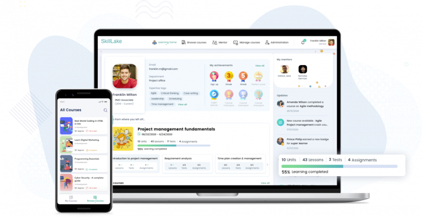

Other Reads from Skill Lake
-

Why Enterprises Are Moving to AI-Based Learning Platforms in 2026
Read MoreMany companies still use old training methods that do not fit today’s work needs. Employees get bored with long training sessions, and companies find it hard to check if people are learning anything useful. This leads to skill gaps, low interest, and poor work performance. To fix this, businesses now focus more on better and
-
Best Corporate Learning Management Systems in 2026: Top 10 Platforms Compared
Read MoreSustaining an agile workforce that upskills at the pace of business is essential for organizations to stay competitive and expand quickly. Traditional training models just can’t keep up anymore, which is why forward-thinking executives are upgrading to modern employee training software to drive retention and performance ROI. This article analyzes the best corporate learning management


Ashmitha Chatterjee
Ashmitha is a learning and development enthusiast who shares her insights on e-learning. She loves to create engaging and informative content and is dedicated to helping people learn and grow through her deep expertise in the field.