Top Learning and Development Trends for 2026

Artificial intelligence, rapid digital transformation, and evolving workforce expectations are reshaping the way organizations approach learning and development. Today, employee training is no longer limited to onboarding or annual compliance programs. Businesses are investing in continuous, skills-focused learning experiences that help employees adapt to changing job roles, embrace new technologies, and stay productive in an increasingly competitive environment.
As organizations prepare for the future of work, Learning and Development (L&D) has become a strategic business function rather than just an HR initiative. Modern L&D focuses on building future-ready workforces through personalized learning, AI-powered technologies, data-driven decision-making, and continuous upskilling. Companies that invest in learning today are better equipped to innovate, retain talent, and respond to changing market demands.
The future of work is undeniably centered around skills, a reality made even more evident by the global pandemic. While the importance of digital skills has been underscored, there’s also a growing recognition of the value of adaptable and learning-agile individuals in the workforce.
In addition to these evolving skill requirements, the rapid advancement of AI and technology, coupled with a competitive labor market, has made it abundantly clear that companies must prioritize investing in the development and training of their employees.
As we delve into Learning and Development trends for 2026, it becomes evident that to remain competitive, businesses must gain a profound understanding of the current state of L&D. Understanding corporate learning and development strategy helps businesses to plan effective training programs that align with the evolving needs of the workforce and the demands of the modern workplace.
In this blog, we will discuss learning and development strategy and trends for 2026 in detail.
The Crucial Role of Learning and Development
Organizations should align their rate of adaptation with the rapidly changing external landscape to engage Gen Z talent effectively. This necessitates the creation of comprehensive training and leadership initiatives that genuinely prioritize diversity and inclusion.
According to LinkedIn Workplace Learning Report 2019, Companies are not the only ones who value training. 94% of employees say that they would stay at a company longer if there is investment in their learning and development.
Learning and Development has also become a key driver of business resilience. Organizations with strong learning cultures can respond faster to technological changes, industry disruptions, and evolving customer expectations. Instead of reacting to change, these organizations proactively equip employees with the skills they need to succeed in future roles.
Employees today expect learning opportunities that are flexible, engaging, and relevant to their day-to-day responsibilities. Whether they are developing leadership capabilities, learning AI tools, or improving technical skills, continuous learning has become an essential part of career growth. Organizations that create meaningful learning experiences not only improve employee engagement but also strengthen retention and overall business performance.
Key Learning and Development Trends for 2026.
When implementing Learning and Development (L&D) initiatives, organizations must determine the training domain and the frequency of training delivery. Another crucial factor for organizations to consider is employees’ preferred learning methods. As remote and virtual learning options continue to expand, employees now have a multitude of learning avenues available. The most favored among employees are online/self-paced courses.
Now, let us get into the key learning and development trends in detail:
Continuous Learning for Organizational Agility
The focus on organizational agility has intensified, driven by the need to adapt to market disruptions swiftly. Recent insights from a Deloitte survey revealed that 85% of business executives actively seek more agile approaches.
The key to enhancing organizational agility is fostering a continuous learning culture. Learning and development strategy examples include training, employee engagement activities, and more. Training empowers employees to swiftly grasp new situations and respond effectively to the changing dynamics of the business world.
Learning and Development (L&D) teams play a pivotal role in this transformation by providing fresh learning opportunities and ensuring that training materials remain current, aligning with immediate organizational needs and broader market conditions.
The embrace of organizational agility yields significant advantages to companies and their workforce. Companies gain the competencies needed to thrive in challenging market scenarios, while employees access valuable training opportunities and acquire new skills that enhance their future career prospects.
Today’s organizations are moving beyond one-time training events and building a culture of continuous learning. Employees are encouraged to learn regularly through bite-sized courses, collaborative learning experiences, on-the-job practice, and personalized development plans. This approach helps businesses remain agile while enabling employees to continuously improve their skills as technology and business needs evolve.
Continuous learning also encourages innovation. When employees have access to relevant learning opportunities throughout their careers, they become more confident in experimenting with new ideas, adopting emerging technologies, and contributing to business growth.
Upskilling and Reskilling
In response to the ever-evolving demands of the modern workforce, organizations of all types and sizes continue to prioritize upskilling and reskilling efforts.
According to LinkedIn, a survey of L&D professionals reveals that 89% believe cultivating employee skills is instrumental in helping organizations navigate the uncertain future of work. This endeavor is particularly critical as specific skills have become important, including management, communication, customer service, and leadership.
A noteworthy trend emerging in the business world is the growing adoption of skill-based approaches to talent management. This strategic shift strongly emphasizes skills rather than specific job roles, ensuring that employees possess the cutting-edge competencies necessary for success.
Furthermore, organizations are increasingly embracing best practices from product development and applying them more broadly. This involves forming project teams focusing on task execution moving away from traditional business unit and department structures.
A significant majority of employees share the enthusiasm for continuous learning and acquiring new skills. A report by PwC titled “Workforce of the Future” revealed that 74% of workers desire to develop their skills to remain employable.
To further bolster their skill-building endeavors, organizations can implement recognition or incentive programs that reward employees for their active participation in developing their skill sets.
Beyond traditional upskilling, organizations are now focusing on preparing employees for AI-enabled workplaces. AI literacy, data literacy, cybersecurity awareness, and digital collaboration have become essential skills across industries. As automation continues to transform job roles, reskilling initiatives help employees transition into new responsibilities while ensuring organizations remain competitive in a rapidly changing business environment.
Successful organizations also create personalized development plans based on employees’ current competencies, career aspirations, and business objectives. This makes learning more relevant and increases employee participation in training programs.
Employee-centric Learning Experiences
The success of an organization’s Learning and Development (L&D) initiatives fundamentally relies on the collective achievement of individual employee learning journeys. By placing employees at the core and optimizing each learning experience, businesses can significantly enhance the effectiveness of their training programs, bringing them closer to their overarching goals.
This principle forms the bedrock of an employee-centric learning culture, focusing on nurturing individual growth to propel the organization forward. Organizations are encouraged to meticulously scrutinize the entire learning journey of each employee, spanning from their initial onboarding to their eventual exit, all to maximize their learning experience.
To successfully deliver employee-centric learning experiences, businesses must invest time and effort in understanding each employee persona comprehensively. This entails delving into their distinct learning preferences, career aspirations, and the potential contributions they can make to the organization.
Today’s employees expect learning experiences that are as personalized as the digital platforms they use every day. Rather than assigning the same courses to everyone, organizations are increasingly creating learning journeys tailored to employees’ roles, career goals, existing skills, and interests. Personalized learning not only improves engagement but also helps learners acquire skills that are directly relevant to their day-to-day responsibilities.
Modern learning platforms also support learning in the flow of work by enabling employees to access training whenever they need it. Whether it’s a short video, a quick knowledge article, or a practice activity, employees can learn without interrupting their workflow, making learning more practical and effective.
Organizations are also embracing mobile learning and microlearning to make training more accessible. Short, focused learning modules allow employees to develop new skills at their own pace, regardless of where they are working.
Wellbeing Programs and Mental Health Support
The challenges of maintaining a healthy work-life balance have left many employees grappling with fatigue and burnout, ultimately leading to diminished performance, increased absenteeism, and even resignations. In response, forward-thinking businesses are proactively addressing these issues by implementing wellbeing programs and specialized training initiatives designed to empower employees in navigating the demands of the modern workplace.
Recognizing the need to support their workforce’s mental health and overall wellbeing, organizations are extending their development opportunities beyond traditional complex or technical skills. These programs now encompass essential skills such as stress management, cultivating a positive mindset, practicing mindfulness, and refining time management abilities. Equipping employees with these crucial skills enables them to function effectively despite workplace pressures, reducing the risk of feeling overwhelmed.
Furthermore, some organizations are taking an extra step by investing in dedicated wellbeing spaces within the workplace, offering employees a sanctuary to decompress, recharge, or engage in mindfulness exercises. Although these investments may appear challenging for some, the positive outcomes of successful wellbeing programs are undeniable. They encompass improved motivation and productivity, reduced absenteeism, heightened job satisfaction, an enhanced company reputation that aids in the hiring process, and increased staff retention, ultimately contributing to a healthier and more resilient workforce.
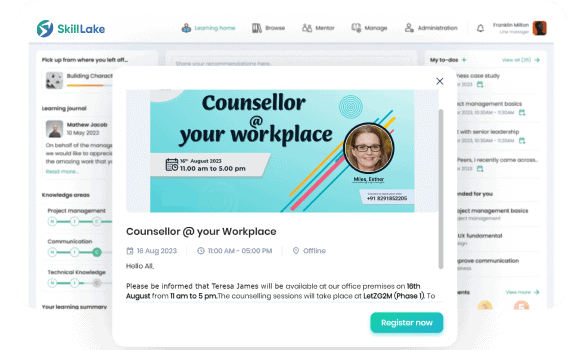
Employee wellbeing is no longer viewed as a separate initiative from Learning and Development. Organizations are integrating wellbeing, resilience, emotional intelligence, and leadership development into their learning strategies to help employees thrive in high-performing work environments. Supporting both professional growth and personal wellbeing creates a healthier workplace culture and contributes to long-term organizational success.
AI-Powered Learning Experiences
Artificial Intelligence has become one of the most influential forces shaping the future of Learning and Development. Organizations are using AI to simplify course creation, personalize learning experiences, automate administrative tasks, and provide learners with faster access to relevant knowledge.
AI-powered learning platforms can analyze employee skills, learning behavior, and performance data to recommend personalized learning paths that align with individual career goals and organizational objectives. This helps learners focus on the most relevant content instead of navigating through lengthy course catalogs.
AI is also transforming how learning content is created. Instead of spending weeks developing courses and assessments manually, organizations can leverage AI to generate training content, quizzes, learning summaries, and course recommendations in significantly less time while maintaining consistency and quality.
As AI continues to evolve, Learning and Development teams will increasingly focus on designing engaging learning experiences while AI handles repetitive tasks such as content generation, knowledge updates, and learner recommendations.
Skills-Based Learning and Internal Mobility
Organizations are shifting from traditional role-based workforce planning to skills-based talent development. Rather than focusing solely on job titles, businesses are identifying the specific skills employees possess and the skills they need to develop for future roles.
Skills-based learning enables organizations to identify workforce capabilities, close skill gaps, and create targeted learning programs that prepare employees for changing business requirements. This approach also supports internal mobility by helping employees explore new career opportunities within the organization based on their skills and learning progress.
By investing in skills development, organizations create a more agile workforce that can quickly adapt to new technologies, business priorities, and market changes. Employees also benefit from clearer career progression, increased learning opportunities, and greater confidence in navigating their professional growth.
Learning Analytics and Data-Driven Decision Making
Modern Learning and Development strategies rely heavily on data to measure effectiveness and continuously improve training outcomes. Learning analytics provide organizations with valuable insights into learner engagement, course completion rates, assessment performance, and overall skill development.
These insights help L&D teams understand which learning programs deliver the greatest impact and identify areas where employees may require additional support. Instead of relying on assumptions, organizations can make informed decisions based on measurable learning data.
Learning analytics also enable organizations to demonstrate the business value of employee training by connecting learning outcomes with productivity, employee performance, retention, and organizational goals. As businesses continue investing in workforce development, data-driven decision-making will play an increasingly important role in maximizing the return on learning investments.
Utilizing a Learning Management System
In the realm of Learning and Development (L&D) trends, Learning Management Systems (LMS) play a pivotal role by offering a host of valuable features and benefits. A contemporary LMS is a centralized hub for storing and organizing learning materials, ensuring accessibility, and accommodating diverse content types, from videos to interactive elements. Furthermore, it empowers organizations to customize and adapt learning experiences, tailoring them to individual learners’ specific needs and goals while fostering engagement and collaboration through gamification and social features. Notably, a robust LMS provides measurable insights, tracking learner performance and behaviors aiding in program evaluation. Its cost-effective scalability eliminates physical constraints, while its capacity to integrate innovative technologies and methodologies future-proofs learning initiatives enabling organizations to stay at the forefront of evolving learning trends. Ultimately, LMS serves as a cornerstone in crafting agile, efficient, and effective learning experiences in the ever-evolving landscape of Learning and Development.
Why is Skill Lake an Ideal LMS for learning and development?
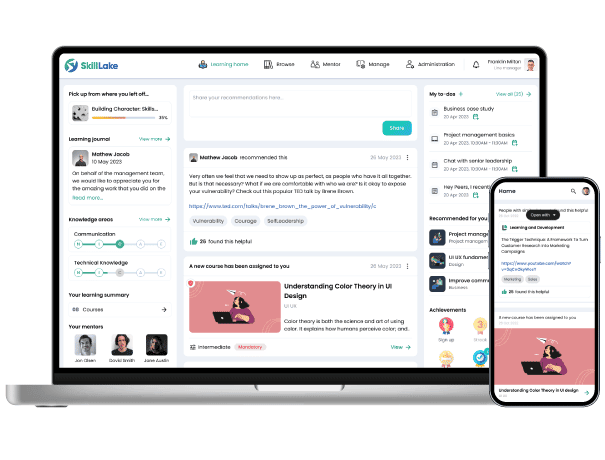
Skill Lake’s AI-enabled Learning Management System (LMS) is ideal for modern organizations seeking an advanced online employee training platform. It offers personalized, accountable, and comprehensive learning experiences beyond traditional LMS systems. With Skill Lake, organizations can create a continuous learning and growth culture, fostering accountability, cooperation, and personalization. It empowers learners to develop skills and competencies directly impacting their job performance, effectively converting learning into actionable results. The platform encourages social and collaborative learning, inspires personalized learning paths, and provides various learning delivery options. Skill Lake’s commitment to learning accountability, microlearning, flexibility, and hands-on training sets it apart. It is a compelling choice for organizations aiming to transform their workforce into future-ready, knowledgeable, and adaptable employees. Skill Lake’s AI LMS offers a holistic and innovative approach to learning and development, addressing the evolving needs of organizations in today’s fast-paced business landscape.
Modern organizations need more than a platform that simply delivers courses. They need an intelligent learning ecosystem that accelerates content creation, personalizes learning experiences, measures workforce skills, and supports continuous employee development. Skill Lake is designed to meet these evolving needs by combining AI-powered automation with learner-centric experiences.
With Skill Lake, Learning and Development teams can create engaging training programs faster using AI-powered course creation, generate assessments automatically, transform existing documents into structured learning content, and deliver personalized learning paths that align with employee roles and career aspirations. This significantly reduces manual effort while improving learning quality and consistency.
Skill Lake also empowers organizations to deliver immersive, hands-on learning through AI Role Play Simulations. Employees can practice real-world workplace scenarios, such as customer interactions, sales conversations, leadership discussions, and compliance situations, in a safe and interactive environment. Instant AI-powered feedback helps learners refine their communication, decision-making, and problem-solving skills, enabling them to build confidence and apply their knowledge effectively in real workplace situations.
Skill Lake also enables organizations to monitor learner progress, identify skill gaps, track competency development, and measure training effectiveness through powerful analytics and reporting dashboards. These insights help HR and L&D leaders make informed decisions about workforce development and continuously improve learning outcomes.
By supporting continuous learning, skills development, collaborative learning, mobile accessibility, AI Role Play Simulations, and AI-powered automation, Skill Lake helps organizations build a future-ready workforce capable of adapting to rapidly changing business environments.
Best Practices for Building an Effective Learning and Development Strategy
While understanding the latest Learning and Development trends is important, organizations must also focus on implementing strategies that create meaningful learning outcomes. A well-planned L&D strategy ensures that learning initiatives support both employee growth and overall business objectives.
Some best practices include:
- Identify current and future workforce skill gaps before designing training programs.
- Align learning initiatives with business goals and organizational priorities.
- Provide personalized learning experiences based on employee roles, career aspirations, and skill levels.
- Encourage continuous learning instead of relying on one-time training sessions.
- Leverage AI-powered learning platforms to automate course creation, assessments, and content recommendations.
- Measure learning effectiveness using analytics, learner feedback, and performance data.
- Regularly update learning content to reflect changing technologies, regulations, and industry trends.
- Promote collaborative learning through peer discussions, knowledge sharing, and mentoring programs.
Organizations that follow these practices create learning cultures where employees continuously develop new skills while contributing to long-term business success.
Conclusion
The rapid pace of technological advancement and the fiercely competitive job market compel organizations to invest substantially in employee development and training. This imperative arises from several key factors. Technological innovations constantly reshape industries, necessitating organizations to effectively equip their employees with the skills to harness these advancements. Failure to do so can render businesses obsolete in a swiftly evolving business landscape. Furthermore, attracting and retaining skilled professionals is a significant challenge in today’s highly competitive job market. Companies that invest in employee growth and development not only draw top talent but also retain it, while those neglecting such investments risk losing their most valuable assets. Adapting Learning and Development (L&D) strategies to align with evolving workforce needs and workplace demands has become essential for organizational survival in the dynamic modern business world.
As organizations prepare for the future of work, Learning and Development will remain one of the most important investments they can make. By embracing AI-powered learning, continuous upskilling, personalized learning experiences, and data-driven decision-making, businesses can create resilient, adaptable, and future-ready workforces capable of thriving in an ever-changing business landscape.
Organizations that invest in modern Learning and Development strategies today will be better equipped to drive innovation, improve employee engagement, strengthen retention, and build a culture of continuous learning. With an AI-powered Learning Management System Software like Skill Lake, businesses can streamline learning operations, accelerate workforce development, and empower employees with the knowledge and skills needed for long-term success.
Frequently Asked Questions
Q: What are the top Learning and Development trends in 2026?
A: The top trends include AI-powered learning, continuous upskilling and reskilling, personalized learning experiences, skills-based workforce development, learning analytics, employee wellbeing, and modern AI-powered Learning Management Systems.
Q: Why is AI important in Learning and Development?
A: AI helps organizations automate course creation, generate assessments, personalize learning paths, recommend relevant content, and provide actionable learning insights, making training more efficient and engaging.
Q: Why is continuous learning important for organizations?
A: Continuous learning enables employees to keep pace with evolving technologies, improve performance, develop future-ready skills, and adapt to changing business requirements.
Q: How does an LMS support Learning and Development?
A: A modern LMS centralizes learning content, delivers personalized learning experiences, tracks learner progress, measures training effectiveness, and simplifies learning administration.
Q: How can organizations measure the success of Learning and Development programs?
A: Organizations can evaluate L&D success using metrics such as learner engagement, course completion rates, assessment scores, skill development, employee performance improvements, and business outcomes.
Q: How does Skill Lake support modern Learning and Development?
A: Skill Lake combines AI-powered course creation, document-to-course conversion, automated assessments, AI Role Play Simulations, personalized learning paths, social learning, skills tracking, and learning analytics to help organizations build a future-ready workforce
Build a culture of continuous learning with Skill Lake’s state-of-the-art people development platform. Give your employees professional training to help them excel in their job roles and propel your business to greater efficiency and success.
Start Today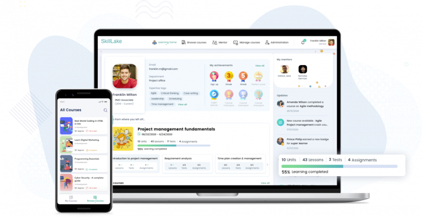

Other Reads from Skill Lake
-

When to Replace an Employee Learning Management System: 10 Signs to Look For
Read MoreIs your employee learning management system helping you build real skills, or is it just frustrating your team? Outdated software wastes your budget and turns training into a tedious chore. If your current LMS platform feels hard to use, lacks modern features, or takes too much manual work to run, it’s time for a change.
-
Top 10 Best LMS for Restaurant Training in 2026
Read MoreRestaurant training is a daily challenge, especially with high staff turnover and evolving safety standards. Traditional methods rarely keep up with today’s fast-paced teams and rising industry demands. Having an enterprise-grade AI learning platform makes it easier to train everyone in your organization, from employees and franchise owners to customer-facing teams – all in one


Ashmitha Chatterjee
Ashmitha is a learning and development enthusiast who shares her insights on e-learning. She loves to create engaging and informative content and is dedicated to helping people learn and grow through her deep expertise in the field.